Nature endowed the vast, thinly populated Wairarapa with just about everything, except sheltered, calm-water boating venues. Fortunately for boaties, engineers have made up for the Wairarapa’s natural shortcomings.
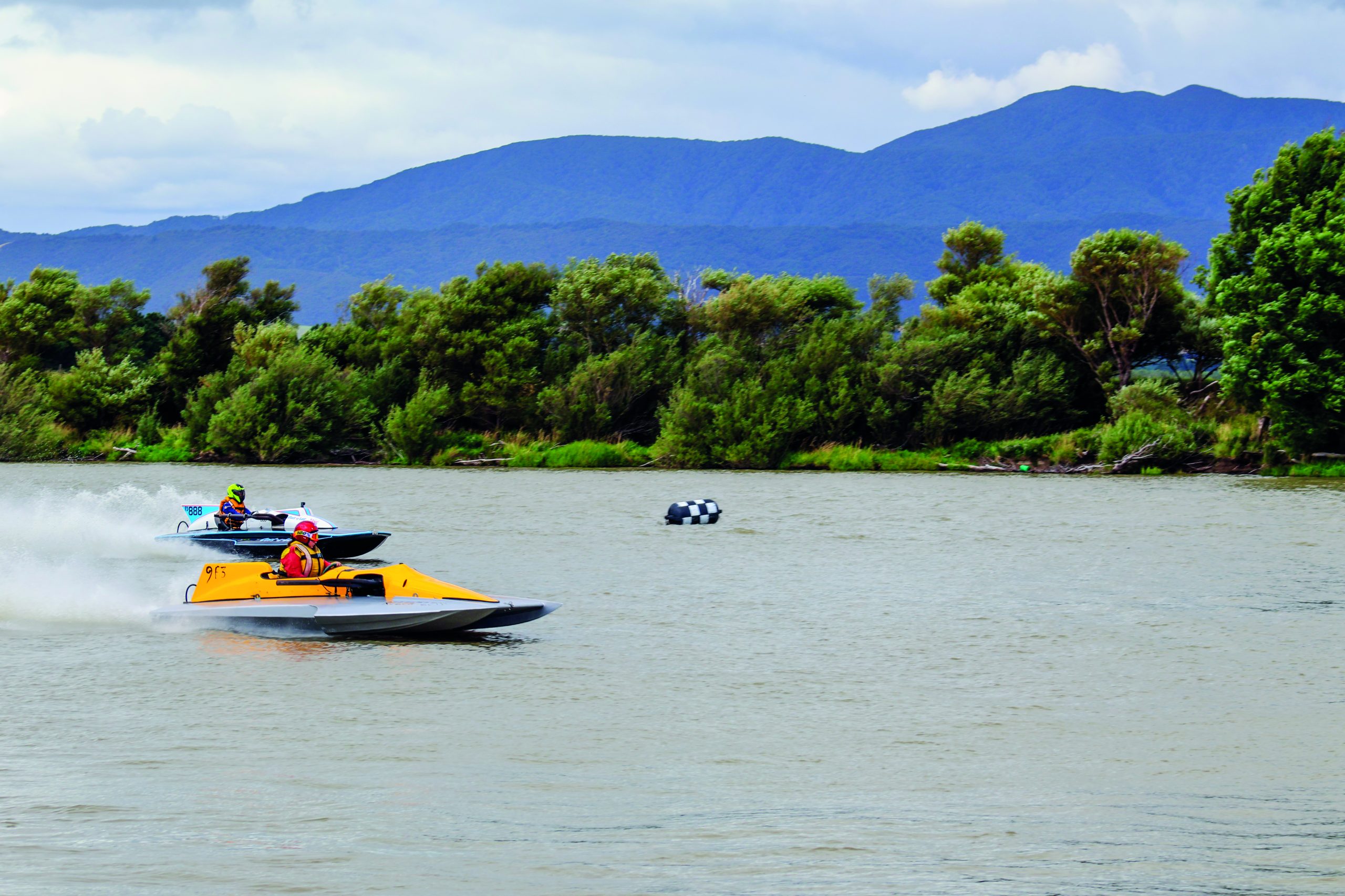
One of the Wairarapa’s most versatile engineered waterways is the Ruamāhanga Diversion, promoted by the Wairarapa Powerboat Club as “New Zealand’s Fastest Water.” This is a four-kilometre arrow-straight canal, built in the late 1960s as part of a flood protection scheme. The scheme involved dredging and widening the Ruamāhanga River for a total of 17 kilometres. The diversion canal branches off the original river channel about 9 kilometres upstream from Lake Ōnoke. From there, the diversion runs northeast for about four kilometres, and then rejoins the natural channel. There is no connection between the diversion and the old channel, which is now a branch of the lake known as the Ruamāhanga Cutoff.
Before the diversion was built, Lake Wairarapa used to flood several times every year, expanding to about three times its dry-weather area and inundating surrounding farmland. Regular flooding was consigned to history when the diversion was completed in February 1968. Some side rivers flood from time to time, but Lake Wairarapa obediently stays within its permitted boundaries.
The diversion was the Wairarapa’s first truly speedboat-friendly venue, the only place you could drive a hydroplane flat out. Lake Wairarapa was never much good. Situated hard up against the wind factory of the Remutaka Range, this enormous shallow lake is churned by blustery winds barrelling down gullies such as the notorious Siberia, where a 19th-century train was blown off the rails. With an average depth of about two metres, the lake’s short steep chop creates horror conditions for rowing skiffs, hydroplanes, flat-bottomed racing runabouts, and ski-boats. It’s not a lot of fun for boat fishing, either.

In the years before the diversion, powerboat racers used a small lake on private land, or natural pools on the Ruamāhanga River. Sometimes they would use Masterton’s inner city Park Lake, which is now called the “Lake of Remembrance”.
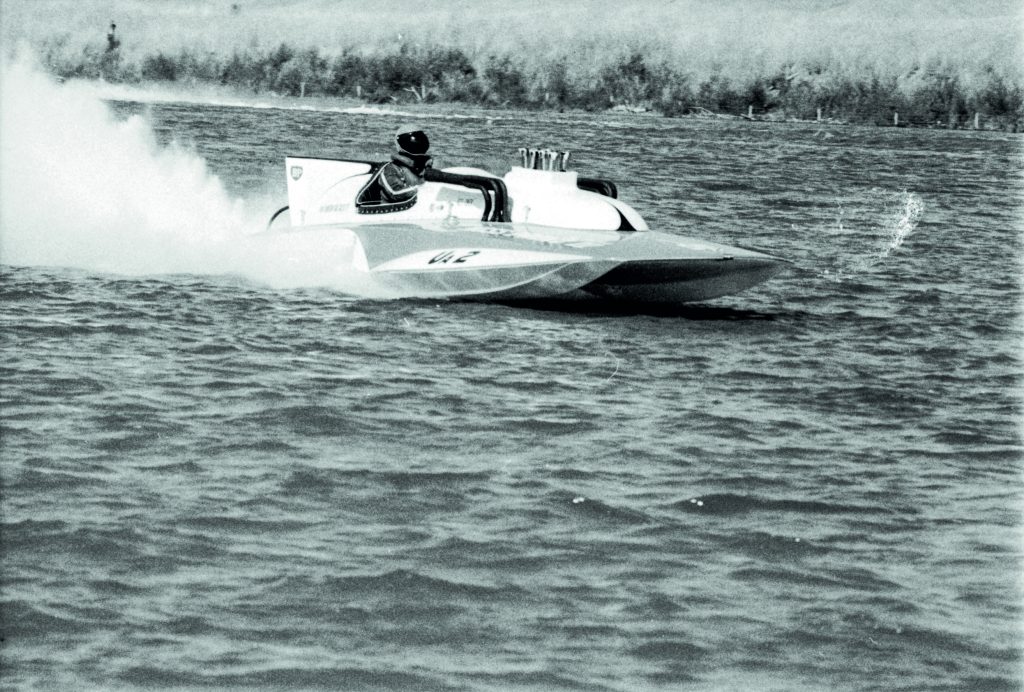
In the late 1960s, the Wairarapa Powerboat Club boasted New Zealand’s largest roster of registered powerboats. Only eight months after the diversion was closed, carrying the Ruamāhanga around Lake Wairarapa instead of through it, the club held a “picnic” on the diversion. What do inshore powerboat racers do at their picnics? They race! Quickest on the day was Mr. T. Sampson, whose hydroplane Nauti Lass clocked 64.3 miles per hour.
With one of the very few concrete launching ramps in the Wairarapa, and a long, sheltered stretch of deepish (three metres or so) water, the Ruamāhanga Diversion is regularly used for several watersports. Jet boats putting in at the diversion can explore the Ruamāhanga River system up into the Tararuas. Jet skiers we spoke to like the deep water. It’s easy on jet unit impellers because they don’t ingest sand and gravel like they would in shallow water.
The diversion also works well for water-skiing and wake-boarding. Although it’s often a little choppy, it seldom gets really rough, except in strong southerlies.

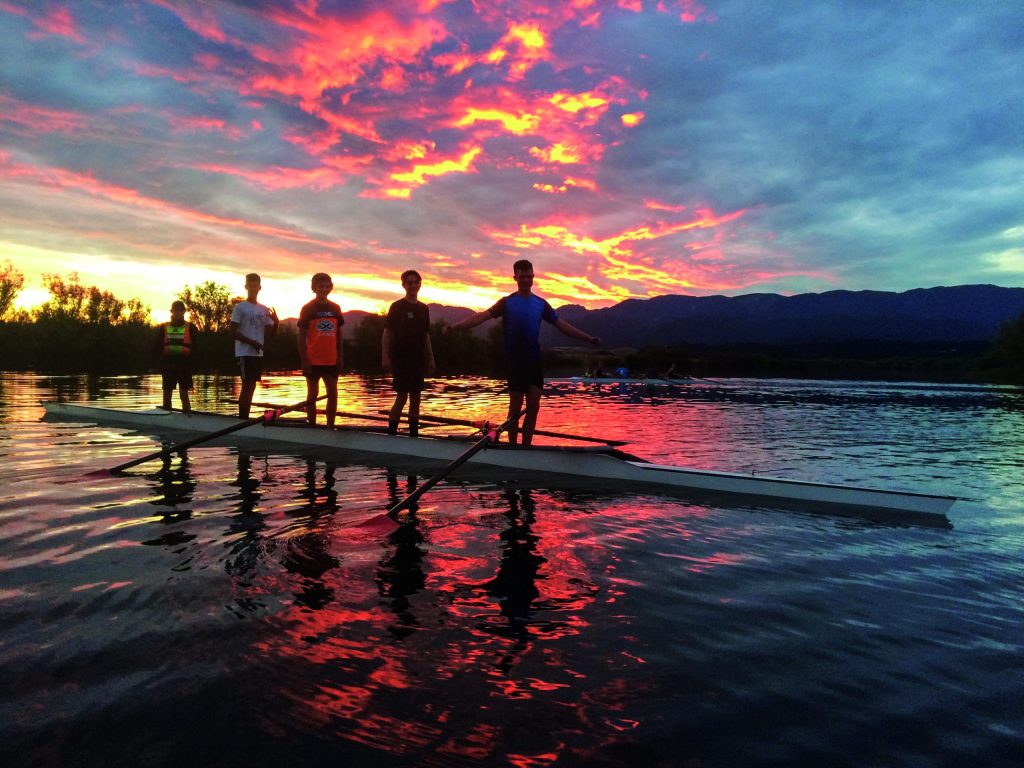
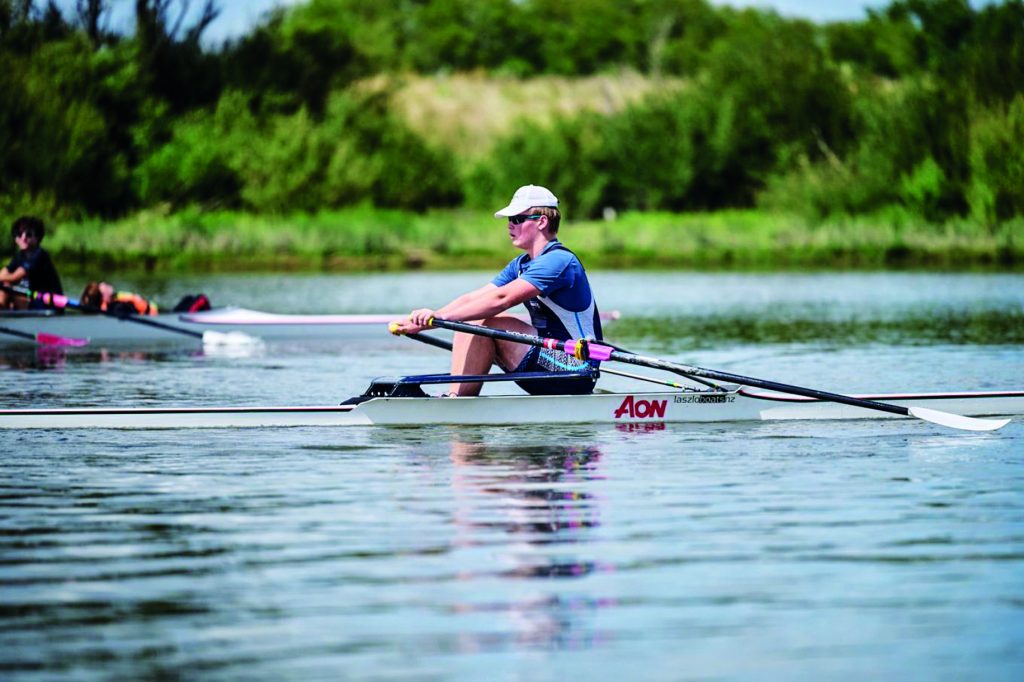
We weren’t surprised to hear that a Wellington-based high school’s rowing team regularly use the diversion for training. Wellington’s inner harbour is less than ideal, with lots of boat traffic and a big chop even on a good day. Onslow College adopted the diversion after looking at several other possibilities. “It’s good in most conditions except southerlies when big swells roll up from the lake,” said Onslow College Lead Rowing Coach Jason Theobald. “There’s a nice long straight for race practices, and the further stretches upstream by the bridge are really flat and sheltered.” They have a good working relationship with the Powerboat Club, and a local farmer often helps them too. Occasionally, low water levels during summer can cause trouble for their coaching boats. However, Onslow College usually runs six training weekends per year on the diversion. They like it so much they named a boat after the river.
Back in February we took our five-metre tinny for a cruise on the diversion. Like many Wairarapa boating facilities, it’s easy to find if you know where it is.
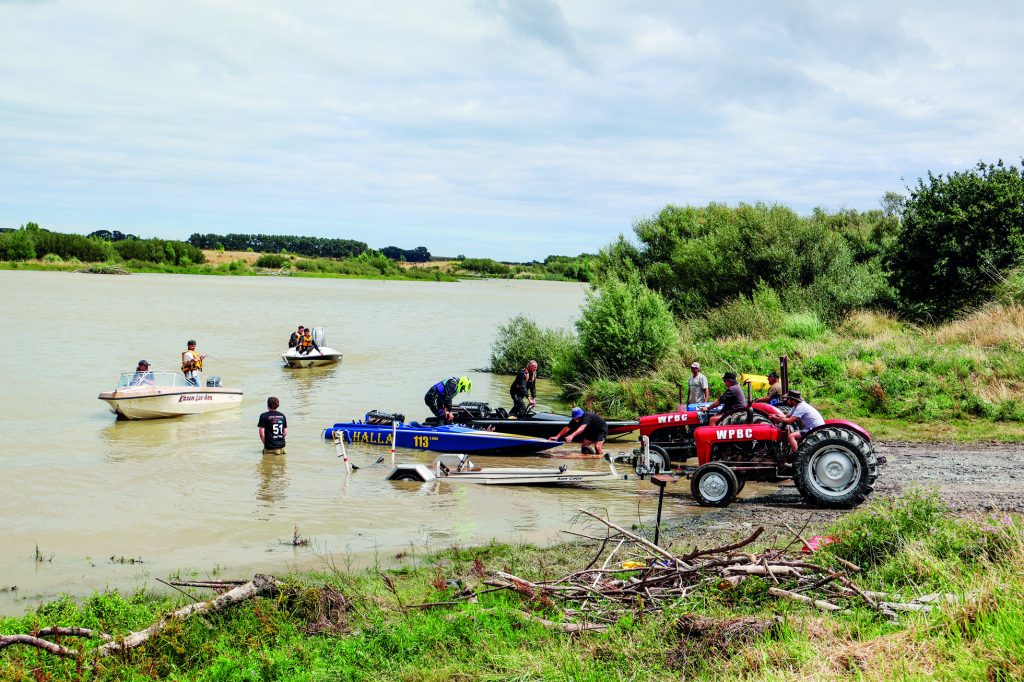
The first thing we noticed was the townie-friendly ramp at the powerboat club, on the western bank of the diversion. The launching ramp was a collaborative project involving the powerboat club and the Wairarapa Catchment Board (WCB), the public body that built the diversion. With a common goal, building the ramp as a semi-formal public-private partnership made perfect sense. The club is located on a large flat area where the stop-bank has been widened. The hard area is compacted gravel and the ramp is concrete: A rear-wheel drive ute happily does the job. The gate is at 737 East-West Access Road, 7.37 kilometres from Kahutara Road.
Maritime NZ puts out a brochure about speed limits on Wairarapa Rivers. For the Ruamāhanga between Lake Ōnoke and the State Highway 53 bridge near Martinborough (way upstream of the diversion), the speed limit is, “any speed safe for the conditions, except during the week before and the week after the opening day of duck shooting season,” when it’s five knots.
Off the ramp, our sounder found bottom at about four metres. There are no navigation marks. I could see perhaps half a metre through the murky water. This river flows through forests and farmland, so trees get washed into the river. There’s no evidence that the channel has been dredged since it was built. It seemed like a good idea to take a good look before running flat out. We kept it below ten knots.
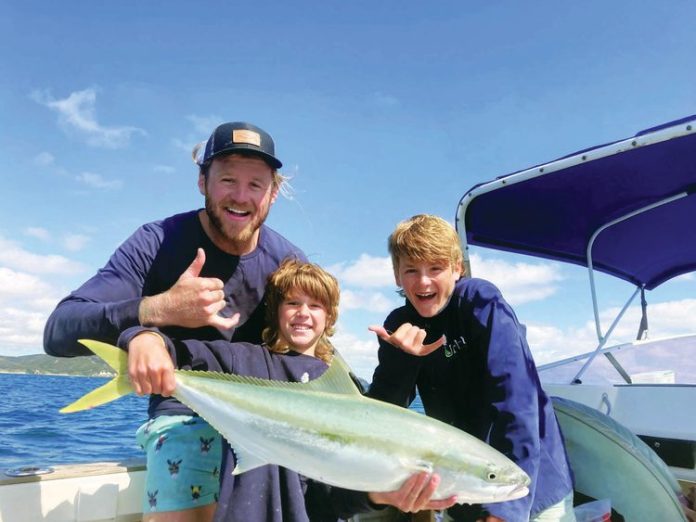
Just downstream of the ramp, a sandbank extends from the eastern bank, partway across the channel. A few hundred metres further down, we reached the junction with the outlet from Lake Wairarapa. The water coming out of the lake was the colour of my morning cappuccino. You can’t access the lake from here, because the channel is blocked by a set of control gates called the “Geoffrey Blundell Barrage”. (Blundell was Chairman of the Wairarapa Catchment Board from 1957 to 1971.) The barrage outlet is reputedly a good fishing spot in the right conditions, producing trout, perch, and when Lake Ōnoke is open to the sea, kahawai. Flounders can be caught all the way up the river, through and beyond the diversion.
From this point, cruising totally opaque water, we had to navigate based on other signs: A wading bird standing in the middle of the channel, for example, highlighted a wide shingle bank extending from the inside of a left-hand curve.
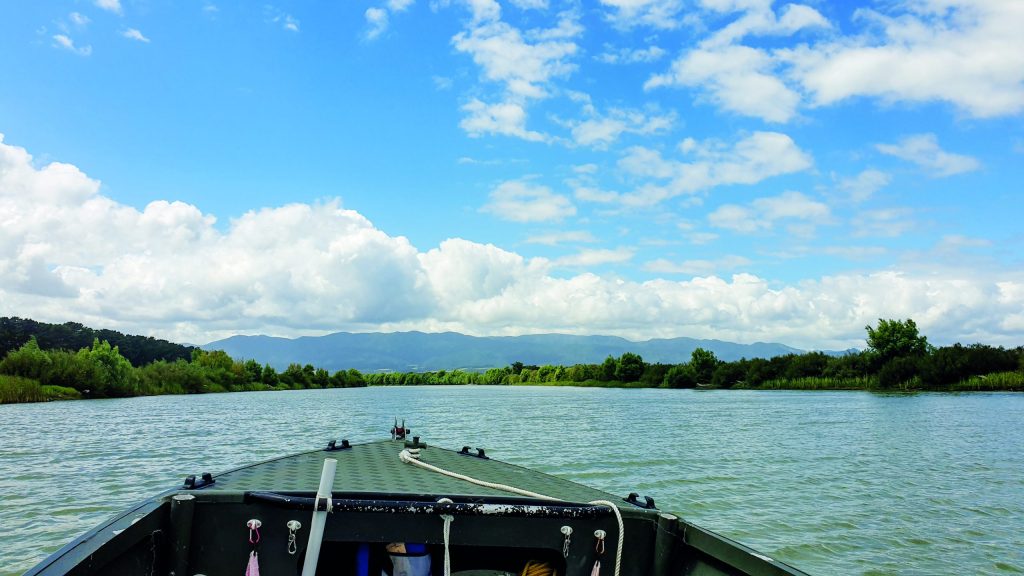
The cruise quickly settled into a pattern: Keep to the outside of bends, watch the sounder, and don’t go fast. It seems fair to say that the shingle builds up on the inside of curves. According to our Lowrance sounder, the water in the channel was seldom less than 4.5 metres deep. If it started shoaling, we’d found a good water for larger sailboats. The channel is seldom more than 180 metres across, a bit narrow for tacking a larger yacht. And then there are the shallow spots: No problem for an outboard, but something of a hazard for a sailboat. I’d happily sail a Starling, OK, or Sunburst on the diversion, but further upstream, the trees that make it such good powerboat water ruin any useful sailing breeze.

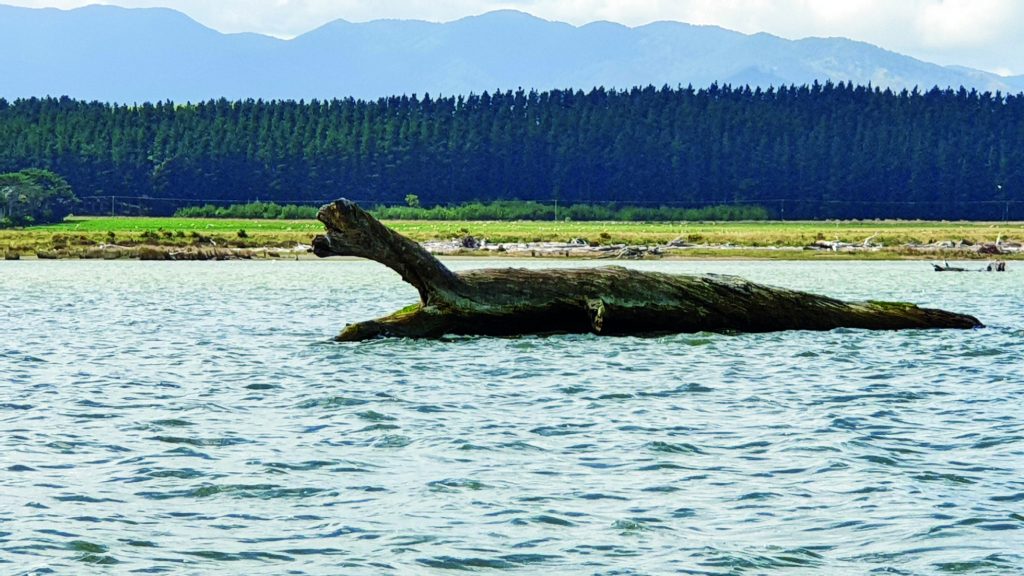
Nine klicks downstream from the ramp we reached Lake Ōnoke, flat calm and eerie under the grey sky, with countless beached logs and trees. Like Lake Wairarapa, Lake Ōnoke is wide and shallow, which makes it susceptible to nasty chop. Entering the lake, the Ruamāhanga merges with the delta of the Turanganui, a wild river out of the Aorangi Mountains over on the east coast. The channel peters out as you move into the lake. With half a metre on the sounder, we decided to turn around.
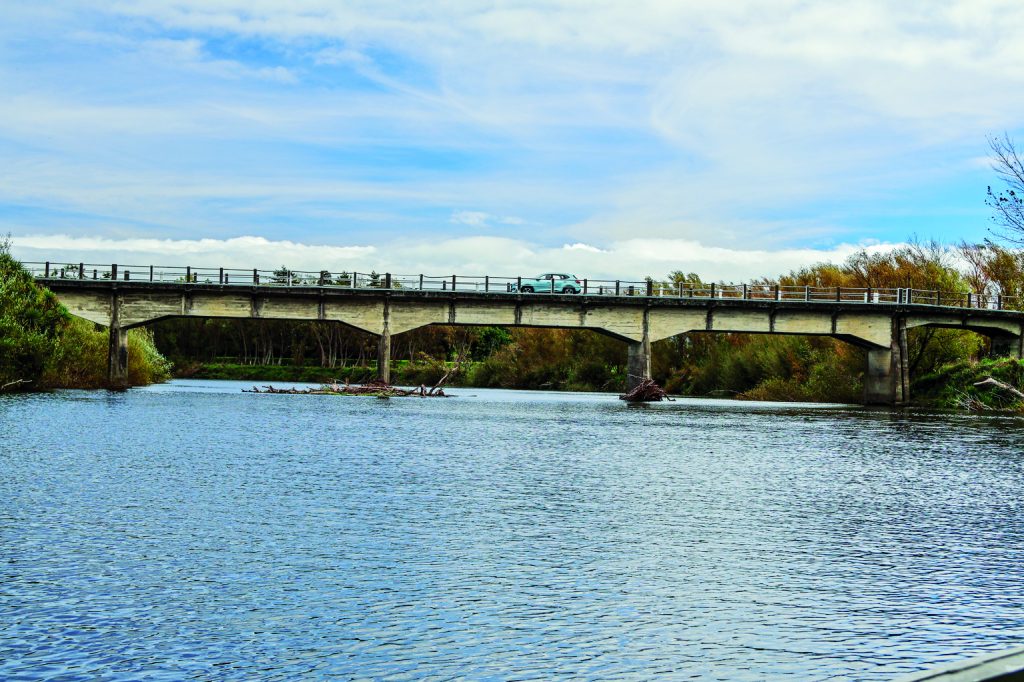
At 22 knots it didn’t take long to return to the diversion, and then we headed upstream. The most noticeable change as we cruised upriver is the vegetation. Plantings on both sides became thicker as we approached the Kahutara Road Bridge, the upper limit of the 1960s dredging project. In this area, trees occasionally fall into the river, forming subsurface hazards. Not too much of a problem at seven knots, potentially troublesome at 25. In some spots upstream of the diversion the sounder showed six or seven metres of water. But we found one very wide pool that’s barely 1.5 metres deep, all the way across.
Back in the diversion we tested the speed of the water. Our tinny did 26.5 knots flat out. Exactly the same as it does anywhere else in New Zealand. We weren’t surprised. There’s nothing special about the water here. They call this “New Zealand’s Fastest Water” because it’s a great place to go flat out in an inshore powerboat, and because you can get your boat up to speed and settled down before entering a measured kilometre.
The Wairarapa Powerboat Club often holds a competition called the “Kilos”. This is all about timed runs over a one kilometre course. According to the Wairarapa Powerboat Club, more class records have been set on the diversion than pretty-much anywhere else in New Zealand. The water, of course, is just water. This is not a place for unlimited hydroplanes, but that’s a small part of the powerboat community. For everyone else, the Ruamāhanga Diversion is a great place to go fast.
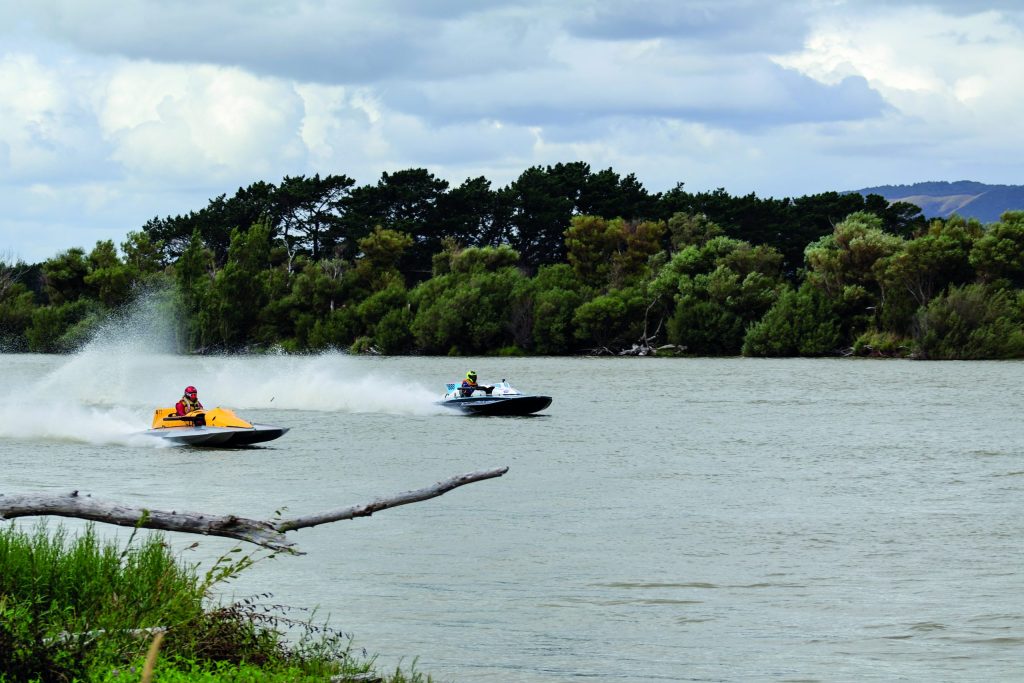
It’s also a fine venue for watching the action. The Wairarapa Powerboat Club’s regatta in January attracted good-sized fleets in several classes, notably the Clubman and Formula V classes. The stop-bank provides plenty of room for spectators, and they can safely get close to the racing.
Perhaps best of all, the Wairarapa Powerboat Club’s hamburgers are believed to be the best on the inshore powerboat circuit. Burger cook Dave Speedie’s secret, we’re told, is custom-made venison patties.
Next year, we’ll get there earlier so we can try those burgers.