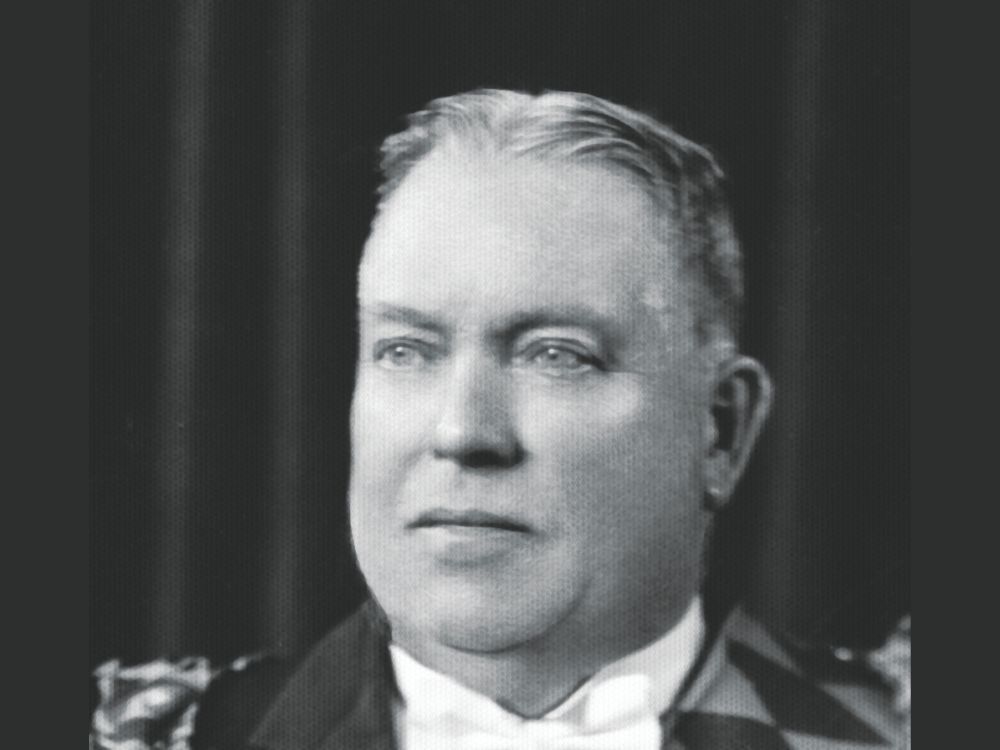
In 1916 24-year-old Auckland solicitor Trentham Charles Webster (known as ‘Charles’) was one of 80 men chosen to be sent to England to train to become RNVR sub-lieutenants.
Through the initiatives of Territorial Major Charles Henry Tarr Palmer of Herne Bay, who had set up a Motor Boat Patrol Reserve in Auckland in June 1915, and the Royal New Zealand Yacht Squadron, these men had been selected to man some of the new Motor Launches (MLs) that the Royal Navy had ordered from the Elco Company of New York. Of these men, 29 were members of the Squadron and all were experienced in handling yachts and motor launches. Another 100 local men, motor mechanics, were selected as Petty Officers to run the engines of the MLs.
But first, let me go back one generation to examine briefly the climate around the defence of New Zealand at that time and the qualities of the men being sent to train as RNVR officers.
Charles’ father, Josiah Daniel Webster (known to his friends as ‘Si’) was born in Auckland in 1860 but grew up on the Thames goldfields. It was a time when every country household had a rifle and a shotgun to provide game for the table, mainly wild pigs and rabbits but supplemented with duck and kereru, the succulent native pigeons, which were an easy shot. These guns were muzzle-loaders using black powder fired by percussion caps. From a very early age Josiah Webster’s skill with a rifle developed so that he quickly became a noted marksman with attention in the newspapers to his marvelous scores on the range at Thames by 1878.

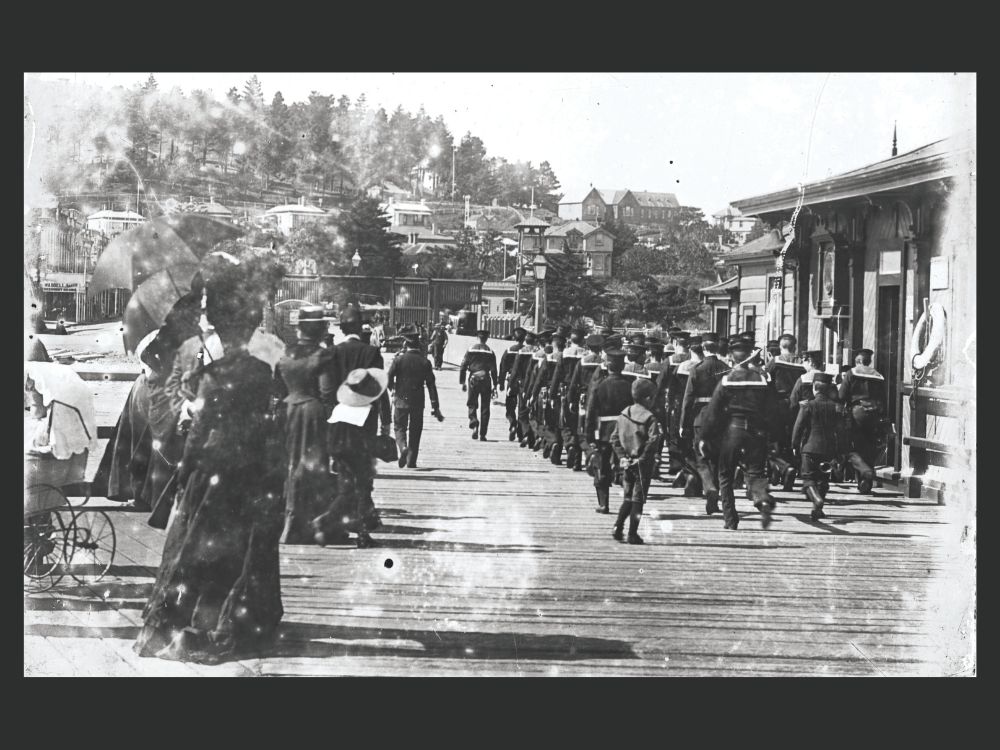
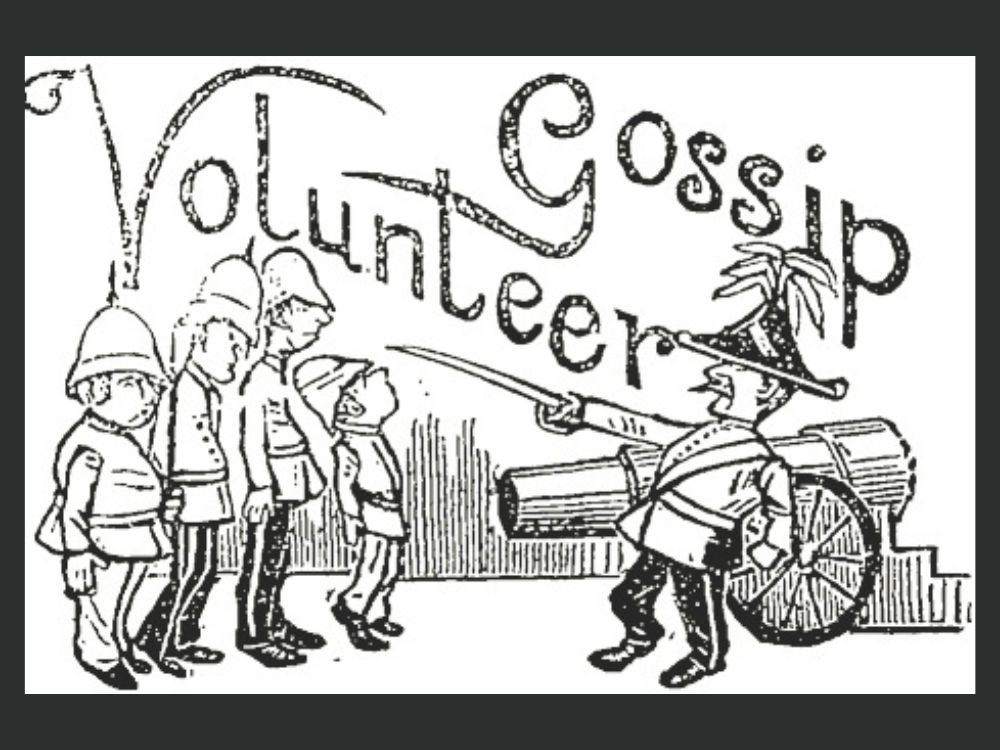
Josiah Webster had joined the Thames unit of the Volunteers, the existing para-military movement which was given greater impetus by the ‘Russian Scare’ of February 1873 when a local newspaper ran a spoof article about an attack on Auckland by the Imperial Russian cruiser Kaskowiski. Volunteer units sprang up all around the country, some infantry, some mounted horse, some artillery and some the ‘Navals’ who trained as gun crews for the new coastal batteries. Each unit adopted their own smart uniform and had regular training sessions, parades and camps. The ‘Navals’ wore seamen’s rigs. The prominent ‘Navals’ unit in Auckland was the Ponsonby Naval Artillery Volunteers.
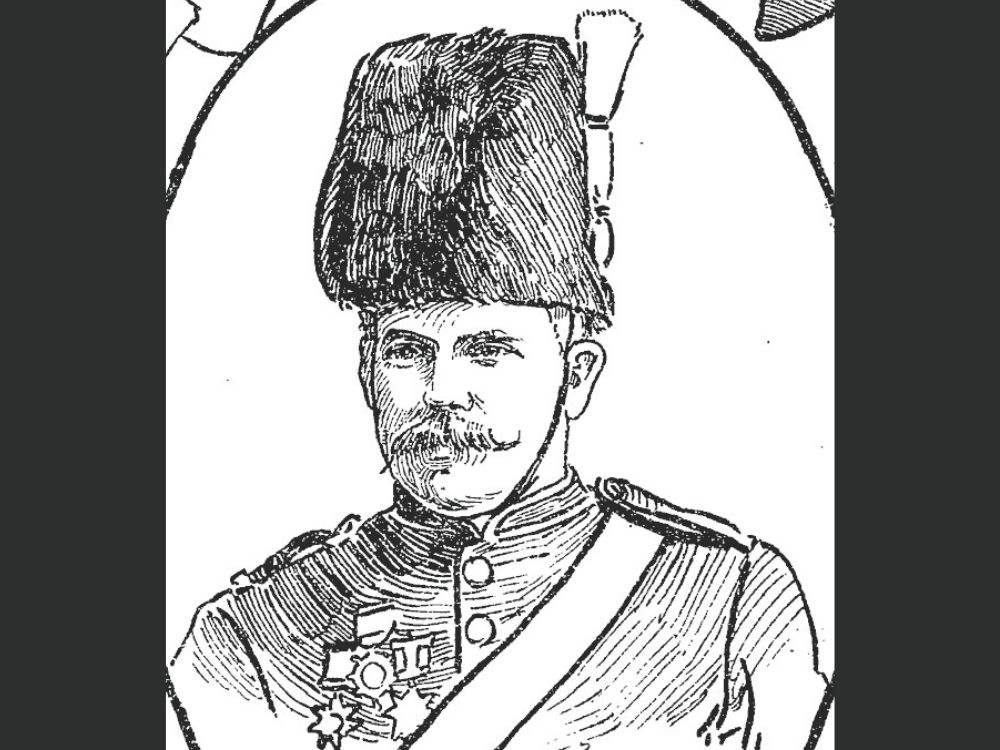
Because of his outstanding marksmanship, Josiah Webster regularly commuted up to Auckland by steamer where he joined the Auckland Volunteer unit known as ‘Battery A’ with the rank of Gunner. This unit trained on field artillery pieces, initially outdated Land Wars Armstrong guns brought out of storage. Their dress uniform included a busby. The magnet for him was the active rifle shooting competitions between Volunteer units and with the N.Z. Rifle Association (NZRA).
The Auckland range was at Mount Eden with distances up to 700 yards. Accurate target shooting required a good bore in the rifle, sound ammunition of constant characteristics, good eyesight, considerable fine motor skills and an extremely good gauge of the conditions, particularly the wind. Gunner Webster became prominent using a government-issue Mk II Snider carbine, a .577-inch breechloading conversion of the Pattern 1853 Enfield muzzle-loader, firing a black powder round in a brass cartridge case. An annual competition for various Championship Belts was held all around the country. There was considerable prize money. Josiah was prominent at every event, especially at 500 yards, with high aggregate scores over the number of distance events shot.
|

In June 1884 he married Annie Houghton in Thames, but Annie sadly died in childbirth in the following February. Josiah moved to Auckland and threw himself back into shooting with the A Battery Volunteers. He already knew well W.H. Hazard, who was a Sergeant in A Battery. Hazard had started business as an importer of firearms and equipment in Grahamstown (Thames) but had shifted to Queen Street, Auckland by 1867 where he also had a shooting gallery, much frequented by the Volunteers. The Observer noted in August 1887, “Last week ‘Si’ Webster of the A Battery and Kelly of the Queen’s Own made 13 consecutive bulls’-eyes in Hazard’s gallery”. The same year Webster was in a team that shot in Australia.
In February 1888 Josiah Webster married Jane Smith. Their first child, Jessie, was born late in the year. Webster continued competition shooting and came second in the Championship Belt in January 1891. The rifle they now used was the .577/450 Martini-Henry. He was deeply enthusiastic about the acquisition and construction of the new NZRA permanent range at Trentham. He could not get away to shoot at its opening meeting in March 1892, but he was so elated by the event that he named his second child, born in the May, Trentham Charles Webster.
The Websters lived in Federal Street and were establishing a large and successful greengrocer’s, fruiterer’s and florist’s shop at the foot of Queen Street, across Quay Street from the Ferry Wharf and across Queen Street from the Railway Station. It was an ideal site for the tropical fruits coming in from the Pacific islands and for the fruit and vegetables coming into the wharves from the Gulf, notably in the Maori ‘peach boats’ and other growers from up the coast like the ‘melon boat’, Shakepear’s yacht Frances from Whangaparaoa.
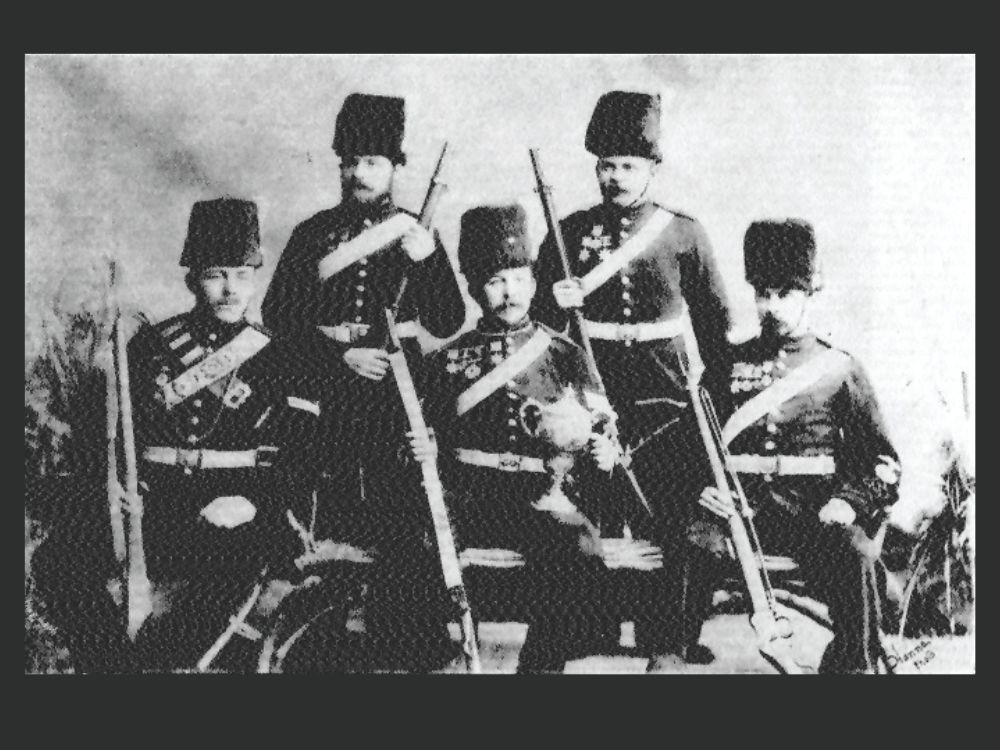
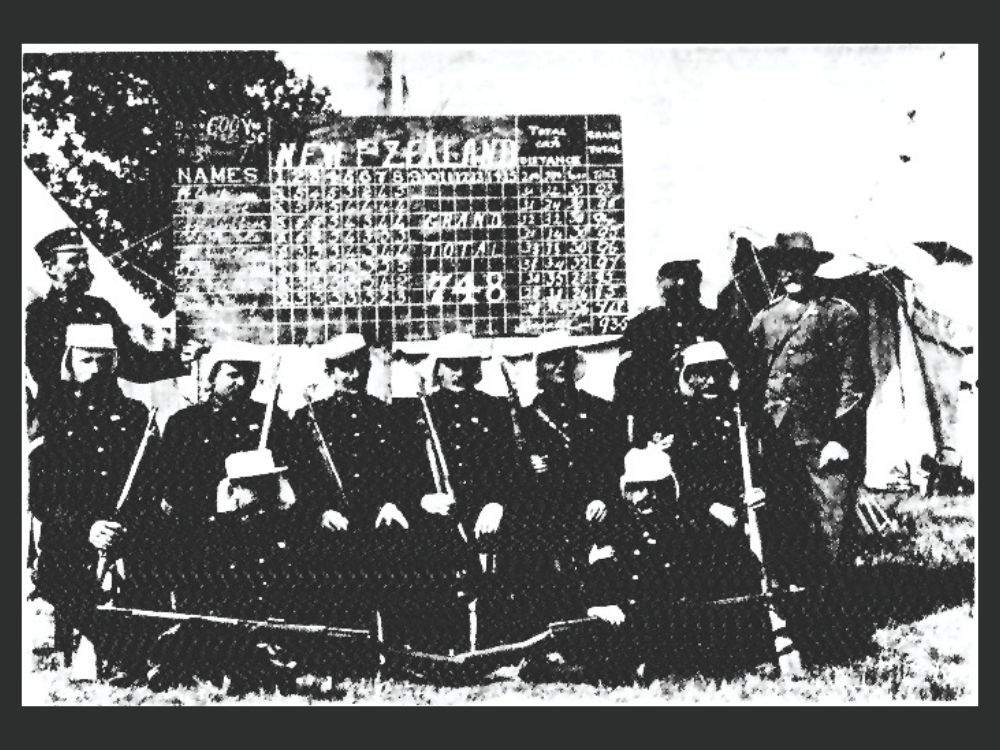
Their business interests became compelling, but Webster still found time to shoot locally with the Akarana Rifle Club and A Battery. Then came the Diamond Jubilee of Queen Victoria in June 1897. The NZRA decided to send one of the many teams to take part in the Empire competition at Bisley, near Aldershot in Surrey, southwest of London. The New Zealand entrants were restricted to those who could afford the time off work and most of the cost of a six-week ship voyage each way. In the end the choice came down to ten men including W.H. Hazard and Josiah Webster from Auckland and the current Champion, Arthur Ballinger of Christchurch. A Sydney paper reported that, “S. Webster is about 37 years of age, and has scarcely missed a week at the targets since his 11th year.”
After a week of intense shooting at Bisley with the new Lee-Metford .303 magazine rifle, the New Zealand team came second overall to the colony of Victoria in the competition and one place ahead of ‘the Mother Country’, judged to be a most satisfactory result. Josiah shot very well, shooting a ‘possible’ at 500 yards. His third child, Anita, was born while he was at Bisley. I wonder if he was tempted to name her Bisley?
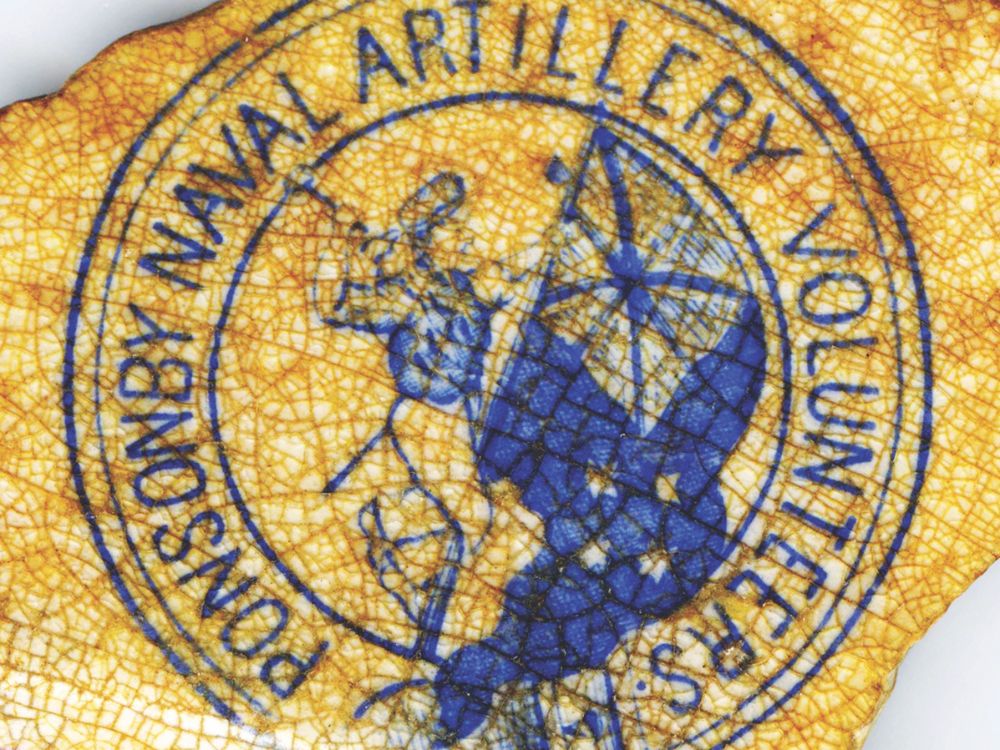
Josiah kept on competitive shooting for just another year. In October 1898, along with Petty Officer Spinley of the Ponsonby Navals, he was a member of a small team that went to Sydney to compete in a Federal match but they did not have enough numbers to figure in the final results. The Observer remarked on 31 December 1898, “Si Webster has abandoned bulls’ eyes for turnips. He claims the Champion Belt now with a white turnip, which turns the scale at 22lbs. Si, somehow, always manages to ‘turn up’ trumps.”
The Websters’ business was flourishing and occupied all of his time. However, the experiences he had as a top-level marksman had kept him up to date with developing firearms technology. This involved a deep understanding of the physics of ballistics, all aspects of the flight of the projectile; in metallurgy, in the construction of the gun barrel and the brass cartridge; and in chemistry in the composition of the propellant. It gave him a comprehension of the many new technologies, especially of the internal combustion engines now beginning to dominate the propulsion of vehicles, motorboats and aeroplanes, something that his son Charles absorbed readily.
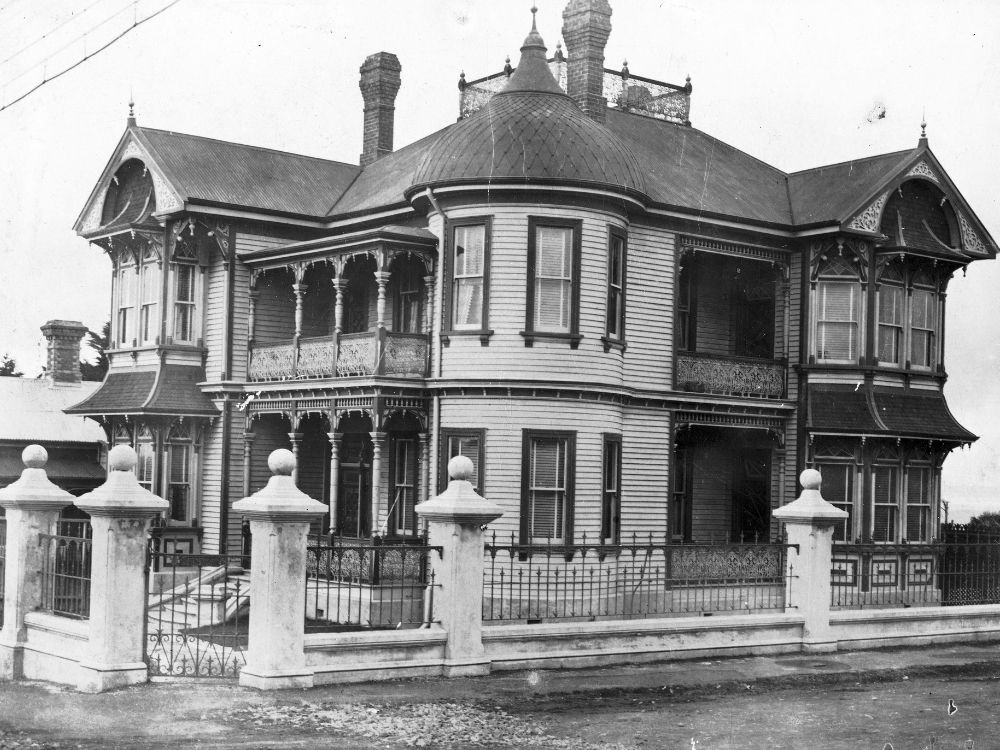
As Charles grew up, the family lived in Federal Street and Charles went to Wellesley Street School. At the end of 1905 he was awarded a free place to attend Secondary School and enrolled at Auckland Grammar School. In 1906 Josiah bought the property at 5 Shelly Beach Road in Herne Bay which had an uninterrupted view of the Waitematā Harbour. He had built on it the exotic two-storey dwelling he named ‘Trentham’ designed by Arthur Ferneyhough, complete with a belvedere, or railed ‘widow’s walk’. As 11 Shelly Beach Road, the house still stands, almost unaltered.
|
On matriculation Charles became an articled clerk to a firm of solicitors in the city and attended Auckland University College to obtain his University of New Zealand Law Degree. Little is now remembered about his leisure activities as a young man but, living in Herne Bay, he was at the epicentre of Auckland’s recreational boating on the south shore of the Waitematā. The prominent Herne Bay yachting people included the Palmer, Thompson, Dennes and Leys families.
Charles Webster’s later friends Roy Swales and fellow RNVR officer, Roy (‘Cob’) Mays crewed on Ariki, then owned by solicitor E.C. Blomfield of nearby Argyle Street and moored off Ponsonby Wharf. To draw a long bow, he could easily have crewed on Ariki or any of a plethora of fine yachts and launches moored in Herne Bay, but he certainly spent a lot of time on the water absorbing the seamanship in yachts and launches that the Royal Navy needed for its brand-new big motorboats for patrols around the coast of Great Britain.
In mid-1916 Charles passed his final examination as a solicitor and volunteered for active service. On 22 August 1916 he was appointed Lieutenant in the 15th (North Auckland) Regiment. He had never been a Volunteer like his father. The South African War had shown that although the Volunteer movement was great fun, it was ineffective in building an efficient citizen army. In February 1910 the Volunteer Force was abolished and replaced by the Territorial Force. There was compulsory military training for all men between the ages of 18 and 25.
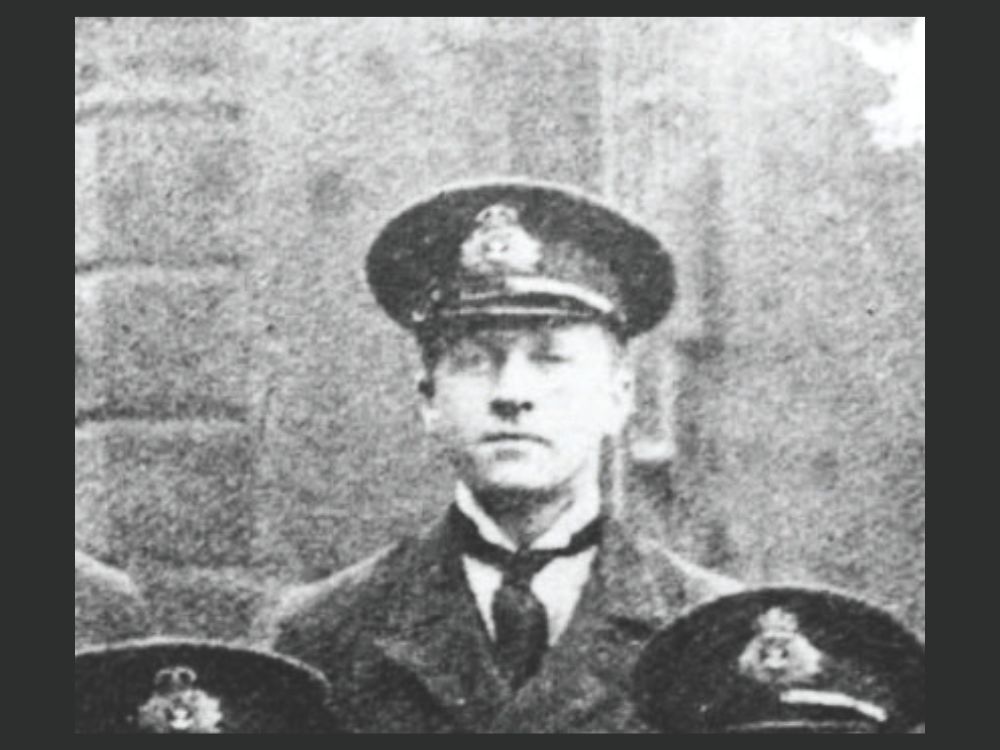
Shortly after his Army appointment, Charles put forward his application to join the RNVR Motor Boat Patrol being organised by Commander Armstrong of the Royal Navy, liaising with the Squadron, and was accepted with the rank of Sub-Lieutenant. One of the drivers of the scheme, Territorial Major Charles Palmer, went to England himself with the group, reduced to the rank of Sub-Lieutenant. Charles Webster, and most of the RNVR appointees, had had intense military training as Territorials since the beginning of the new scheme in late 1911 and, with their military training coupled with their recreational boating experience around the coast of this country, were already well-fitted for active service in MLs.
By November 1916 the new RNVR recruits from New Zealand were on a ship to England, some with a difficult war ahead of them.
NEXT MONTH: Charles’ war experiences with the Elco MLs and some secret stuff with the Thornycroft CMB aero-engined hydroplanes.
BOATINGNZ.CO.NZ