For well over 50 years, Bri-Ski Propellers has been successfully powering thousands of Kiwi boats. Founded in Brian Schimanski’s basement in 1970, Bri-Ski propellers are still being made today, and this is their story.
After serving in WWII in Egypt, all Cecil ‘Ces’ Schimanski wanted afterwards was a normal life.
“He was one of those people who never said a word about the war, so I know nothing about what he did,” recalls his eldest son Brian, who was born in 1942, the eldest of the couple’s three children.
Brian Schimanski grew up on the family dairy farm located near Port Waikato; however, the farm was sold in the late 1950s, and the family moved to Bucklands Beach. Ces Schimanski bought an 11m displacement launch, went commercial fishing and sold his catch off the beach, which was all standard practice then.

Brian Schimanski left school at 15 and pursued his then-passion for motorcycles by getting a job with White’s motorcycle dealers in Newmarket.
Unfortunately, in a collision with a car running a red light, Schimanski severely injured his foot, making it impossible for him to ride motorcycles. This prevented him from returning to Whites, so he took a job with car dealer McDonald Halligan in its spare parts department. About a year later, Schimanski joined Associated Engineering, a large engineering firm specialising in manufacturing car parts.
“There were 300 to 400 staff; it was a big company.”
After four years, Schimanski was recruited by a smaller engineering firm, Engineers for Industry in Panmure, whose main business was designing and building engineering machinery for other companies.

The company also developed a basic range of boat propellers, which they supplied to retailers such as Ged McCarthy, Marine Power and Sydney Woodroft. At that time, most boats were powered by imported stock propellers; there was little in the way of custom propeller design or production.
After a couple of years, Schimanski was promoted to run the propeller division. There was no formal training; Schimanski learned the whole business through hands-on experience.
All new stock propellers started as full-size timber patterns, which were sent to Marshall Foundries and placed in a sand-filled, two-part box. The pattern was removed, the box bolted together, and the propeller cast from manganese bronze. After cooling, the rough casting was removed from the mould and finished by hand with grinders, belt sanders, and hand files.
Engineers for Business was never very interested in its propeller division and didn’t promote it. After a few years of running the operation, Schimanski saw an opportunity and, in 1970, decided to start building propellers himself. It was a brave move, especially since he had previously married the late Diane (nee Little), bought a house in Howick, and was expecting their first child.
Blessed with youthful resilience and driven by enthusiasm, Schimanski started his business in the basement of his Howick home, under the Bri-Ski banner, an abbreviation of his name.
“I wanted a simple, easy-to-spell business name,” he recalls.
Primarily because of Schimanski’s enthusiasm, Bri-Ski quickly became an instant hit. In less than six months, Schimanski had outgrown his basement, moved into a small factory, added two staff members, and bought a lathe.
Most of Bri Ski’s business involved 10- to 14-inch propellers, which suited most of the popular displacement launches of that time.




Schimanski gradually expanded his workforce as sales increased, and within a few years, Bri-Ski was producing over 1,000 propellers a year. At this stage, all were sold to retailers – Bri-Ski did not sell directly to the public. This changed when outboard motors with factory-installed propellers became more popular, which had a notable impact on Bri-Ski’s business.
“We looked at making outboard propellers, but we couldn’t compete with the factory-supplied ones.”
To compensate, Bri-Ski began selling propellers directly to the public, coinciding with the boom in amateur boatbuilding. With a variety of new boat designs and marine engines becoming available, the market for custom propellers expanded substantially.
“I had to learn how to specify propeller sizes for various hulls and motors; fortunately, there were plenty of books on it.”
Bri-Ski continued to expand, manufacturing larger propellers up to 25 inches in diameter. Propeller repairs remained a key part of the business, and at one stage, Bri-Ski had two full-time staff dedicated to repairs.
With many amateur yachts being built, the demand for yacht propellers increased. Initially, most yacht propellers were fixed two-bladed types, but racing sailors started requesting a folding propeller to improve sailing performance. Schimanski designed a two-bladed folding propeller that became a staple of his business for many years.
Around the same time, Schimanski set up his own foundry in Whitford, and all Bri-Ski propellers were eventually cast there. This meant the propellers could be very competitively priced, especially when compared to imported ones.
As the business grew, Bri-Ski moved to larger premises on Moore St, Howick, and invested in more advanced engineering equipment to produce bigger, more complex propellers.
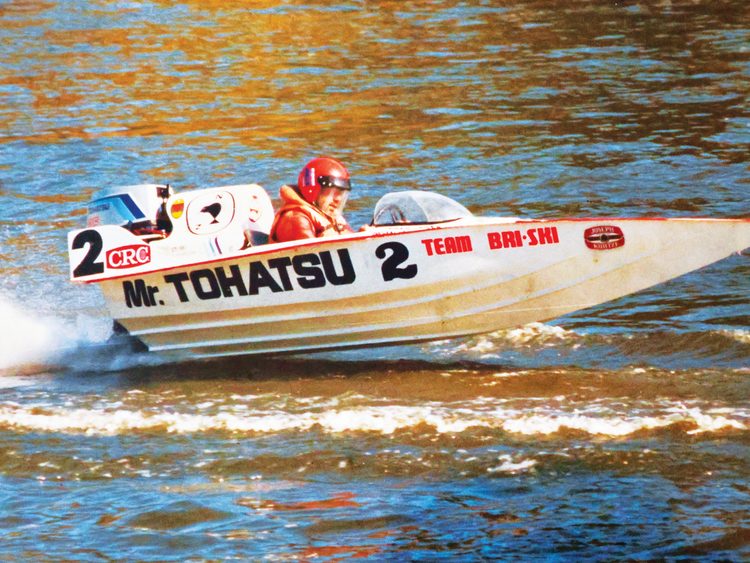
One niche market for Bri-Ski was propellers for offshore powerboat racing, which Schimanski took a keen personal interest in. In fact, the whole family were enthusiastic participants in the Formula 300 Class of mini-powerboat racing for many years. Powered by a 30hp outboard, these small craft provide exhilarating and wet racing.
In the late 1980s, Schimanski developed a folding propeller specifically for top-level yacht racing, which gained popularity in elite classes like the One Ton Cup (OTC).
When the top OTC and maxis started using the Bri-Ski racing folder, word spread quickly, and several units were sold overseas to prominent sailors, including Dennis Conner, Grant Dalton, and the late Sir Peter Blake. Another was sold to the Bruce Farr-designed Fram X, built for HRH Crown Prince Harold of Norway.

“I remember addressing the package to Prince Harold, and the postman questioning who it was going to,” recalled Schimanski, continuing, “Bruce [Farr] put us onto a lot of offshore business.”
The widespread popularity of planing launches in the 1980s suited Bri-Ski’s operations.
“They used smaller propellers, which suited our style, so we did very well in that market.”
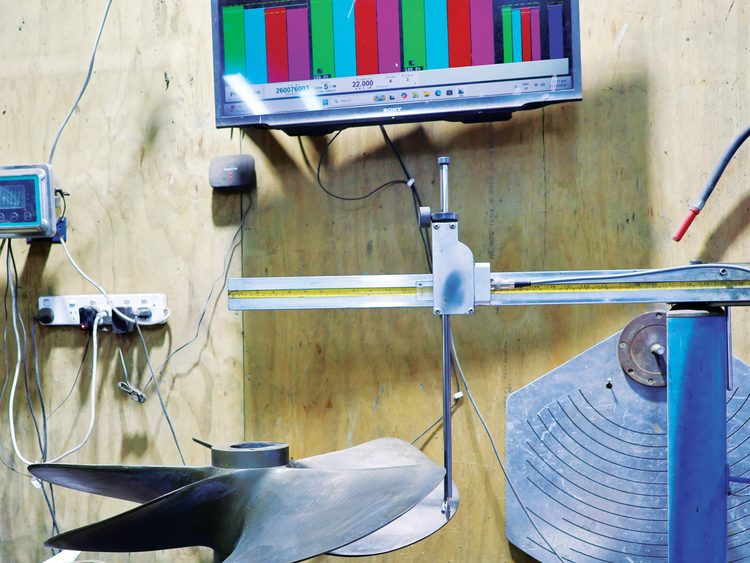
Propellers for planing craft operate at higher speeds, and precision is crucial. During the 1990s, Bri-Ski adopted the Australian-developed Prop Scan system. This computerised diagnostic and measurement tool accurately mapped each blade’s geometry, detecting micro-inaccuracies in pitch, camber, and section shape to within 0.025mm.
Any discrepancies were corrected to ensure each blade of a propeller matched its sister blades and performed exactly the same amount of work. The result was better balance, increased efficiency, and improved fuel consumption.
“The Prop Scan system was the most worthwhile thing I ever bought for the business.”
The Prop Scan system became invaluable for identifying vibration or noise issues with new propellers.
“When there’s an issue in the drive train, everyone blames the propeller first, but using the Prop Scan system could quickly confirm whether it was the propeller or not.”

In 2009, Schimanski decided it was time to retire and sold the Bri-Ski company to one of his long-term employees, Brent Crawford, who had been with him since starting as an apprentice aged 15. At that time, Bri-Ski had six full-time staff, and the business was thriving. Sadly, 18 months later, a recession reduced propeller demand, forcing Crawford to cut staff and reduce costs.
Crawford decided to relocate his business to Maramarua, which is on Highway 2 about an hour’s drive south of central Auckland. Lower overhead costs and smaller staff numbers all helped Bri-Ski weather the recession and regain the company’s profitability.
“My mortgage there was less than what I was paying in rent,” he said.
Although Bri-Ski’s move initially faced some resistance from long-term customers, this faded as they adapted to the new arrangement. Additionally, Bri-Ski’s location was ideally located to serve customers from the Coromandel and Tauranga. As a bonus, the property offered a considerably nicer lifestyle for the Crawford family and their two children.
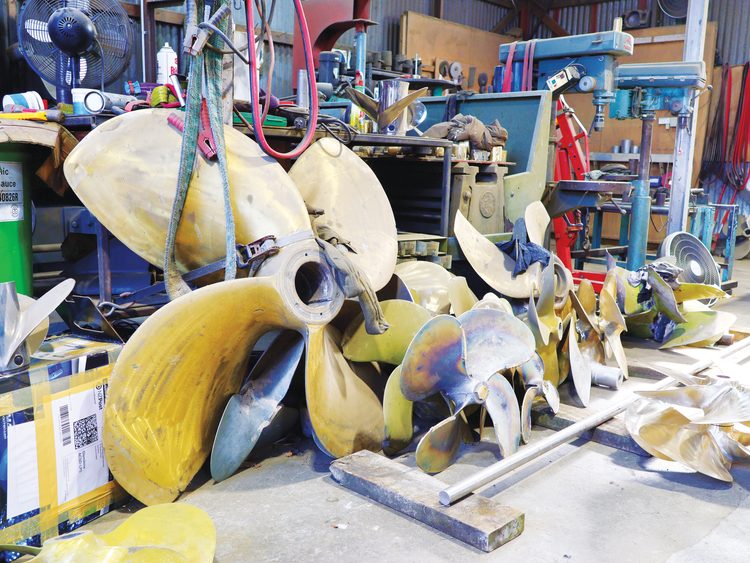
These days, with one full-time and two part-time employees, Crawford runs a lean and efficient operation. More than half of its work involves propeller repairs – despite the widespread use of GPS and electronic charts, colliding with underwater objects and damaging the propeller(s) hasn’t lost its popularity.
Crawford believes almost any propeller can be repaired and, with the Prop Scan machine, restored to as-new condition. Bri-Ski are equipped to repair propellers made of bronze, aluminium, and stainless steel.
Bri-Ski has been the agent for VEEM Propellers, an Australian-based company, for many years. Thanks to their advanced CNC machinery, VEEM can offer a more cost-effective propeller, provided the customer is willing to accept a slightly longer lead time. For those in a hurry, Bri-Ski still crafts propellers in the traditional way, starting from a rough casting from a local foundry and finishing it by hand.
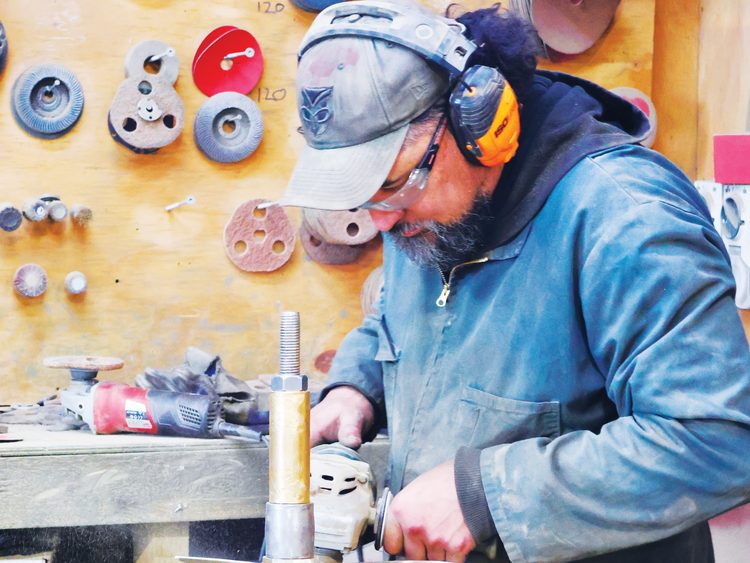
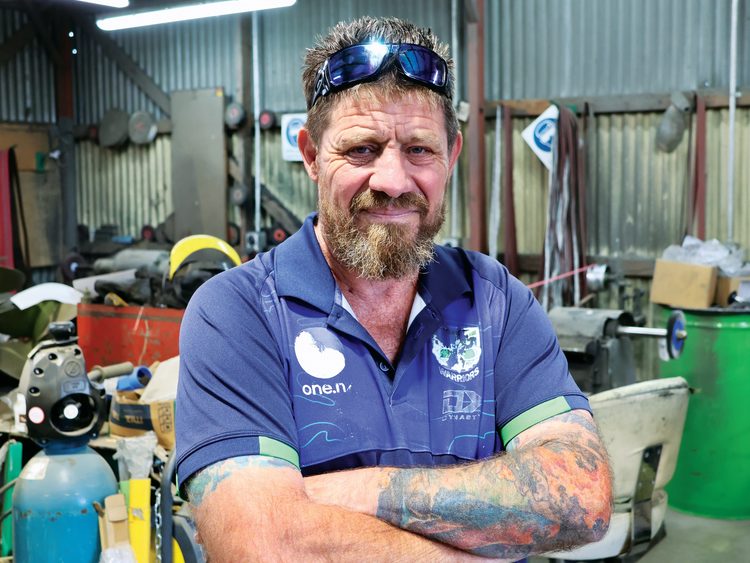
On the day this writer visited, an employee was hand-finishing a new propeller, just as Bri-Ski’s founder did decades ago. With skilled workmanship and the Prop Scan technology, the final product will be as accurate as any CNC version.
The craft of building propellers is a complex mix of pattern-making, casting, machining, and balancing. In an age of advanced CNC machining, it’s good to see skilled tradespeople and traditional techniques keeping the old ways alive. As long as people go powerboating, it looks like Bri-Ski will stay busy repairing propellers and helping their owners get back out on the water.
Bri-Ski Propellers – a prime example of traditional New Zealand innovation, expert craftsmanship, and hard work. Enjoy your retirement, Brian Schimanski – you’ve more than earned it.