It’s easy to fill boats with lots of ‘stuff’, especially if you’re a small boat owner, as I am. So ideally every item on board must earn its keep and potentially serve more than one purpose. So, what are the essentials?
The big things
While some fishers may consider even seating to be a luxury, opting instead for more fishing space, that’s pretty hard core, even for me, so let’s keep it a bit more mainstream.
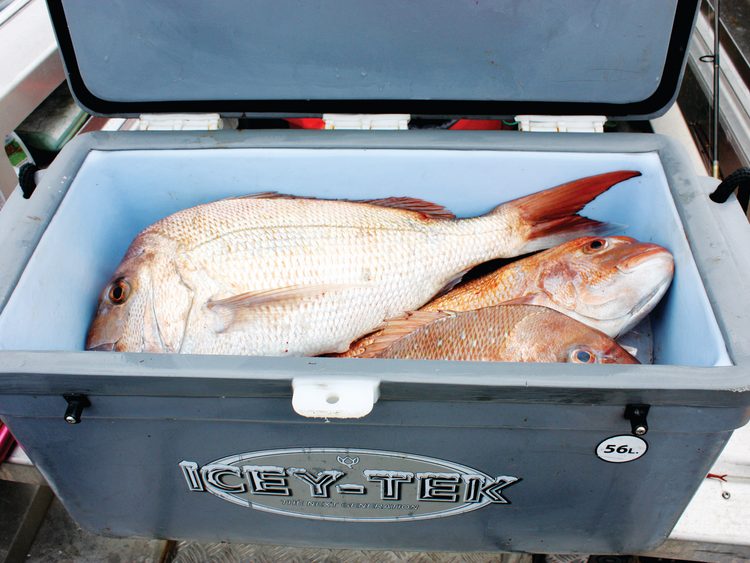
Chilly-bins: A good-sized chilly-bin can provide seating, especially when fitted with a cushion Velcro-ed to the lid, as well as somewhere to store the catch, bait, food and drinks. However, chilly-bins vary greatly in construction material, size and shape, which affects how efficiently they keep their contents cold and how long ice will last. Yes, the cheaper models are lightweight and affordable, but their thin plastic walls and polystyrene or open-cell foam insulation mean ice melts relatively quickly (usually within 12-24 hours) while their hinges and handles can fail, especially when the bin is heavily loaded.
Bins by Yeti, Icey-Tek and Dometic are at the other end of the scale. These are more heavily constructed from high impact (Yeti) or thick, rotomoulded plastic with heavy-duty, closed-cell polyurethane foam insulation. When pre-chilled and then packed with salt ice (which melts more slowly than freshwater ice), they can retain ice for several days – and they are virtually indestructible.


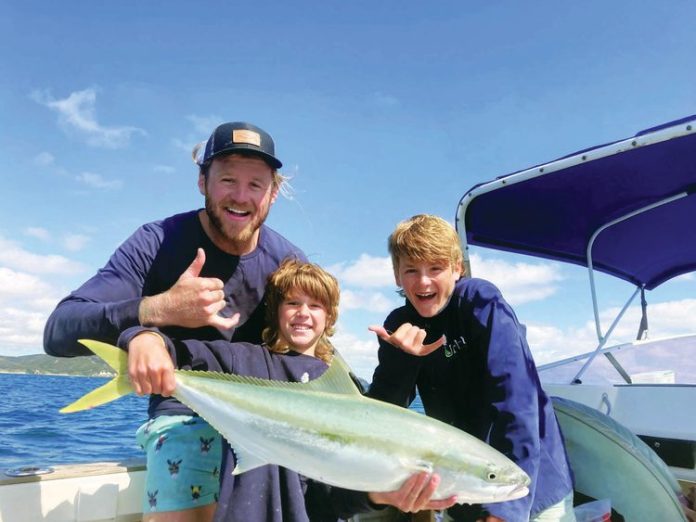
My two Icey-Tek bins are 23 years old and still going strong. The first is a relatively compact high-sided 40-litre model used for snapper fishing, comfortably accommodating all the fish two anglers might catch (we rarely keep any fish over 4kg). However, a reasonable-sized kingfish must be trunked or even filleted to fit inside the bin, so when kingfish are the main target, I use my larger, longer, 56-litre bin instead.
More recently, soft-sided cooler bags from several manufacturers/brands have been introduced. Made from heavy-duty, water-resistant fabric with insulated liners, these bags are foldable and more easily stowed onboard until needed, but they don’t stay cold as long. Even so, they are a great option when targeting large fish, since they occupy much less space until they are needed.
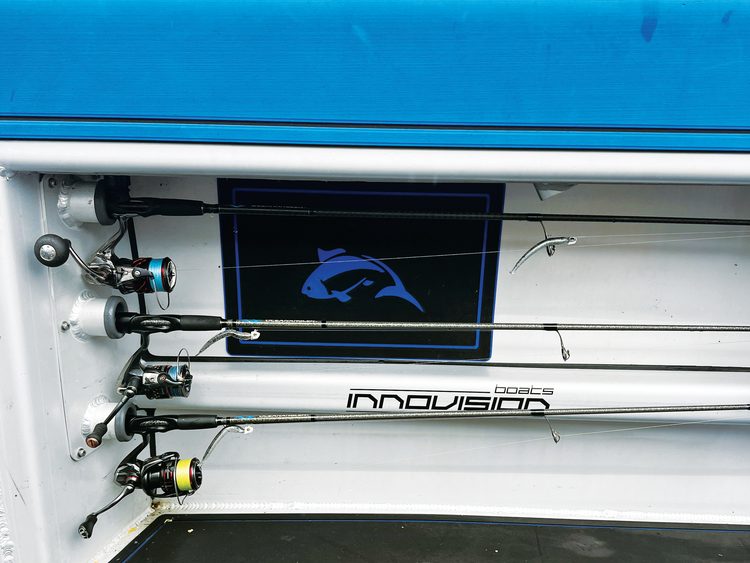
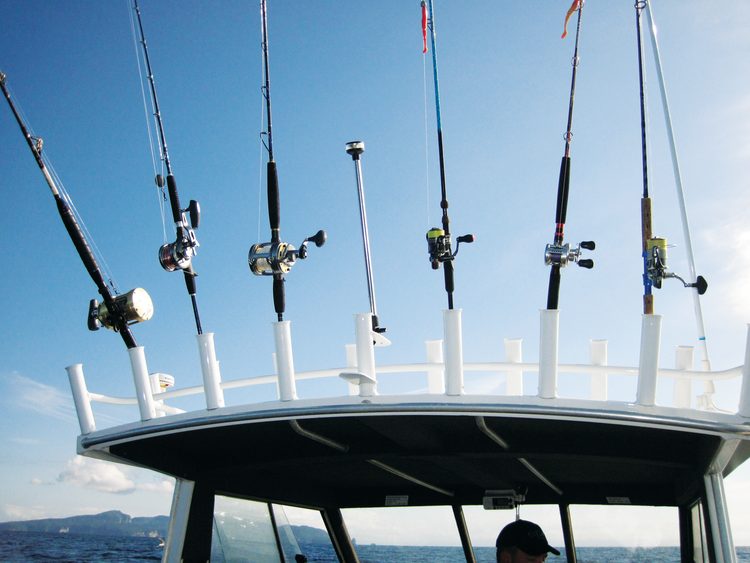
Rod holders: Hopefully your boat has several good quality rod holders fitted already, and hopefully they are nicely angled and positioned so they don’t clash with one another or risk rods placed in them point loading if a fish bites. Typically, though, you will bring more rods than you have rod holders, which is why most of us add a rocket launcher or rod rack.
To be honest, I’m not really a fan of rocket launchers, especially when used to transport longer soft-baiting and top-water rods. We have found out the hard way that long rods (i.e. 7-8ft/2.13-2.44m) in high-mounted rod holders tend to whip around in rough conditions, sometimes smashing each other to bits. They whip around so violently that I suspect they even break themselves occasionally.

There are no such problems with shorter, sturdier rods in rocket launchers, but long rods are better placed in rod racks. The best I’ve seen are mounted along the sides of the cockpit where outfits are easily accessible and reels are protected from spray.
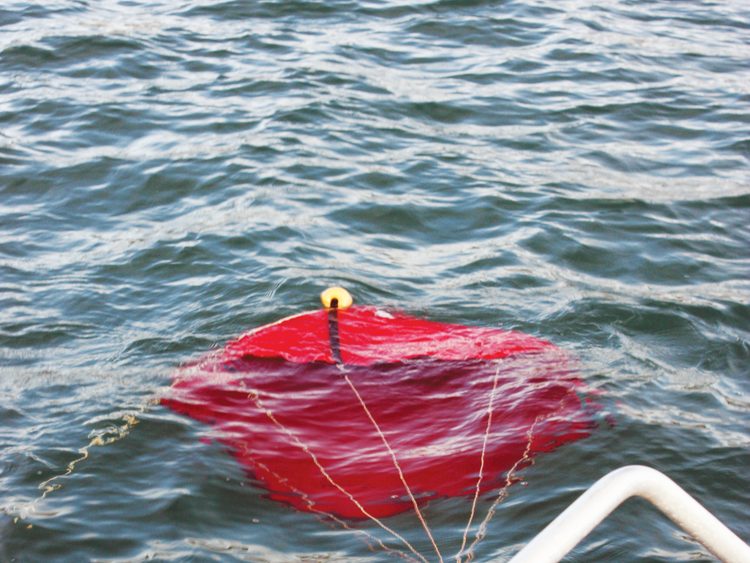
Drogues: A sturdy sea anchor can be a massive advantage, particularly jig, soft bait and topwater lure fishers, slowing the drifting boat’s speed and/or altering its course to allow more effective lure presentations. Parachute-type drogues are especially effective but always attach a collapsing cord to the point end to facilitate sea anchor retrieval. With drogues, the bigger they are, the better they perform, but larger ones can get in the way while fishing. Most drogues recommend suitable boat lengths on their packaging.
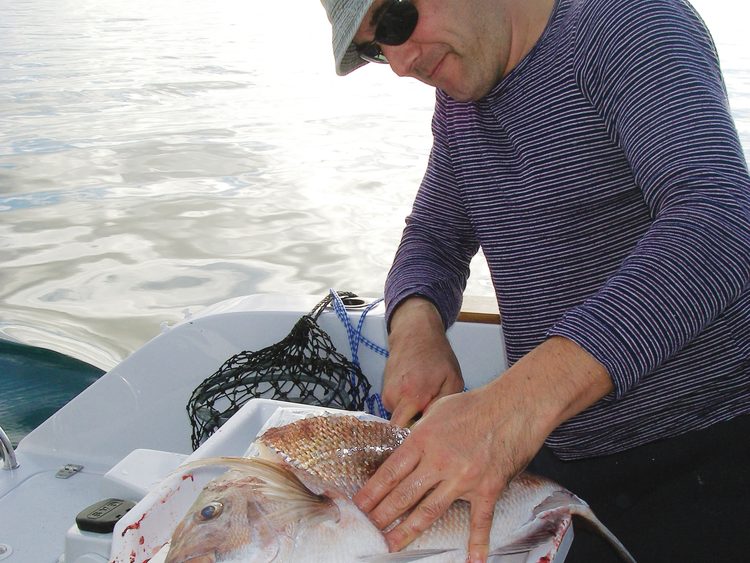
Bait/filleting board: With a small boat, my own preference is for a removable board that perhaps slots into one or two of the boat’s rod holders. These boards tend to be made from High-Density Polyethylene (HDPE), which is gentle on knife edges, highly durable, UV-stabilised, resistant to cuts and abrasions, and will not absorb fish odours or blood. Drain holes at the board’s rear allow juices, water and blood to exit into the sea. When filleting, I add a separate cutting board to raise the cutting surface above the bait-board’s moulded lip. This allows flatter cutting angles and makes skinning easier.
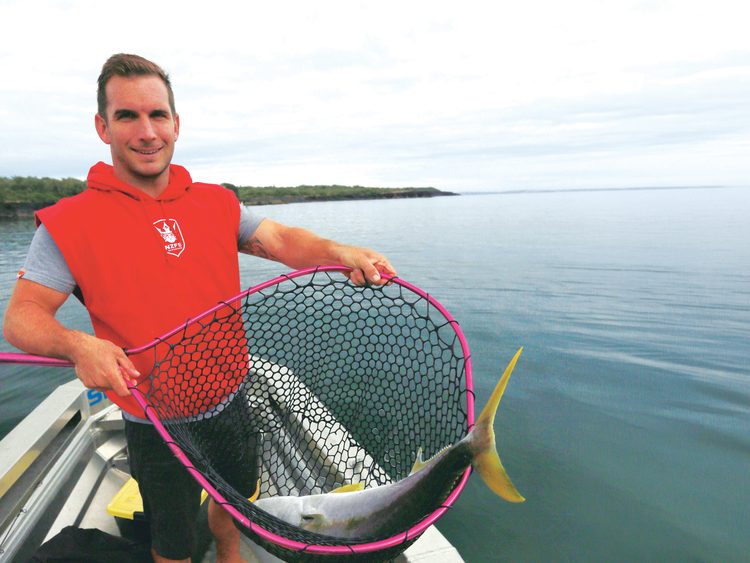
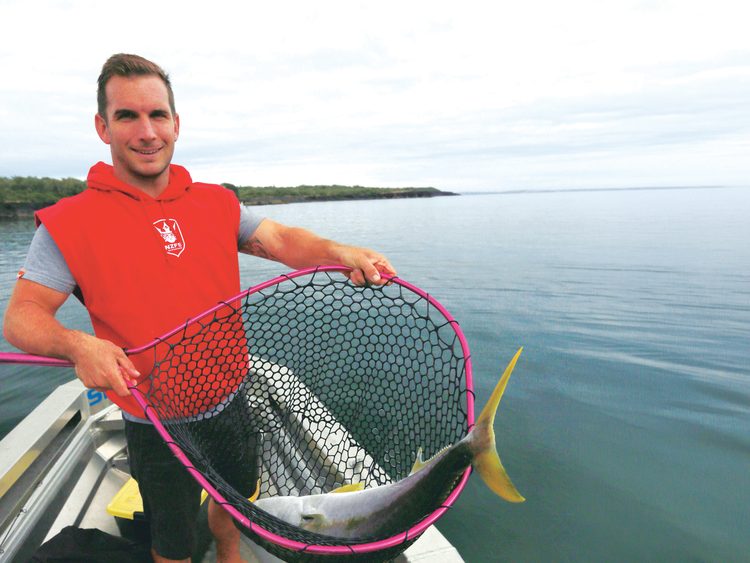
Gaffs and nets: A big scoop net fitted with heavy-duty rubber mesh usually gets the job done. It’s durable, kind on any fish destined for release, and seldom tangles with hooks. Even decent kingfish can be netted headfirst, grabbed by the tail, and then lifted over the gunnel. Telescopic and folding models occupy less space and don’t get in the way as much.
Nothing beats a gaff when it comes to larger fish, including kingfish, tuna and hapuku, but gaffed fish are coming home with you – gaffs are not for catch and release fishing unless the fish is carefully lip-hooked.
Tackle boxes: My gear is housed in several tackle boxes that vary in size depending on the tackle type/fishing style, with some having colour-coded latches so I know with a glance what’s inside. All the boxes are structurally strong and almost completely waterproof.
Smaller things
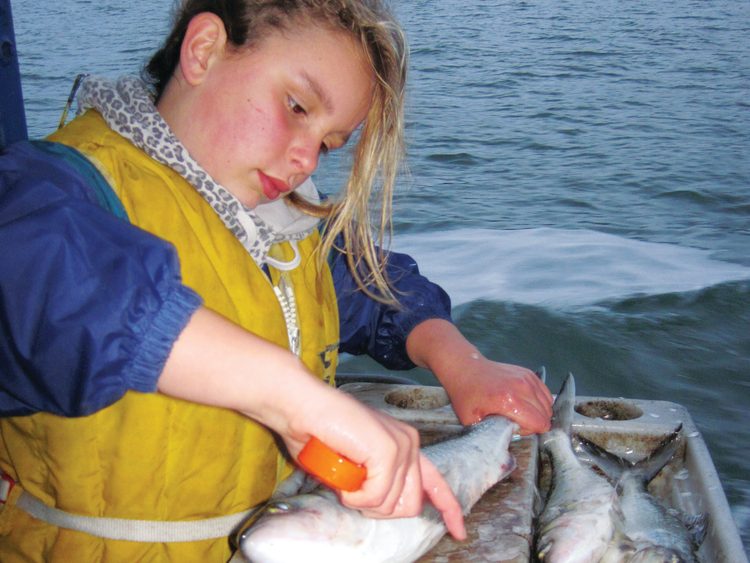
Scaler: It pays to remove the scales from kahawai and mullet before using them for bait. Some people like to scale their catch for cooking whole or with the skin on.
Hook removers: These can take many forms, from long-nosed pliers to long, slim, push/pull tools, but they should be stainless steel.

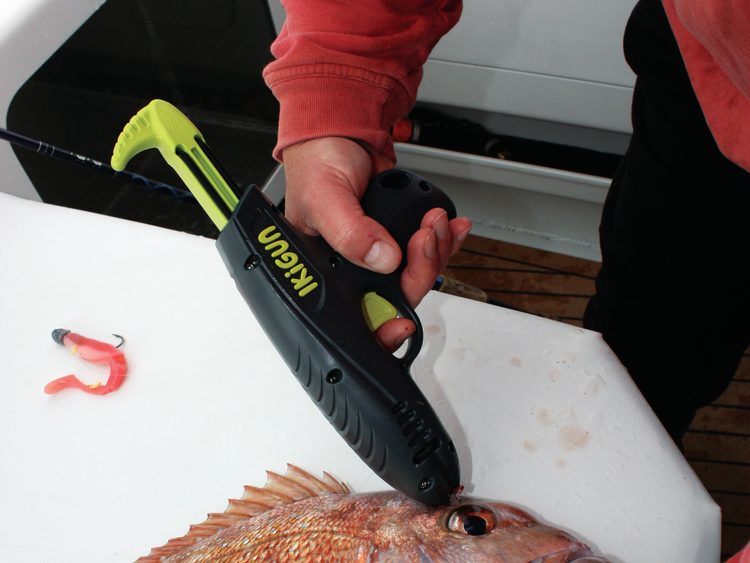
Iki’ spike: Fish should be killed as quickly and humanely as possible and a well-placed iki’ spike is perfect for the job. A dedicated iki’ spike doesn’t cost much, so don’t keep on using the tip of a sharp knife, it’s too dangerous!
Bait scissors: These large scissors can cut up strips of bait, but mine are also used to cut the gill latches of any fish I’ve killed for eating, bleeding them so their flesh is whiter and lasts longer in the fridge. However, bait scissors seldom cut braided lines – you’ll need specialist line snippers for that.
Gloves: Fishing gloves have many functions, but are mostly used while fishing with lures, providing protection from the sun and when handling fish. Gloves’ thin, stretchy materials dry quickly and provide good sensitivity, making them perfect for someone like me who doesn’t like putting on sunscreen. A buff/gaiter, sunglasses and hat complete my lotion-less sun protection.
Bait/safety/filleting knives: Most anglers are not great at maintenance, so any knives left on board should be stainless steel. Try to keep the safety knife sharp, because a lot might depend on it one day.
Bailer: My tinny’s bailer is a large plastic milk bottle with the base removed. It’s tied to my boat with cord and it works well, also serving as a ‘wee-wee’ container when conditions are a bit rough or if a crew member is shy.
Towels/cloths: These items are so handy for clearing condensation off windscreens, drying off seats, etc. as well as keeping anglers’ hands, gear and the boat itself clean by wiping away blood and mess.
Finally, make sure you have the usual safety equipment on board, including life-jackets, at least two forms of communication (VHF radio, cell phone, flares), and a PLB, along with a first aid kit and basic repair tools – you will appreciate the preparation one day!