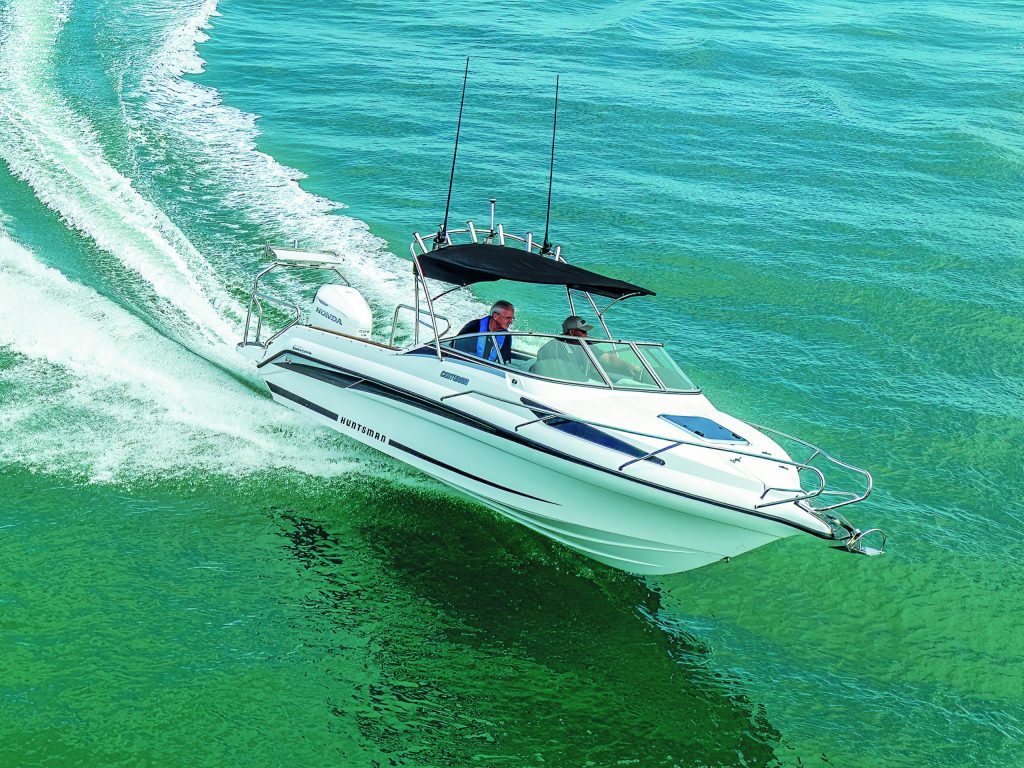
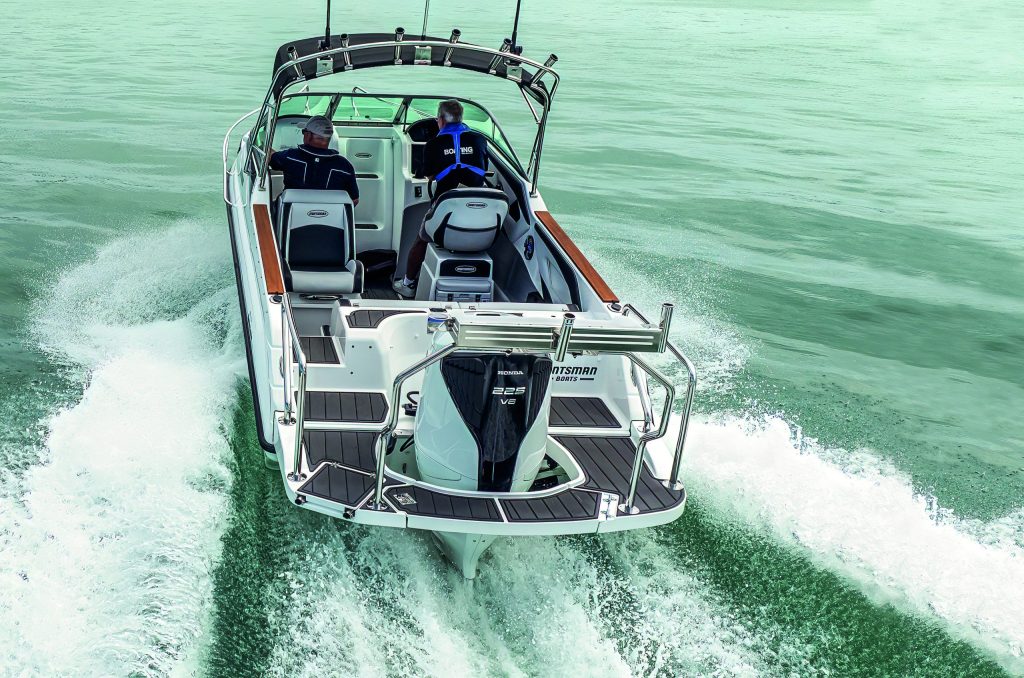
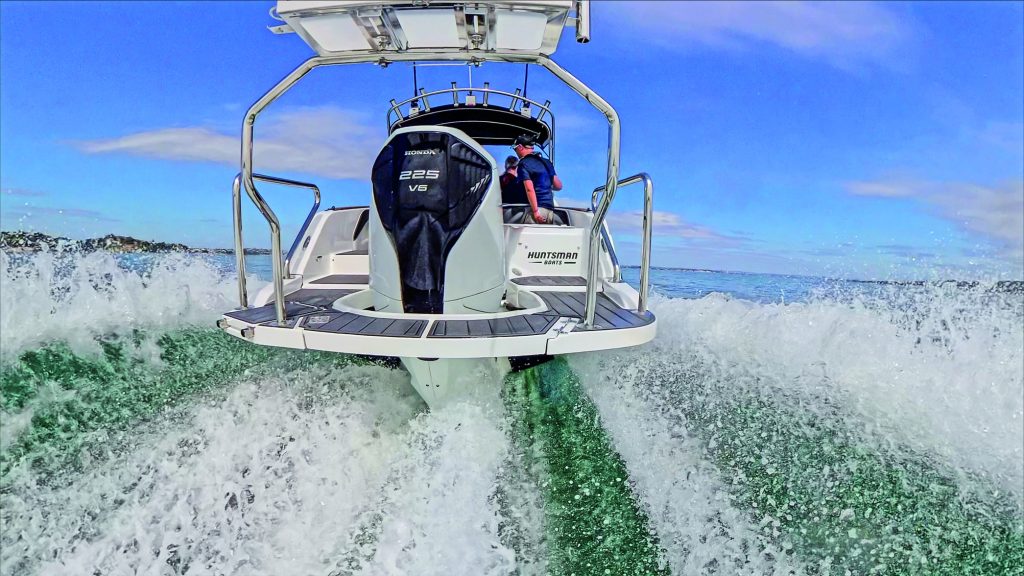
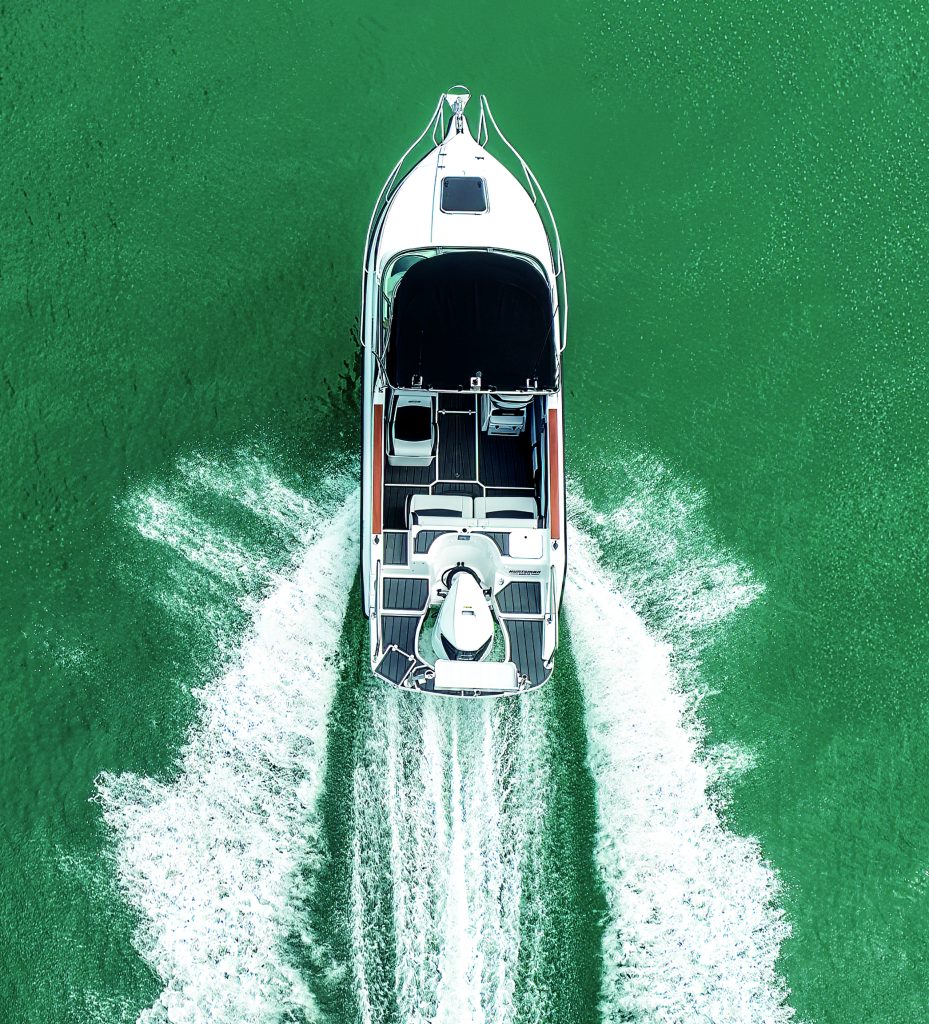
Introduced to New Zealand late last year, there are three engines in the new V6 range – BF200, BF225 and BF250hp. Our introduction to the line-up – the 225hp model – was bolted to the transom of a 6.5m CSB Huntsman Centurion. It’s a happy marriage – effortless, smooth, quiet – and when you open the tap, a responsive, exhilarating ride.
Anyone who’s followed Honda’s outboard evolution will remember the 2024 launch of the flagship BF350 V8. It quickly developed an enthusiastic following and most of the features it debuted have now migrated to the smaller siblings. These new V6s were the first to receive the upgrades – followed by the four-cylinder models (BF115, BF135 and BF150).
Drive-by-wire

There are far too many new features to explore within the confines of this article, so I’ll home in on my favourites. Chief among them is the new throttle/helm control unit that’s central to Honda’s Drive-by-Wire technology. It’s a side-mount model – slim, unobtrusive and ergonomically-moulded for a snug hand fit. Below the throttle lever itself is a five-button, multi-function panel, easily operated by your thumb.
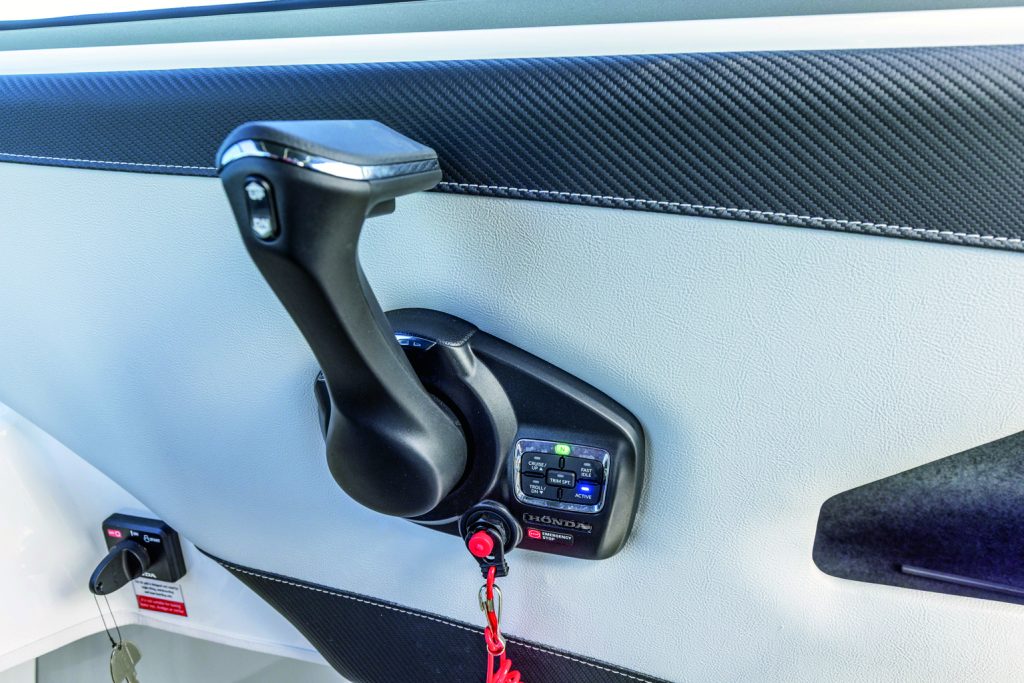
These buttons offer Automatic Tilt, Trim Support and Cruise Control functions. Automatic Tilt is designed for easily distracted boaties who forget to tilt the engine during retrieval (we’re all guilty). Trim Support helps to deliver the best trim setting for optimum performance. It’s particularly useful during holeshot: it automatically adjusts engine trim to the vessel’s changing ‘attitude’ during the transition from dead-start to plane.
A bit like a car, Cruise Control is a one-button operation for keeping the boat at a constant speed – but it can be set to either engine RPM or speed (a cool feature for anglers who like trolling or scouring the seabed in search of promising structures).

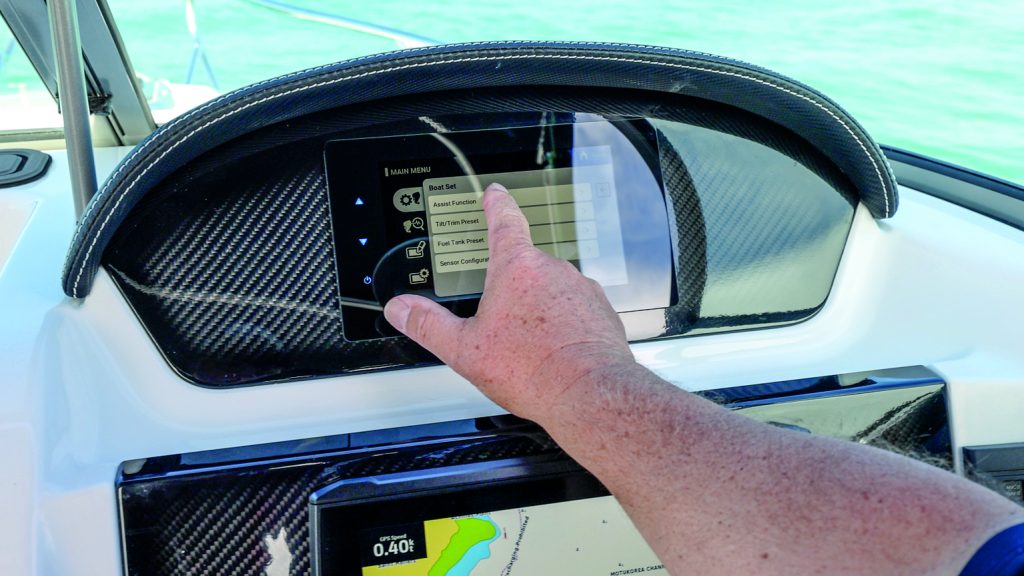
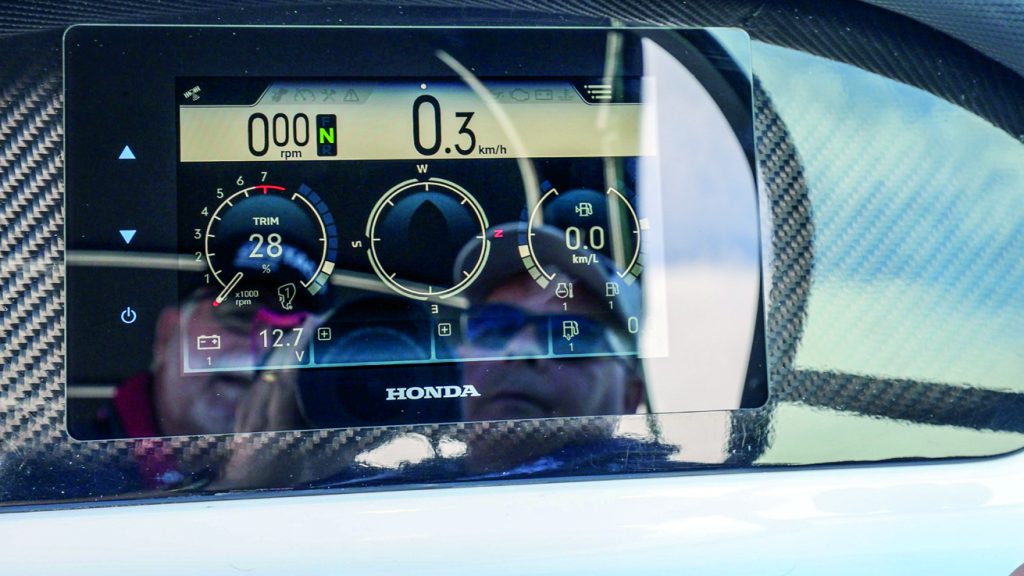
Selecting/adjusting those Cruise Control parameters is easy with Honda’s new high-definition 7-inch touchscreen (replacing the earlier 4” and 5” units). This unit, of course, also displays standard engine data (fuel consumption, temperature, RPM, alternator charge, battery level, etc).
The helm unit’s multi-function panel also features a prominent Neutral Indicator/Lock – a bright green LED to remind boaties that the engine is actually in Neutral – and not quietly inching towards to the jetty. This is very useful given the 225’s modest murmur at idle speed – the absence of sound cues can lead to embarrassing docking experiences…
What does it all mean?
Well, it’s another step along the ‘easier-to-operate’ theme that’s so prevalent in modern recreational boating. It makes running your vessel a lot simpler and stress-free. More freedom to concentrate on waypoints, sonar readings – and lure/reel selection. Features like Trim Support and Cruise Control also impact your wallet – a more efficient, smoother performance equates to better fuel consumption.
The Drive-by-Wire (DBW) technology is plug-n-play and simple to configure – particularly with the touchscreen and its drop-down menus. I should point out that DBW is an option with the new V6 engines. If you prefer mechanical controls, this is available (it’s a little cheaper). Even with the mechanical option, the engine’s integration with the new 7” display unit is seamless.
But, if you’re going to spend around $38k–$40k on a new engine, I’d recommend embracing the DBW option – the installation is clean, crisp and free of any hoses/cables, and it brings silky-smooth gear shifting. Twin, triple, and quadruple rigs are equally well served by DBW. You’ll need more helm controls, but once installed/configured, you can adjust speed from a single controller.
Mechanical upgrades
The fuel efficiency advantages of Trim Support and Cruise Control are boosted by the introduction of a new O2 (oxygen) sensor to the V6’s exhaust chamber. By monitoring the oxygen level in the exhaust gases in real-time (identifying mixtures that are too rich/lean) the sensor instantly adjusts fuel injection settings to compensate. In effect, a clever ‘feedback loop’ that optimises fuel efficiency and reduces emissions.
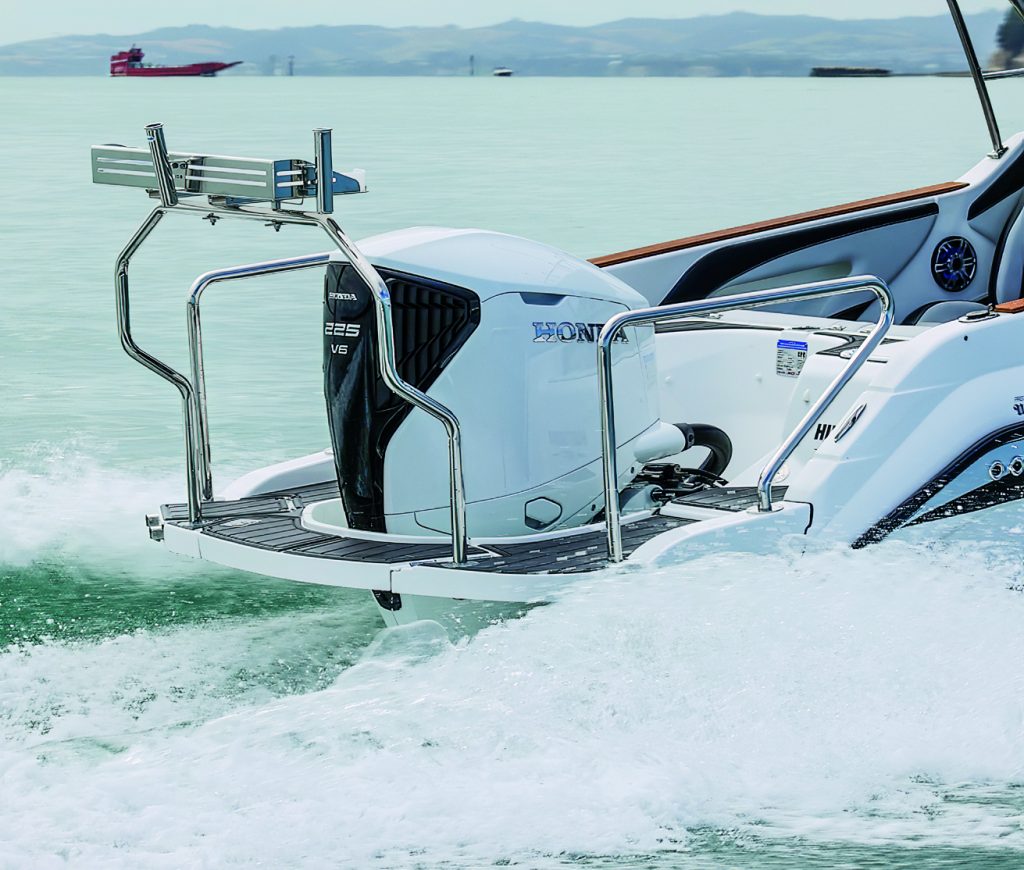
There are various other improvements. While the new cowling style complements any hull design, it reduces noise and the smoother airflow enhances engine cooling. Inside the engine, a new cylinder head (with a re-engineered combustion chamber) maximises combustion for consistent performance. The new cylinder head gasket also provides better water drainage, inhibiting corrosion.
A new, stronger starter motor mount (with a more rigid starter motor seal) brings a sharper, more consistent starting performance, and there’s a new oil pump to boost lubrication. An upgraded fit-and-finish schedule benefits high-rigidity parts such as levers and handles, boosting protection against the elements.
All of these add up to servicing benefits: valve adjustment intervals have been extended, and the iridium spark plugs last a lot longer.
These upgrades support Honda’s existing performance technology (retained on all engines). Features such as Boosted Low Speed Torque (BLAST™) that advances the ignition curve for better holeshot performance and Variable Valve Timing & Electronic Control (VTEC®) for smooth power delivery throughout the engine’s operating range.
Technology Migration
Honda enthusiasts are probably aware that the brand’s outboard evolution has benefitted enormously from the cross-pollination of technology within the empire. Many of the high-performance developments from an extensive racing heritage (MotoGP, F1, MotoX) – and massive automotive production – have migrated to the outboard engine sector. The V6 upgrades are a good example.
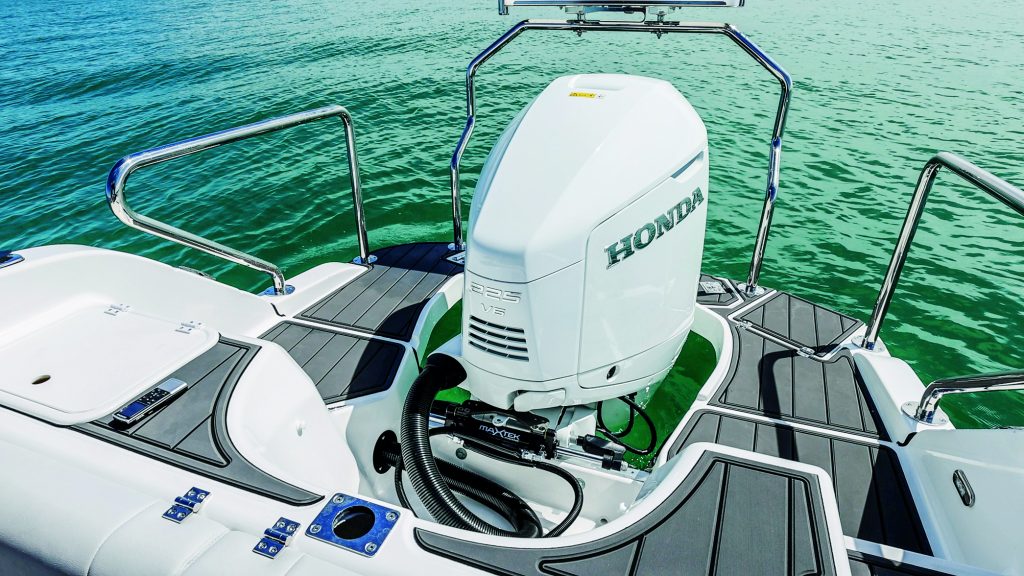
The new engines are available in the signature Honda Marine colours of Aquamarine Silver and Grand Prix White. They are National Marine Electronics Association (NMEA) 2000® certified and come with a three-year (commercial) and seven-year (domestic) warranty.
PERFORMANCE & FUEL CONSUMPTION
The consumption/performance you can expect from the new 225hp V6 is reflected in data from sea trials with the 6.5m CSB Huntsman.
With a full tank (175 litres) and three crew, the V6 propelled the vessel to a top speed of just over 41 knots. At a 23-knot cruise speed (3,500 – 4,000rpm) fuel consumption was around 25 litres per hour (just over a litre per nautical mile).
The engine was fitted with a three-blade Lexor stainless steel prop (15 1/2” x 17”).
|
RPM RANGE |
SPEED |
FUEL |
FUEL |
|
IDLE |
3.0 |
2 |
0.6 |
|
1000 |
3.2 |
4 |
1.3 |
|
1500 |
4.8 |
7 |
1.4 |
|
2000 |
6.3 |
8 |
1.3 |
|
2500 |
8.1 |
14 |
1.7 |
|
3000 |
15.1 |
17 |
1.1 |
|
3500 |
20.4 |
22 |
1.1 |
|
4000 |
26.0 |
28 |
1.1 |
|
4500 |
30.1 |
34 |
1.1 |
|
5000 |
30.4 |
35 |
1.2 |
|
5500 |
38.2 |
64 |
1.7 |
|
6000 |
40.7 |
80 |
2.0 |
|
6100 |
41.3 |
80 |
1.9 |
SPECIFICATIONS
engine type 3.6 litre (3,583cc) V6 four-stroke, 24 valves
bore & stroke 89mm x 96mm
full throttle RPM range 5,000 – 6,000
HP rating @ propshaft 225hp @ 5,500rpm
fuel delivery Multipoint programmed fuel injection
ignition system Microcomputer programmed
exhaust system Through hub
fuel 91 unleaded
alternator output 90 AMP
dry weight Mech: X Type: 284kg, U Type: 289kg
DBW: X Type: 286kg, U Type: 291kg
overall width 666mm
gear ratio 2.00:1
For more information visit: Honda Marine www.hondamarine.co.nz