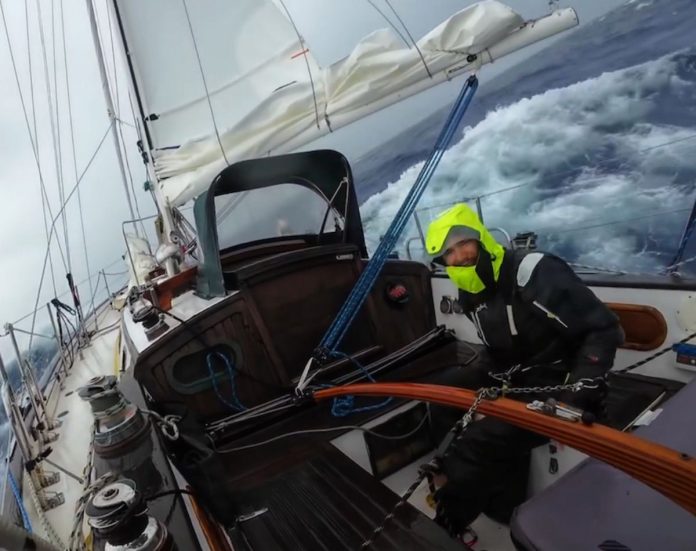
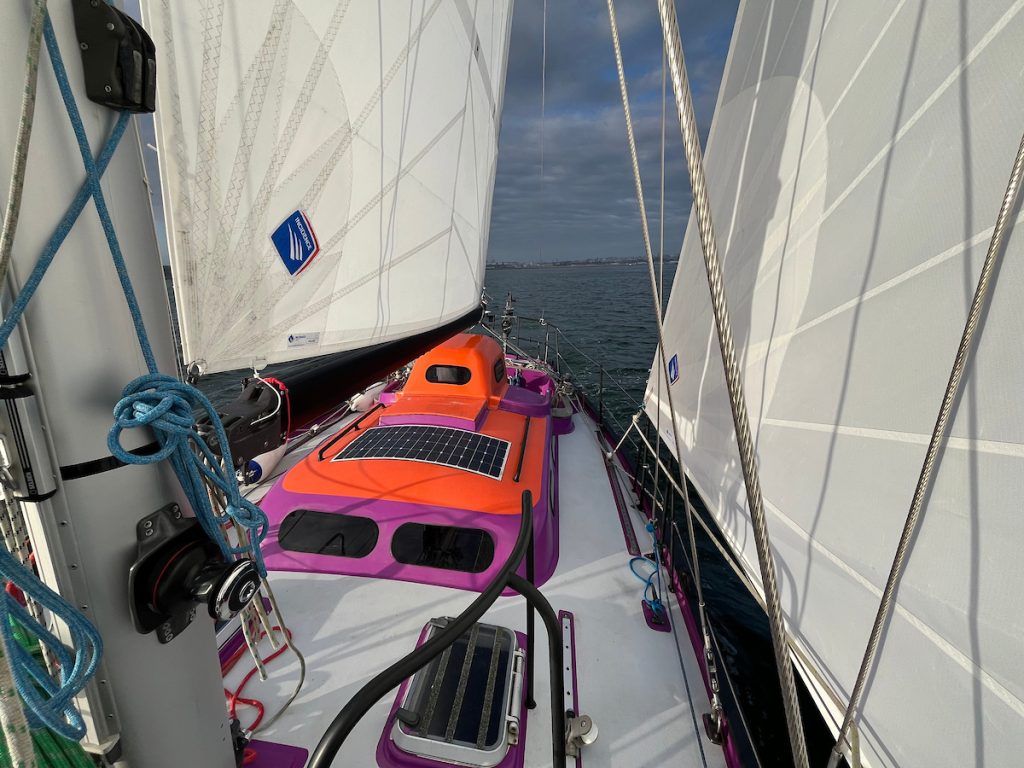
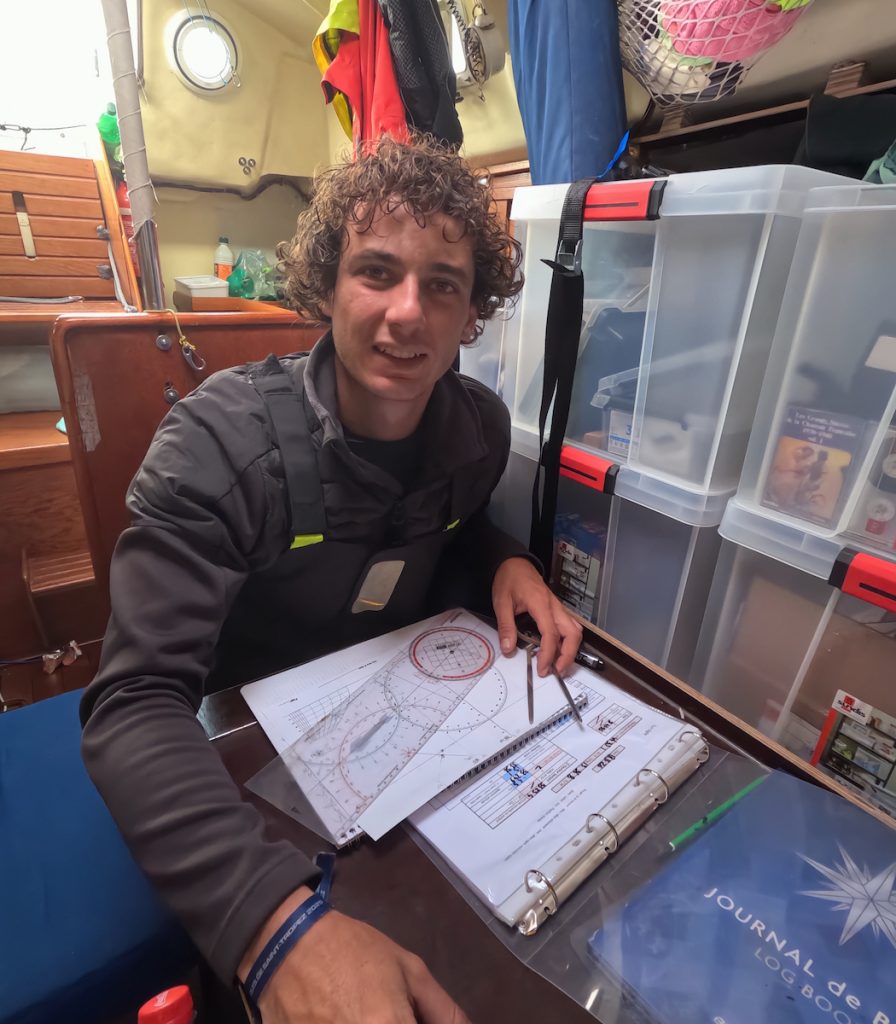
The rules make sure of that. Entrants sail identical-era yachts, production boats of 32 to 36 feet with full-length keels, designed before 1988, restricted to the equipment Robin Knox-Johnston had aboard Suhaili when he became the only finisher of the original 1968 Sunday Times Golden Globe Race. No GPS, no satellite navigation, no autopilots, no electronic instruments of any kind. Sextants, paper charts, wind vanes and a lot of self-reliance are what get a boat around the world, or don’t.
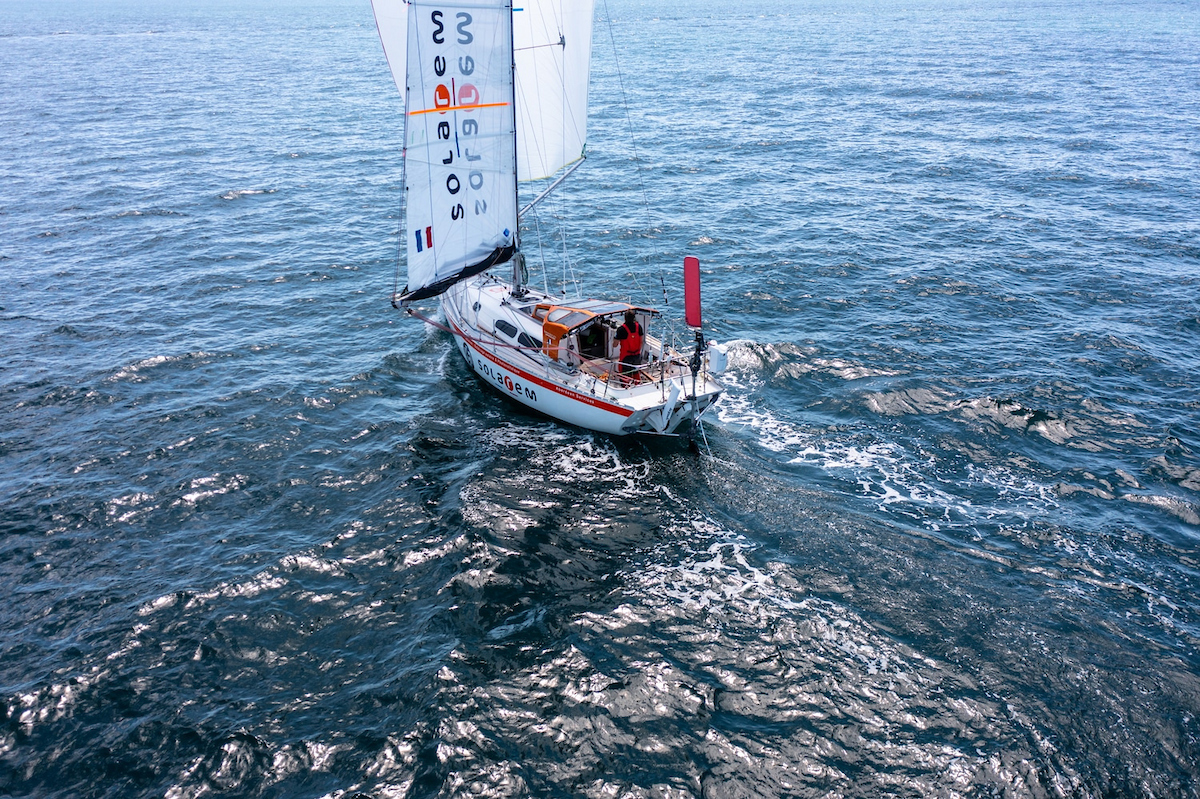
Damien Guillou, sailing Solarem, made his move early. As the fleet worked out of the Bay of Biscay into building headwinds on the second day, he pushed south for a cleaner angle around Cape Finisterre while much of the fleet held north waiting on a wind shift that never quite paid off. That single tactical call has shaped the entire first fortnight. Guillou has led every tracker update since, extending his advantage through a string of the fastest days in the fleet, and by the most recent snapshot had opened close to 100 nautical miles on Pat Lawless in second, aboard Silvermines Hydro.
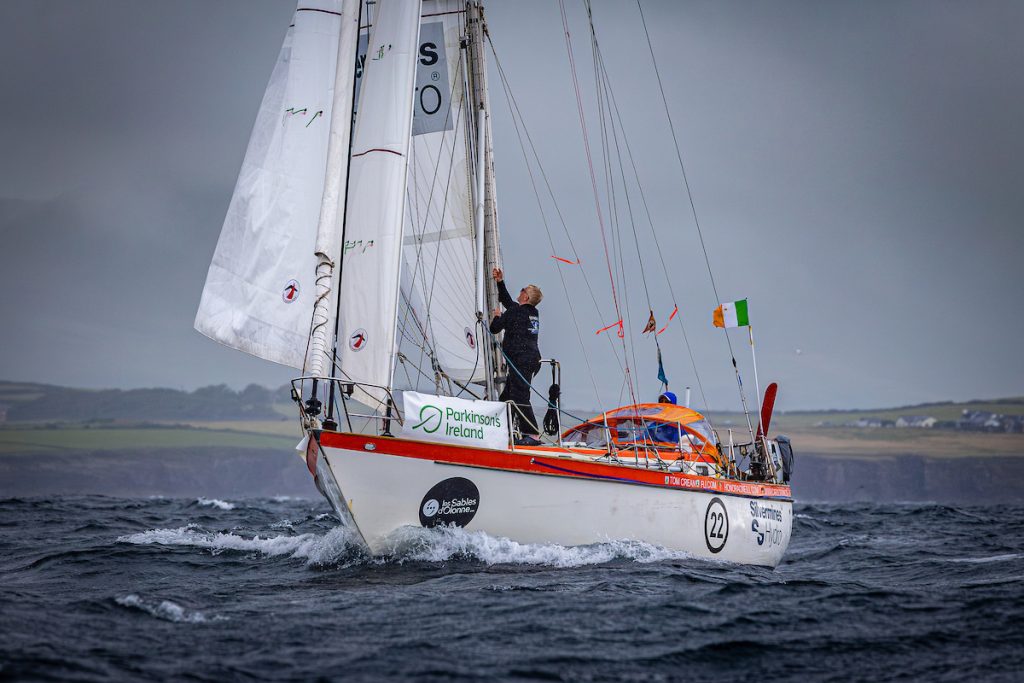
Lawless has clawed back real distance twice in the past week, once cutting a 60-plus mile deficit down to around 43 miles before Guillou answered with his best day of the race approaching Lanzarote. Both skippers reached the race’s first film-drop checkpoint, Marina Rubicón, within hours of each other in mid-September, both carrying unfinished business from 2022, when mechanical failure ended both their previous Golden Globe campaigns. Guillou marked the arrival by anchoring for an hour and climbing his own mast to replace a damaged spinnaker block sheave before sailing straight back out, well within the rules that allow unaided repairs but forbid outside help.
The battle for third has run closer than almost anything else in the fleet. Andrea Lodolo, Ertan Beskardes, Etienne Messikommer, Guido Cantini and Daniel Pinsky have spent much of the past week trading the position, sometimes by margins as small as one or two nautical miles on distance to finish. Boat speed hasn’t decided it. Beskardes overtook Lodolo at one point despite sailing nearly 90 nautical miles less through the water than her, simply by holding a straighter course, and the same thing happened again days later at the back of the fleet, where Pär Nyman passed Selim Yalçin with a similar deficit in distance sailed. Without GPS-plotted routing to fall back on, a straight line is worth almost as much as raw pace.

Two boats are now sailing under different circumstances entirely. Guy deBoer, aboard Spirit, retired from the main classification after a chain plate fitting on deck, flagged as a minor concern during pre-race inspection, began showing serious signs of stress on the passage to the Canaries. He made the call to stop himself rather than risk a structural failure at sea, and is now completing repairs in Lanzarote that will need to pass an independent survey before he’s allowed to continue, in the non-competitive Chichester Class. Selim Yalçin followed him into that class days later after his HF radio failed overnight, a piece of equipment the rules require, and diverted to Cádiz on the Spanish mainland to get it replaced.
There was a genuine safety scare too. Louis Kerdelhué’s boat suffered a spinnaker wrap a few miles off the Lanzarote coast, and with sails flogging and no response to hails from a passing yacht, his boat was reported to local rescue authorities as unattended and not under command. He’d been below deck the entire time and was never in danger, but it showed how quickly an ordinary sail-handling problem can look far more serious from the outside when a boat has no way to simply call in and explain itself.
Further back, Helga Marie “Mara” Løvenskiold Kveseth has climbed steadily through the second week without a single day that grabbed the headlines, currently sitting ninth after posting the fleet’s best 24-hour run more than once. Henry Wootton, who by his own account struggled emotionally with the opening days after years of preparation, has since turned into one of the fastest boats in the fleet.
As it stands, Guillou leads Lawless by roughly 100 nautical miles, with Lodolo, Cantini, Messikommer and Pinsky locked together barely a day’s sailing apart in the fight for third. The fleet is working its way down the West African coast in a narrow band of coastal breeze, with almost nothing usable further offshore, before the long run south toward the equator and the Southern Ocean begins. Two boats are repairing rather than racing. Fourteen are still going for the win.