Nine IMOCA monohulls will launch northbound in three weeks, chasing a sun that never sets. On 7 June, nine skippers will cross a frontier still unexplored in offshore racing history: the Arctic Circle. The Vendée Arctique 2026 is not just another race.
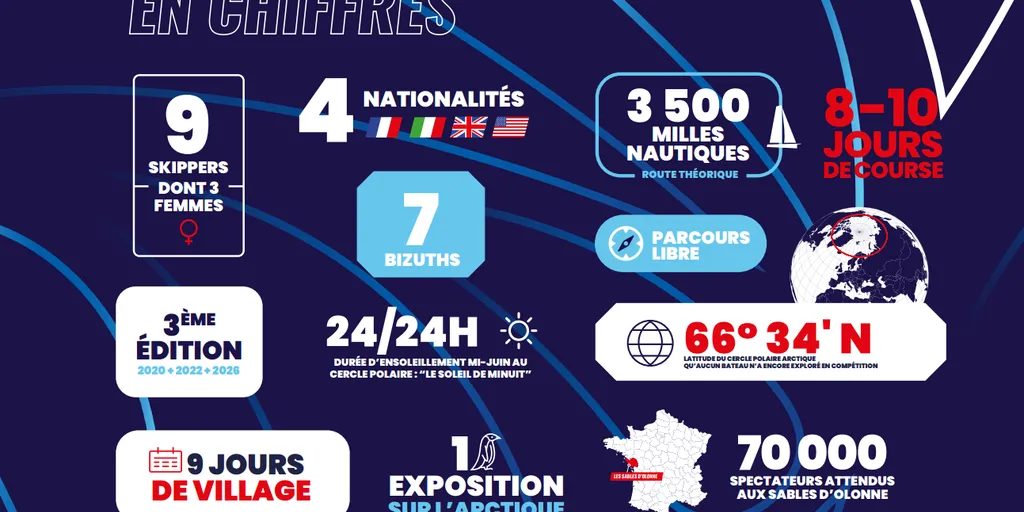
This third edition marks a watershed moment for the event. After its creation in 2020 during the Covid disruption and a committed second edition in 2022, the Vendée Arctique has evolved into something genuinely uncharted. The fleet will enjoy complete navigational freedom—no imposed route, no mandatory waypoints—while pushing north past 66°34′. For the first time, offshore racers will cross the Arctic Circle alone.
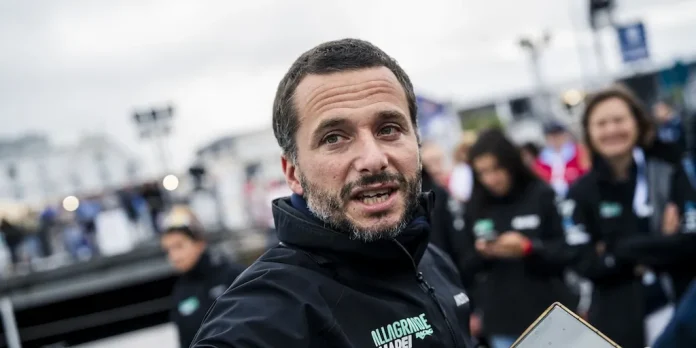
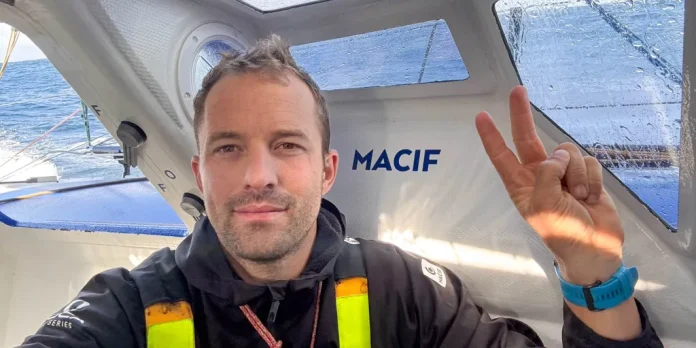
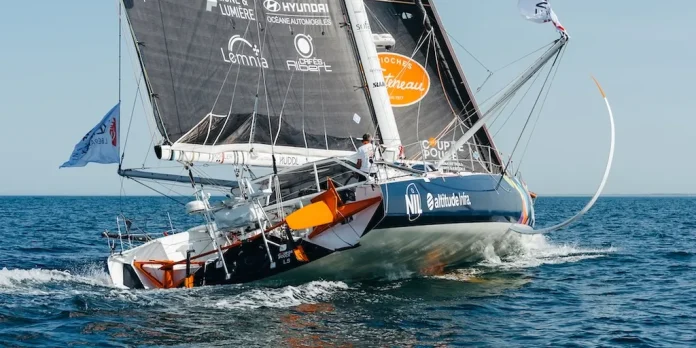
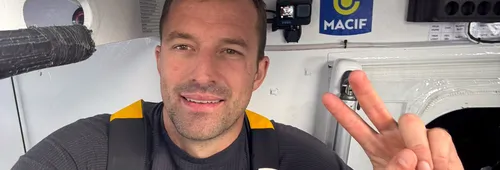
The nine skippers represent a deliberate but dense field. Italian Ambrogio Beccaria will sail Allagrande Mapei. France sends Arnaud Boissières (April Marine), Manuel Cousin (Coup de Pouce), Nicolas d’Estais (Café Joyeux), Corentin Horeau (Macsf) and Violette Dorange (Initiatives-Cœur). British-French sailor Sam Goodchild skippered Macif Santé Prévoyance. Italy’s Francesca Clapcich, racing 11th Hour Racing, carries American registry. Élodie Bonafous rounds the roster with Association Petits Princes–Quéguiner. Seven of the nine are making their Vendée Arctique debut—a striking statistic that underscores the generational turnover since the last Vendée Globe.
Three women line up at the start. Bonafous, Clapcich and Dorange embody three distinct trajectories, yet share identical stakes: cross the Arctic Circle, accumulate high-latitude solitary experience and build toward the 2028 Vendée Globe qualification cycle. That women comprise one-third of the fleet simply reflects how offshore racing now operates—equal boats, equal conditions, equal demands.

The course spans roughly 3,500 nautical miles, yet the actual distance is unknowable. With complete freedom of passage, skippers will craft trajectories according to weather systems, ice zones, exclusion areas and sea state. Some will gamble on direct runs; others will seek safer passages or superior conditions. The race could become the most strategically fluid event of the IMOCA calendar. In these latitudes, weather systems evolve at pace, depressions chain relentlessly across cold, unstable waters. Skippers will manage manoeuvres, cold and disorientation. Sleep will suffer.
The race should take eight to ten days—brutally fast, brutally intense. Come June, racers will navigate permanent daylight. Nuits blanches. An horizon that never extinguishes. The physiological toll of racing without darkness, without the body’s natural rhythm anchors, remains untested in offshore racing. Around the Arctic Circle, competitors will inhabit a territory still largely unexplored by solitaire sailors. No precedent exists. No established tactics. Just nine monohulls, a blank map and a boundary waiting to be crossed.