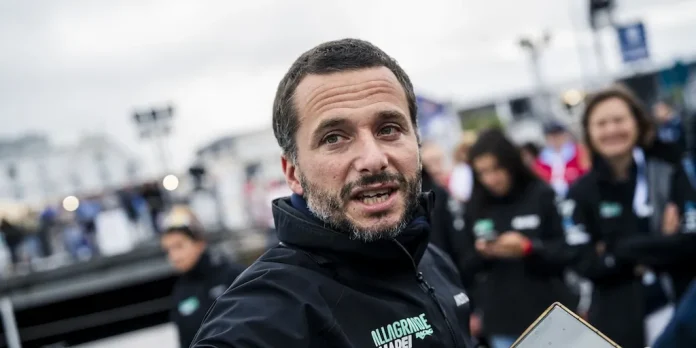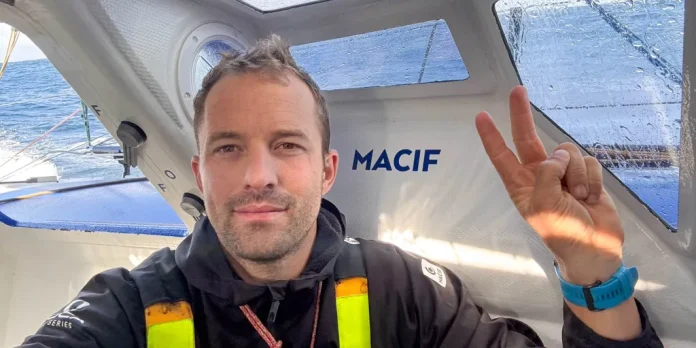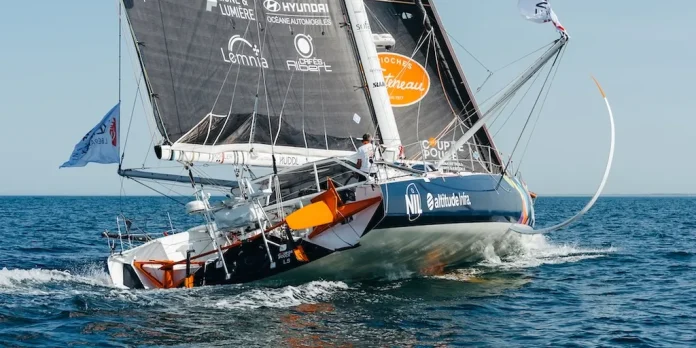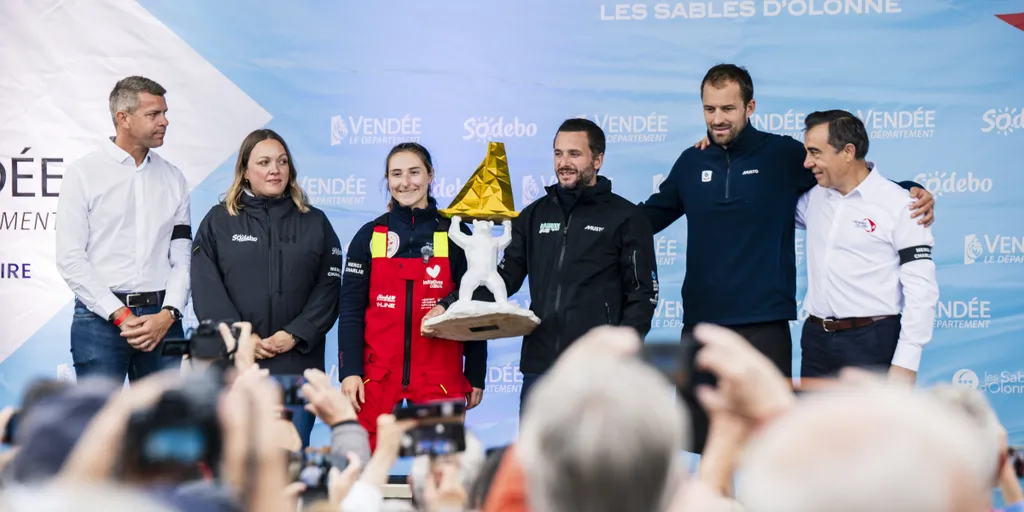
Nine IMOCA skippers departed Les Sables d’Olonne on 7 June for the third Vendée Arctique, a 3,190 nautical mile race to the Arctic Circle and back. When Ambrogio Beccaria crossed the finish line on 21 June aboard Allagrande Mapei, he’d pulled off a remarkable turnaround. Sam Goodchild, leading for much of the race in Macif Santé Prévoyance, had been caught and passed in the final miles. For New Zealand sailors tracking the IMOCA circuit and the path to the 2028 Vendée Globe, the race offered something rare: a genuine test without the extreme endurance of a circumnavigation.
The fleet was small but dense with experience. Four skippers had completed the Vendée Globe; five were tasting solitaire IMOCA racing for the first time. Three women competed. Four nations were represented. The race introduced a free routing element, allowing skippers to choose their own longitude when crossing the Arctic Circle. That shift moved strategy and weather reading back into focus rather than pure speed. The course also incorporated cetacean protection zones, weaving environmental responsibility into the sporting challenge.
On the water, the eight days delivered genuine drama. Goodchild had seemed set for victory, but Beccaria’s assault in the closing miles turned the race inside out. Violette Dorange claimed third in Initiatives Cœur, with Élodie Bonafous and Francesca Clapcich close behind. Nicolas d’Estais, Arnaud Boissières and Manuel Cousin all completed the course after demanding passages. Corentin Horeau retired from the race with damage to his MACSF boat.
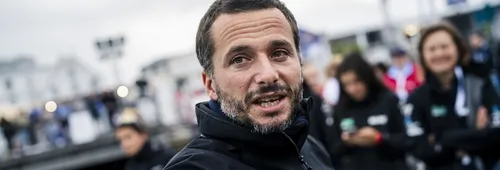
Goodchild described the experience as a “condensed Vendée Globe.” Bonafous summed up eight days more tersely: “We had it all—wind, calm, sea state, cold.” For the first-time IMOCA sailors, the race served as a shakedown cruise. For the veterans, it was a chance to test boats and tactics ahead of bigger ocean campaigns.

The village that sprang up on the Vendée Globe esplanade drew roughly 50,000 visitors over nine days. Drone displays opened proceedings. Skippers signed autographs. Florian Ledoux’s Arctic exhibition drew crowds. Ifremer and IPEV researchers talked polar science. Sponsor pavilions from Sodebo, Brioches Fonteneau and Hyundai hosted visitors constantly. Artist Julien Vrignaud exhibited works and engraved the trophies. Virtual Regatta let spectators take the start themselves, in simulation.
The race reached far beyond the pontoons. The official website logged nearly 820,000 visits. Social media carried the race to over 21 million views across video, photos and posts. Twenty-eight television channels broadcast the start globally. French media outlets and international press covered the story throughout.
Those numbers signal something solid: the Vendée Arctique has anchored itself in the calendar leading toward 2028. It sits comfortably between the club races and the ultimate test, offering skippers and audiences alike something in between.