In early 2013, boating journalist Steve Raea returned to Mexico’s west coast to rejoin a yacht he had purchased the previous year and prepare for another Pacific crossing. More than a decade later, his account provides a fascinating snapshot of offshore cruising before Starlink, before widespread weather-routing apps, and at a time when self-reliance remained one of the most important tools aboard any ocean-going yacht.
Originally published in 2013 and written by Steve Raea.
One thing Raea had learned when preparing for offshore was to listen to any nagging doubts washing about in his brain and to act on them. Years earlier, preparing for an offshore race from Auckland to Fiji, he had nagging doubts about the integrity of the yacht’s rigging. It looked fine and had done a good job of keeping the rig in place, so the task of replacing it kept getting moved down the to-do list as the race start approached. Needless to say, the rigging didn’t get a look in, and four days into the race the mast fell over the side of the boat.

That was the end of the race, of course, and a very expensive lesson in preparing for sea.
A similar thing happened when preparing for his first Trans-Pacific crossing in Alnilam, the Robertson 35 he had purchased in San Diego in 2006 and sailed home the following season. He had a nagging doubt about the integrity of the rudder bearings and had put dropping the rudder on his list of things to do. Again, the task kept dropping off the list and was eventually overlooked. His failure to act on his own intuition came back to bite him hard when the rudder shaft seized nearly 600 miles west of Mexico.
Over the course of two days he was able to free the shaft by pumping grease through an improvised gland, but the experience of hanging by his ankles in the aft lazarette hour after hour in a following sea was not one he’d want to repeat.
Thus, the nagging doubts he’d harboured for some months about the integrity of the thru-hull fittings on his current yacht got the better of him just as he was preparing to set sail south. Despite having had weeks to deal with this while his dearly beloved sat in a dentist’s chair in Mazatlán, he’d avoided the job and the expense of being hauled, telling himself they’d last the distance back to New Zealand.

He knew he was kidding himself. They probably would last, but the nagging doubt would kill him. A day out from the scheduled Sunday departure he called the boatyard at the marina and arranged to haul the yacht the next morning. The yard assured him they had replacement thru-hull fittings and the expertise to extract and replace them quickly. All going well, they’d drop him back in the water the following morning.
Up and away
Having your boat hauled by a travel lift is reasonably straightforward, but in Mexico it’s something of a cause célèbre: everyone wants a part of the action and completing the paperwork alone is a task in itself.
The attractive young Mexican woman at the travel lift office had Raea perform a half marathon returning to and from the boat for paperwork he never would have thought necessary for a simple haul-out. Passports, his and crew, ship’s registration documents, copy of deleted US registry, insurance papers, temporary import permit, and that was just for starters. She then required photos of the yacht, port side, starboard side and below the waterline. Gawping great gasps of air, he politely asked why all this was necessary. She smiled a knowing smile and said only that it was.
The next morning at the appointed hour he moved the boat around with the assistance of his new-found Australian friend Johnny and his Australian blue heeler attack dog, Billy. Billy is all class when he’s not biting Mexicans, but Johnny has a mouth on him just begging to be stuffed with a fender.
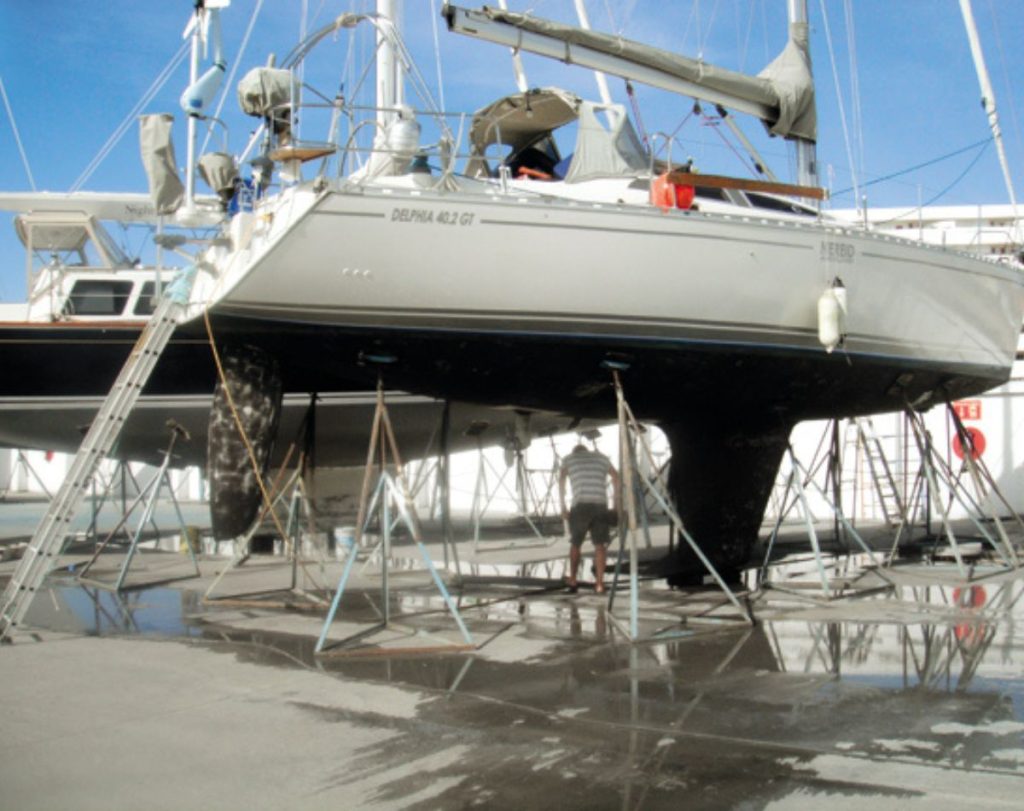
As they eased the boat under the 100-tonne travel lift, Raea looked up at the lift operator and almost had a turn. The face peering down at him was the same pretty Mexican señorita from the office. She smiled at them in her knowing way and began hauling them out with the precision of a surgeon. Apparently, their nearly eight feet of draft was a challenge calling for the utmost precision from the most highly-skilled operator.
Skilled she was, but Raea was thankful they were not being charged by the hour as the lift took a total of three and a half hours start to finish. Unfortunately, the Mexican lunch hour fell towards the end of the operation, and the boat sat in the slings for the duration. Any chance of splashing the next morning evaporated before his eyes.
This was another salient reminder of the machinations of Mexico time, and nothing would be achieved by beating his chest, so they resigned themselves to an extended stay in Mazatlán. Things, however, went rapidly downhill from there. The yacht’s thru-hulls are a metric size and those stocked by the yard were imperial, catering for the dinosaur American fleet. This meant further delay.
Rather than merely sit and wait for the parts, Raea decided to make himself thoroughly miserable by attacking the two most unpleasant jobs on the boat, the antifouling and the heads. The heads had never worked properly, just ask his dearly beloved, and the antifouling applied the previous season had been all but scraped away by his overzealous boat boy during the previous summer season.
Big bang theory
With the toilets in a thousand pieces and toxic antifouling dust swirling all around them, they decided to check in to a cheap bungalow in the heart of town. The silver lining was being in town for the spectacular opening cadenza of the annual Mazatlán carnival.
This was a fireworks display unlike any other Raea had seen. Staged in the historic downtown area of Mazatlán with its high cliffs dropping vertically to the sea, the area is a natural amphitheatre, amplifying many times the thunderous boom of fireworks.
The opening fireworks display and street party is the biggest event of the year and draws in hundreds of thousands of Mexicans and tourists. This year’s event was no different. A ticket to the main party area, a two-kilometre stretch of foreshore lined with stages, eateries and stalls, cost 30 pesos, about NZ$3.
Gaining access to the event, however, is a sideshow all of its own, with men separated from women as you approach the main gates. From there you’re herded down a line of about 50 heavily-armed Federal police who aren’t shy with a body frisk. Their sub-machine and sawn-off shotguns ensure complete compliance. These boys mean business and they’re there for a reason.
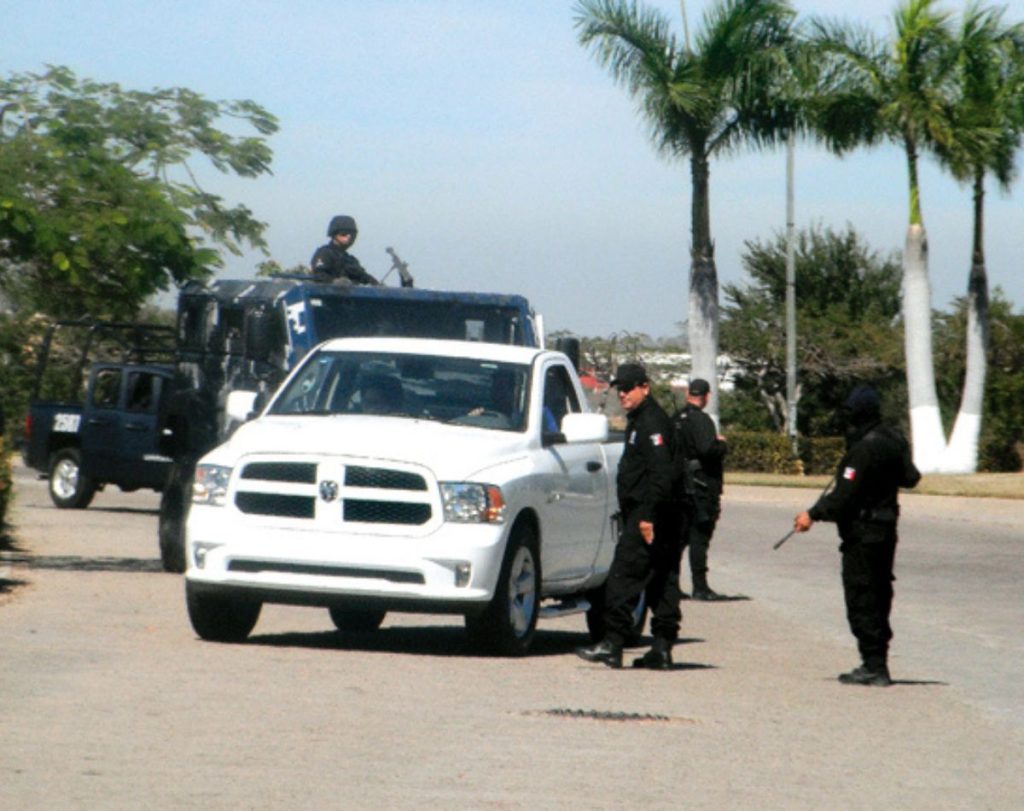
Once inside the compound the true size of the crowd becomes apparent and, according to TV, that year’s opening fireworks display drew in over 300,000 people. Imagine spilling out of the gates of Eden Park after a rugby test with fifty thousand fans. Now double that, and double it again, and throw in another hundred thousand people and you’ve got a party.
Just moving about is like being swept along by a strong current, unsure of where, or even when, you’ll pull free. It’s not for everyone but the atmosphere is electric and alive with a cacophony of every kind of music pumping from stages two storeys high.
Nothing happens early in Mexico and it was 11.30pm when, suddenly, the street and stage lights flickered twice and died. In the next moment you could feel your breath being sucked from your lungs by the explosion of fireworks. Seconds later the skies erupted in a sea of spectacular colour. The battle had begun.
Set off from opposite sides of a long crescent beach, the display is a re-enactment of a historic battle, each battalion fighting for supremacy through the choreography of fireworks. The display lasted a full 30 minutes and culminated in a grand finale easily rivalling New Year’s Eve fireworks on Sydney Harbour.
Night watch
Back at the marina, work on the hardstand progressed steadily if not quickly, and they were finally lowered back into the water seven days to the hour of coming out. The delay had eaten into their sailing plans and meant a non-stop sail from Mazatlán to Puerto Vallarta in order for Cherie, Raea’s partner, to make her flight back to New Zealand.
Being just over 200 miles, the sail south to Banderas Bay would take them past Isla Isabella, a world-class bird sanctuary, and the roadstead anchorages of San Blas and Chacala, both of which Raea had visited during his first Mexico cruise.
San Blas is an historic town, once a major centre of Spanish domination of the west coast of the Americas. It was in San Blas that the Spaniards built the vessels used for exploring the west coast of North America. Some of the town’s history is preserved in its old buildings and cathedral, but today it’s a sleepy, quaint village and home to the indigenous Huichol Indians who come down from the mountains to trade handicrafts.
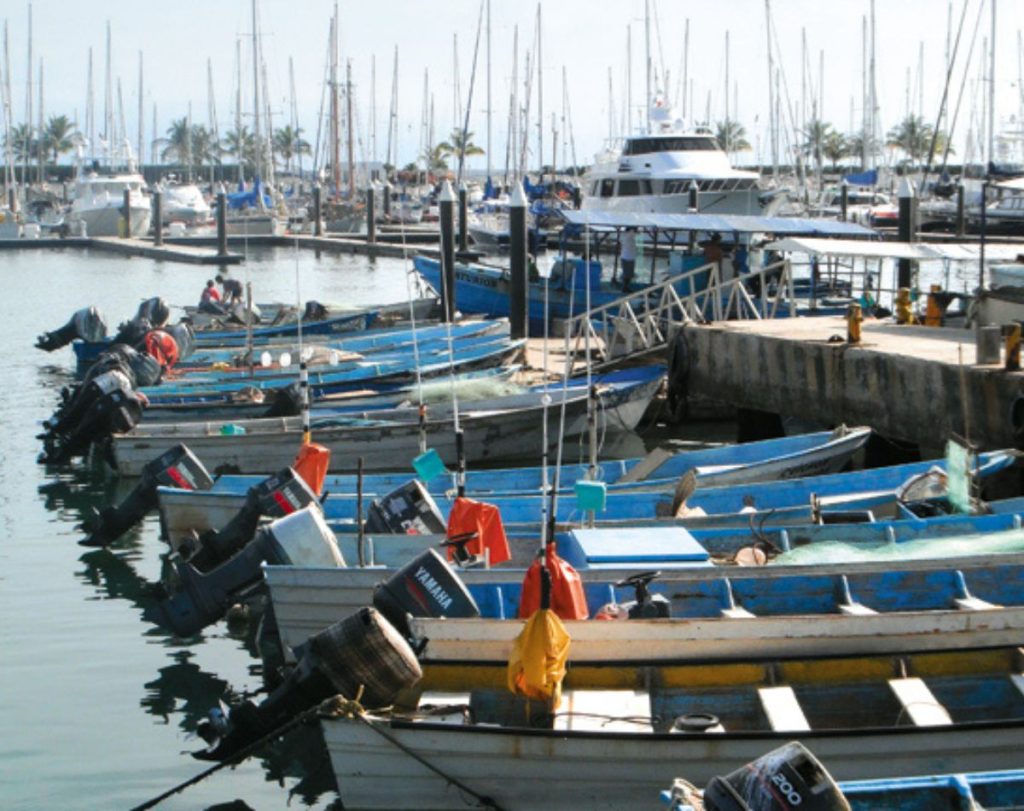
There is now a full-service marina in San Blas but few cruising yachts stay long, chased off by the ferocious mosquito-like no-see-um insects that come out at dawn and dusk, making life miserable for the unprepared. So small they’re invisible, the no-see-ums rip flesh using their teeth and these bites often become infected. Having been mauled by these insects once, Raea would rather take his chances with a shark.
With no option to avoid a night sail, they departed Mazatlán mid-morning and enjoyed an excellent fast downwind sail all day and into the early part of the evening, then the wind dropped away to nothing. They motored all night and through till late morning when they picked up a very light thermal breeze off the coast. They ghosted the last 20 miles to Punta de Mita at the northern tip of Banderas Bay and dropped the anchor.
Adventure playground
Banderas Bay, Bay of Flags, is the largest bay on the west coast of Mexico. The bay runs inland by more than 15 miles and it is open to the Pacific Ocean. Punta de Mita is low-lying and marks the northern tip while, 20 miles across, Cabo Corrientes is high and windswept. The bay is a major tourist destination and a cruising hub with a choice of four full-service marinas spread across La Cruz, Nuevo Vallarta and Puerto Vallarta. Each year, dozens of yachts assemble in the bay for the annual Puddle Jump, the 3,000-mile rally across the Pacific to the Marquesas Islands and points south-west.
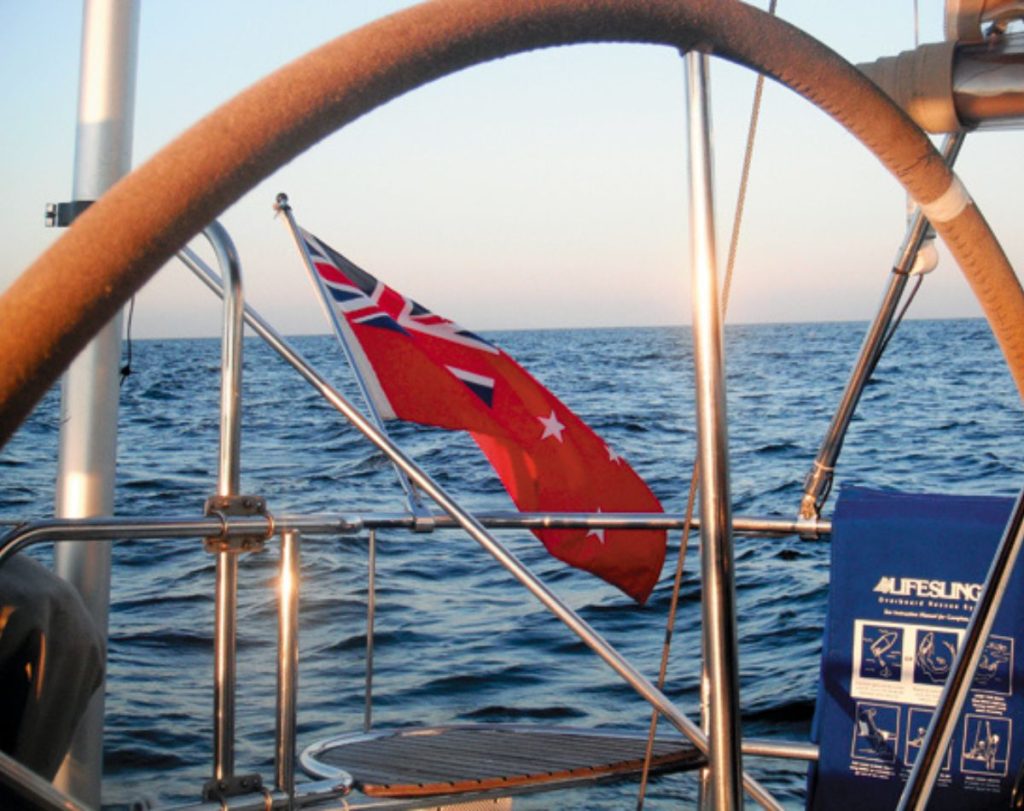
The bay is also the venue for the annual Banderas Bay Regatta, the largest sailing race-week in Mexico, which kicks off in late March and runs for a week. It’s part of the reason why Raea had chosen to base himself there until jumping off for the Marquesas in late April.
With the conveniences of a major city, Puerto Vallarta is the ideal place to provision for the crossing, but with city life comes city prices and a city pace that takes some getting used to. Marinas are expensive and good anchorages are few, but the deep waters of the bay provide excellent sailing and sea life. It is here that humpback whales come to calve and the bay literally teems with breaching whales, dolphins, turtles and the lure of big game fish.
Back to work
Alone on the boat for the next six weeks until crew flew in, it was back to work, completing the never-ending list of jobs that haunted him in the waking hours. There was the SSB radio to install, the watermaker to recommission, secondary pumps to fit and a myriad of other odd jobs lining two foolscap pages in the ship’s log.
This is the end of Part 3. Next: Banderas Bay Regatta – flying the Kiwi flag in Mexico’s biggest Race Week.