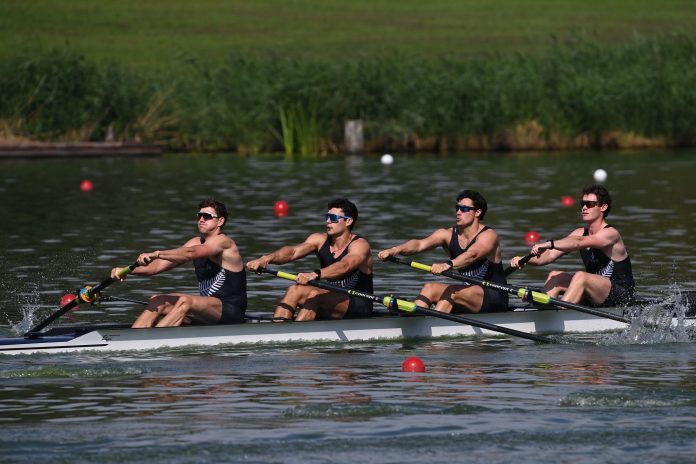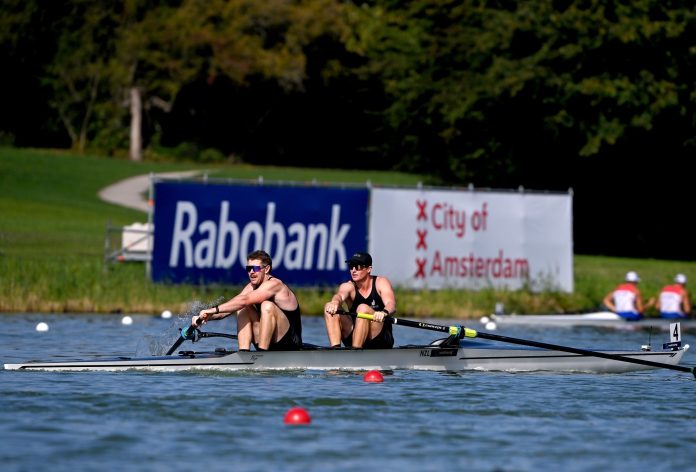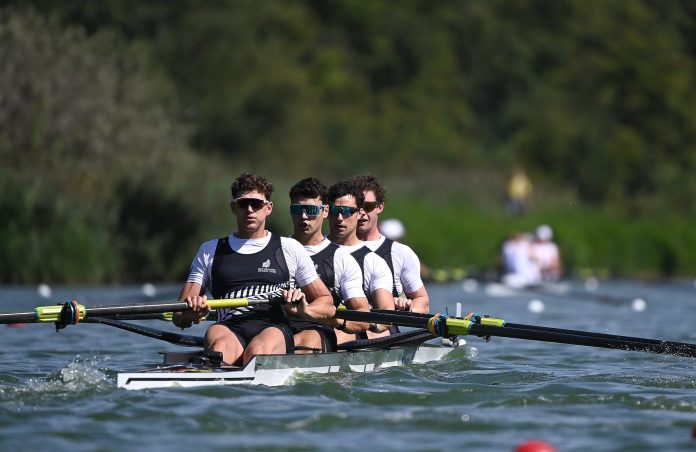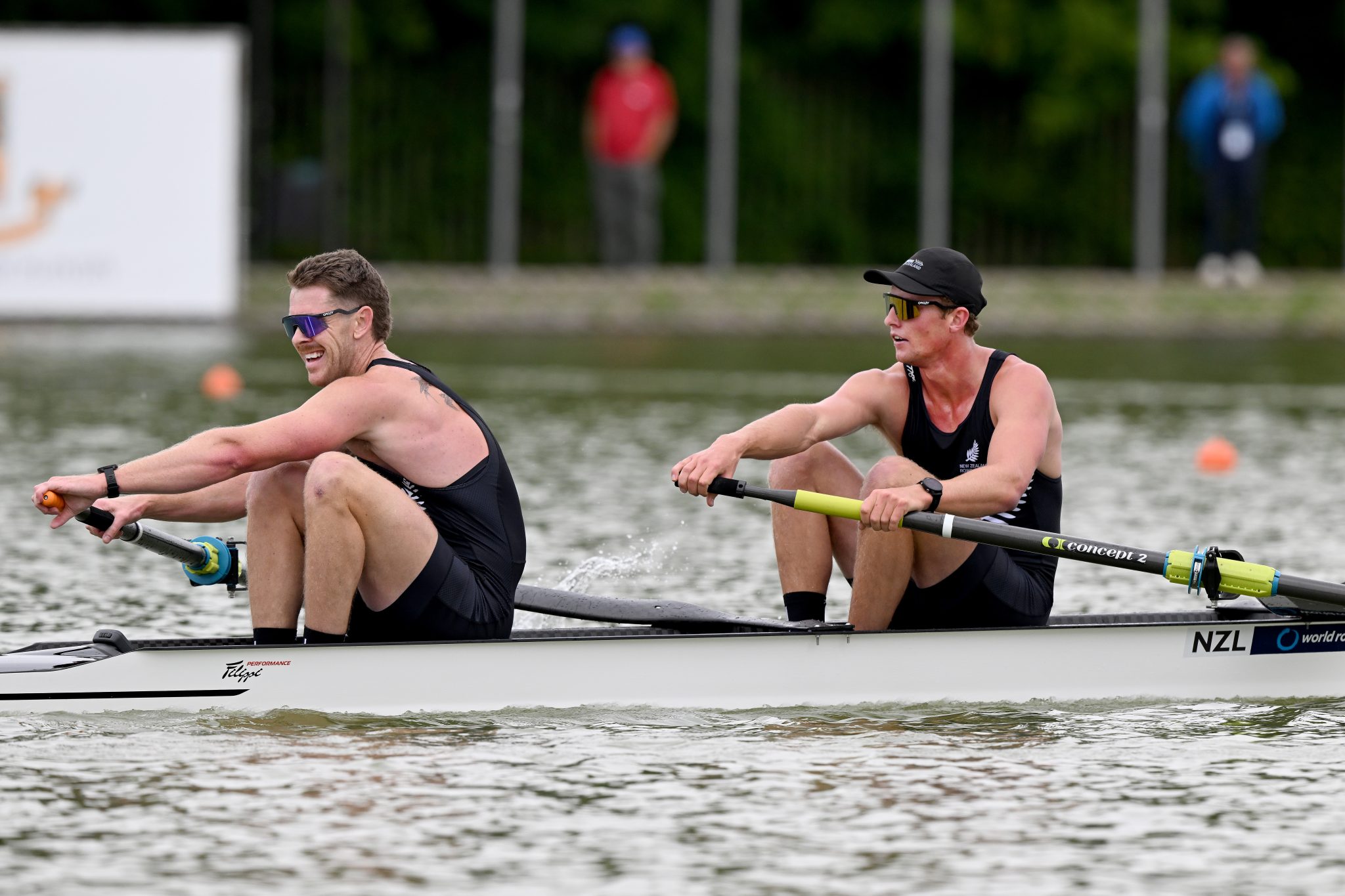
Ben Taylor and Oli Welch weren’t chasing ghosts in Plovdiv. They were simply rowing fast, and the comparisons to one of New Zealand’s most storied pairs came unbidden.
At the World Cup in Bulgaria, the emerging Men’s Pair combination stormed through their semifinal with a first 500m split of 1:30.28. That number conjures memories of Heat 1 at London 2012, when Mahe Drysdale and Eric Murray clocked 1:31 on their way to a world best time. The mathematics of elite rowing are unforgiving, and Taylor knew exactly what had happened.
“I knew it was fast,” he said after the race. “We thought we could improve that first K, so we went out there attacking it. So pretty happy.”
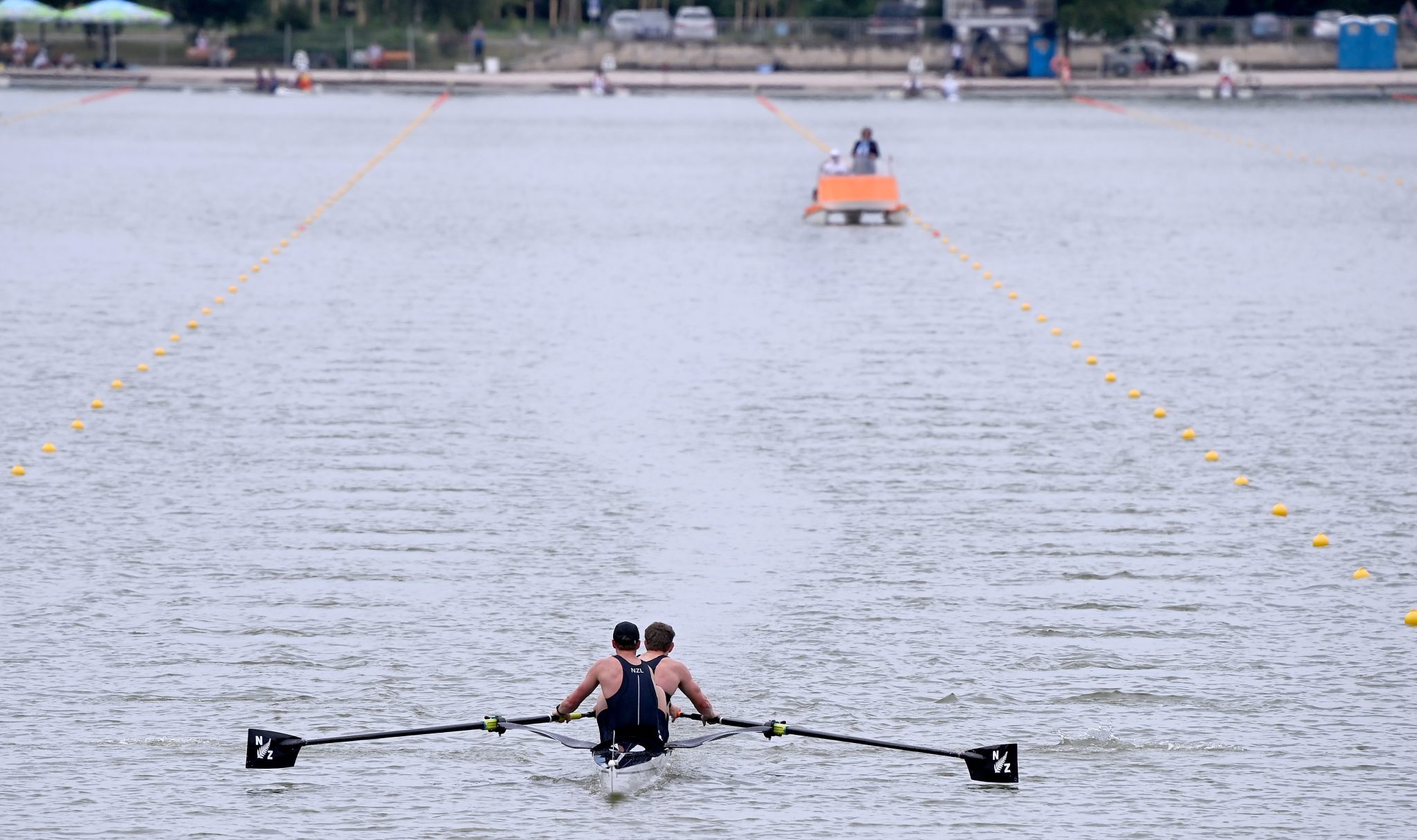

The pace didn’t hold through the middle stages. At the 1000m mark, Taylor and Welch were two seconds down on the Bond-and-Murray template. Conditions had shifted, and Taylor made a deliberate call to abandon the time chase. “It was there, it was a thought but one I had to quickly shake,” he recalled. “I didn’t think we were really on for achieving that.”
They finished in 6:23.00 with the race already won, easing to a controlled 1:43 final 500m at 32 strokes per minute. Not a world record attempt. Just a clean, professional advance to the next round.
What matters is the ceiling these two have revealed. Taylor acknowledges the pair sense their own potential but won’t be drawn into hunting it. “We’re trying to keep chill about it though,” he said. “We both deep down know that we could go really fast when we get it right and get the right conditions. It’s something we want to let happen when it comes rather than start chasing it.”
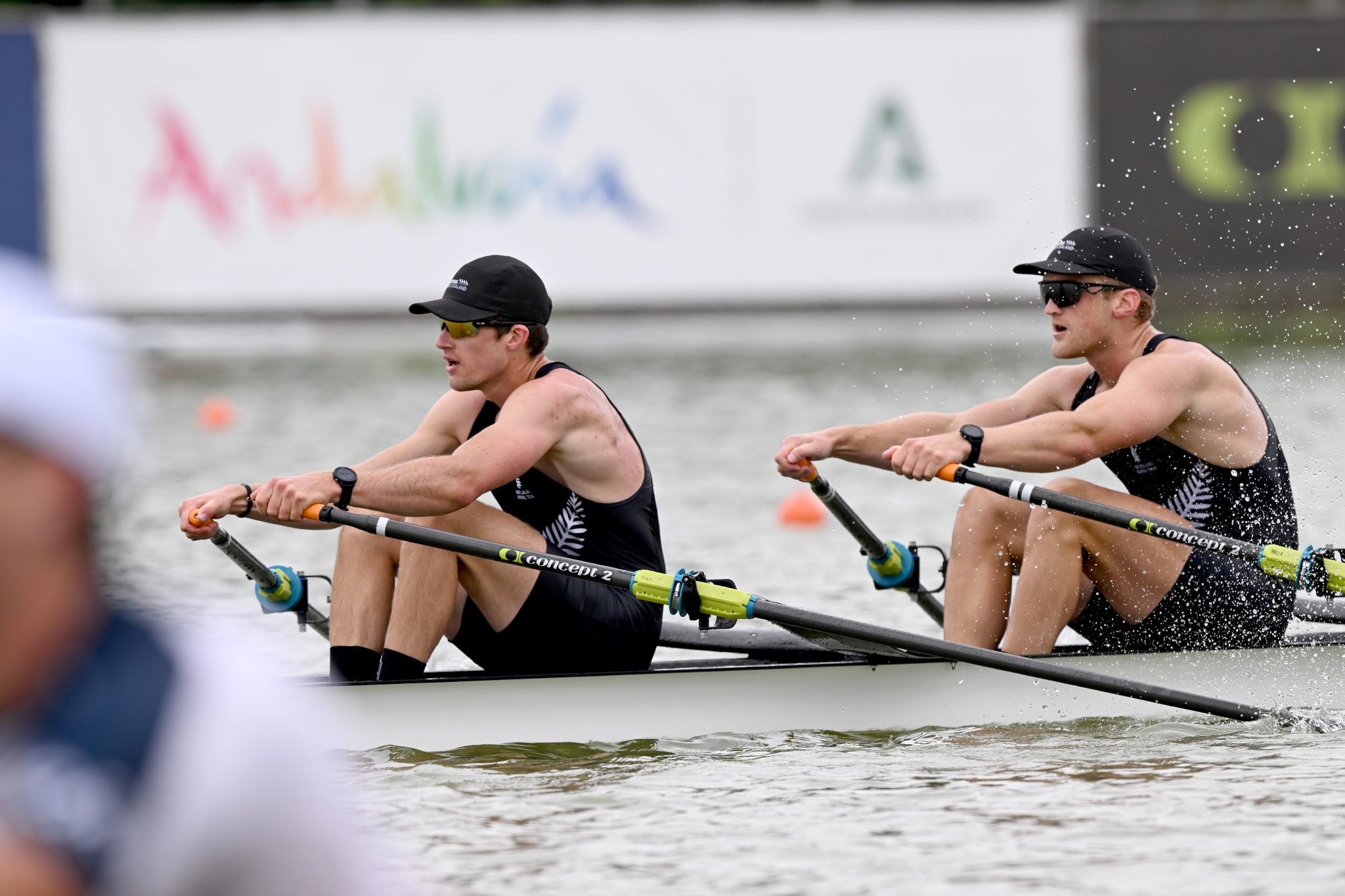

That discipline reflects maturity beyond their years in the pair. Too many emerging crews sabotage themselves by reaching for the headline time too early.
Elsewhere in Plovdiv, the Men’s Double Sculls of Finn Hamill and Ben Mason rediscovered their form after a flat showing in Seville two weeks prior. They won their semifinal by two seconds against the USA, clocking 6:14.82. The pair made adjustments—”a bit of a panic rig” and position swap—but remained genuinely uncertain what sparked the turnaround.
“Honestly, we’re probably just as confused as to why we were going slower at the first regatta as why we’re going faster now,” Mason said. “We just kinda trusted it, I suppose, and it’s magically going faster again.”
Their A Final target was straightforward. “Go out and see if we can win the whole thing. Take all the glory,” Mason added. “We got a bronze and a silver last year, so it’d be pretty unreal to get a gold at a World Cup this year.”