The following editorial, Synergy protects our seas, appears in Surveillance Volume 53, Issue 2 (pp. 3–4), published by the Ministry for Primary Industries.
Surveillance is MPI’s authoritative quarterly publication reporting on New Zealand’s biosecurity health status across animal, plant and aquatic environments. In this piece, three authors from Earth Sciences New Zealand and Biosecurity New Zealand make the case that protecting Aotearoa’s marine environment from invasive species requires more than vigilance. They describe how two programmes, the National Marine High-Risk Site Surveillance (NMHRSS) programme and the Marine Invasives Taxonomic Service (MITS), operate in tandem to detect and confirm non-indigenous species at New Zealand’s highest-risk ports and marinas. Since 2002, the NMHRSS programme has identified 24 new-to-New Zealand species and 268 range extensions. MITS underpins that work with authoritative taxonomic identification, including molecular methods, for specimens that cannot be reliably identified in the field. The authors argue the two services are fundamentally inseparable, and that increasing vessel traffic and changing ocean conditions will only deepen the need for both.
Synergy protects our seas
Kiwis unfamiliar with MPI’s and Earth Sciences New Zealand’s (formerly NIWA) work in Aotearoa’s marine environment may wonder how invasive species are spotted amongst the huge area and wide variety of the country’s coastal habitats. Protecting the marine environment from non-indigenous species depends on more than vigilance alone; it requires a coordinated biosecurity system where public awareness, policy, science, expertise and innovation are interlinked. Two cornerstones of this biosecurity system are the National Marine High-Risk Site Surveillance (NMHRSS) programme and the Marine Invasives Taxonomic Service (MITS). Together, they form a complementary partnership. The NMHRSS programme focuses on early detection at high-risk locations, and MITS provides the taxonomic certainty needed to underpin confident, defensible management action.
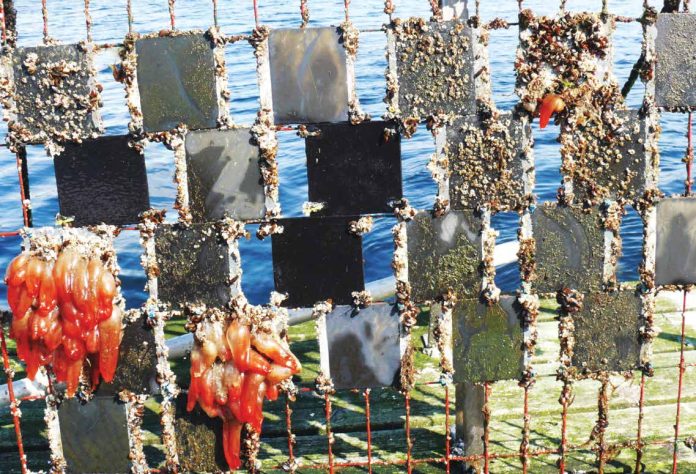
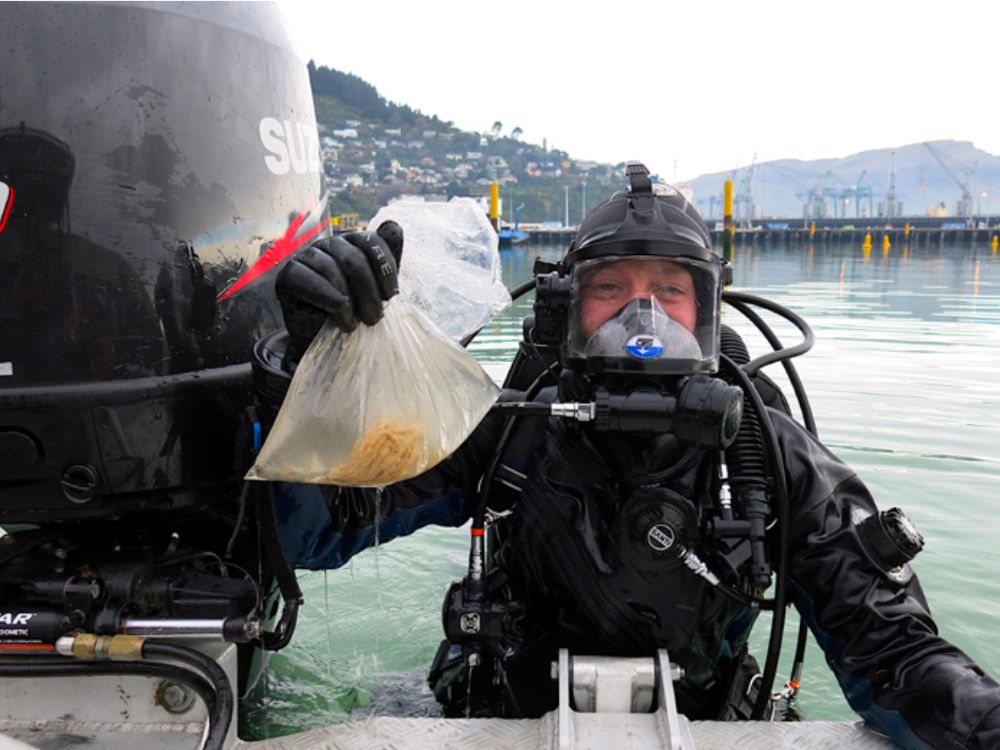
The NMHRSS is a programme of surveys focused on the early detection of high-risk marine non-indigenous species at 12 high-risk ports and associated marinas around the country. Surveys are designed to detect the presence of non-indigenous and potentially invasive marine flora and fauna. They particularly target species that have documented impacts internationally. The programme also aims to monitor changes in the distribution of established non-indigenous or pest species at these high-risk locations, and to inform regional marine biosecurity.

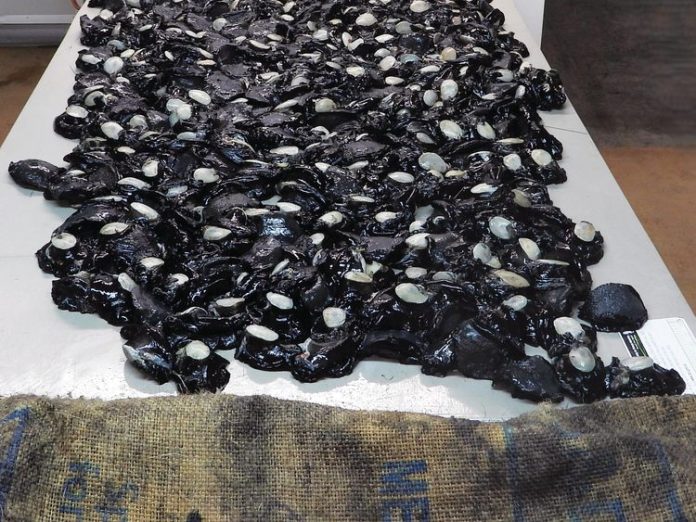
The five primary target species, not currently known to be present in New Zealand, are the Northern Pacific sea star Asterias amurensis, European shore crab Carcinus maenas, the marine aquarium weed Caulerpa taxifolia, Chinese mitten crab Eriocheir sinensis and Asian clam Potamocorbula amurensis. These species would likely affect our environment, economy or societal values if they were to establish in New Zealand. There are also four secondary target species that are locally present in various places around New Zealand: the Asian bag mussel Arcuatula senhousia, Australian droplet tunicate Eudistoma elongatum, Mediterranean fanworm Sabella spallanzanii and clubbed tunicate Styela clava.
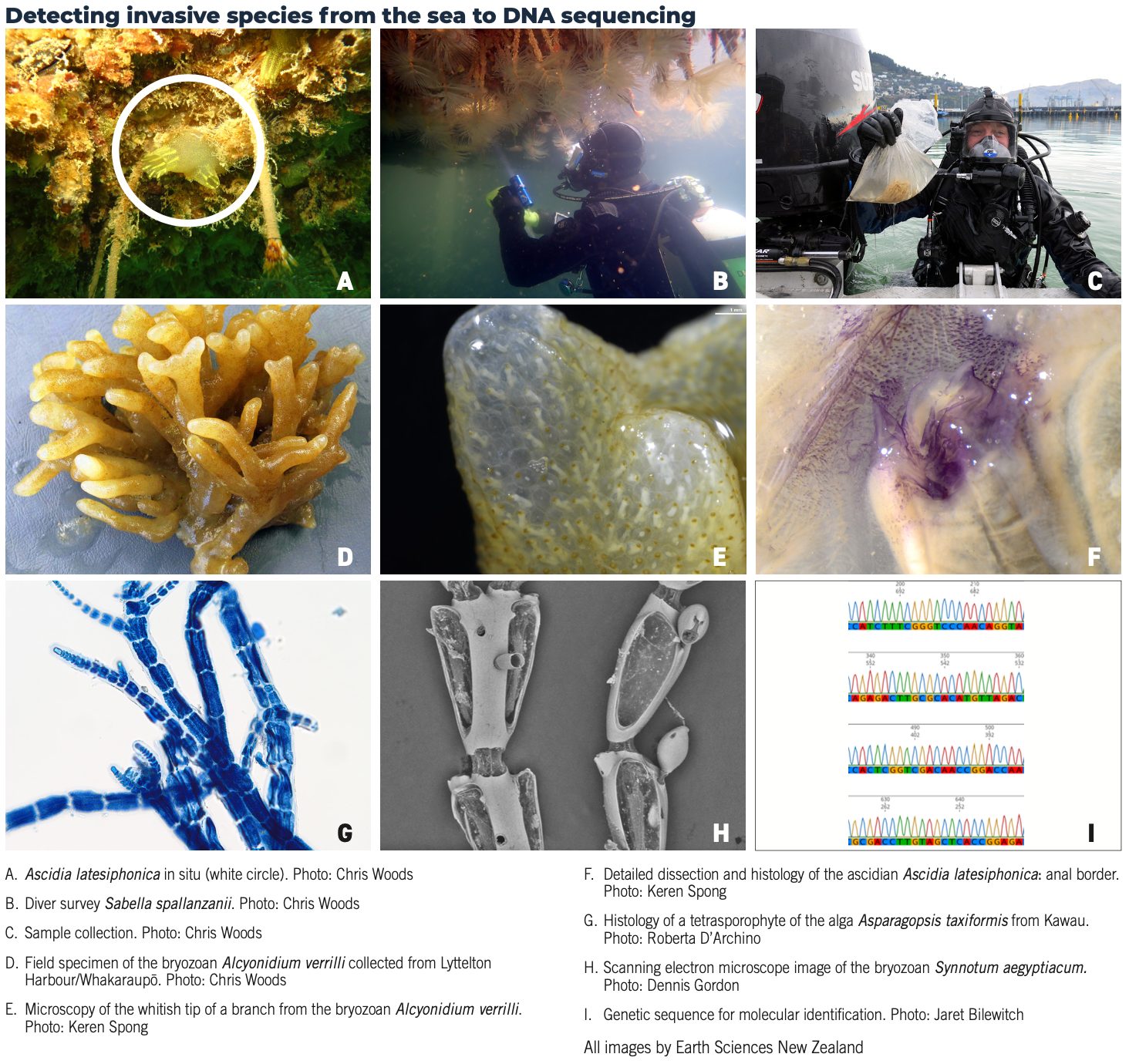
First implemented in 2002, the programme has conducted 42 seasonal (winter and summer) rounds of surveys. To date, 24 new-to-New Zealand species and 268 range extensions of established non-indigenous species have been detected during NMHRSS surveys. Prompt, location-specific and taxonomically verified reporting of such detections to national and regional authorities has facilitated numerous incursion management responses.
This flagship biosecurity programme has helped create an effective and experienced national ‘standing army’ of marine biosecurity staff within Earth Sciences New Zealand. Their specialist expertise is utilised across a wide range of marine biosecurity actions by both MPI and regional authorities. In addition, Māori partner, stakeholder and national/regional authority participation in NMHRSS programme surveys has facilitated development of capability across the wider national biosecurity network. By continuing to invest in the NMHRSS programme, we help to keep our frontline active surveillance at high-risk ports and associated marinas efficacious and robust.
The Marine Invasives Taxonomic Service (MITS) is a quiet but indispensable pillar of New Zealand’s biosecurity system. Accurate, authoritative and timely identification of marine organisms underpins every effective response to incursions, and MITS provides that scientific certainty. Unidentified suspect samples collected through active (such as the NMHRSS programme) and general surveillance (for example, public reports received via MPI’s exotic pest and disease hotline and online notification system) are sent to MITS for identification. By maintaining taxonomic expertise across a wide range of marine taxonomic groups and delivering defensible identifications, the service ensures suspected non-indigenous species are recognised early, when eradication or containment may still be feasible. All confirmed identifications are recorded in a dedicated database for future reference, strengthening national institutional memory. In a country whose economy, culture and biodiversity are so tightly bound to the ocean, this capability is a necessity, not a luxury.

MITS and the NMHRSS programme are fundamentally interdependent – you cannot have one without the other. Surveillance provides the eyes on the water, but without MITS it cannot deliver certainty. Samples collected through the NMHRSS programme go to targeted collections focused on priority species, or organisms that appear unusual, unfamiliar or out of place. As a result, specimens are often those most likely to represent new or previously unrecorded species in New Zealand. They may be cryptic, damaged or at life stages that make reliable field identification difficult or impossible. To resolve this uncertainty, MITS applies integrated taxonomic approaches that combine the expert judgement of specialist taxonomists with molecular methods, ensuring robust, defensible identifications even for challenging or novel material. This close linkage means surveillance is not merely about detecting what is present, but also about correctly knowing what it is and turning observations into evidence that supports proportionate, timely and effective biosecurity decision-making.
Looking ahead, the importance of the NMHRSS programme and MITS will only grow. Increasing vessel traffic, changing ocean conditions, and the spread of species into new ranges will place greater demands on identification and diagnostics. Future biosecurity will require faster turnaround times, stronger links between traditional taxonomy and molecular tools, and trusted reference services that decision-makers can rely on under pressure. By continuing to invest in and evolve both the programme and the organisation, New Zealand strengthens its ability to protect marine ecosystems and respond with confidence to the biosecurity challenges of the future.
Dr Serena Keeler
Marine Biologist, Marine Biodiversity
Earth Sciences New Zealand
Dr Chris Woods
Marine Ecologist, Marine Ecosystems & Biosecurity
Earth Sciences New Zealand
Abraham Growcott
Principal Adviser Aquatic Surveillance
Diagnostic, Readiness and Surveillance Directorate
Biosecurity New Zealand, Tiakitanga Pūtaiao Aotearoa
Ministry for Primary Industries/Manatū Ahu Matua
abraham.growcott@mpi.govt.nz