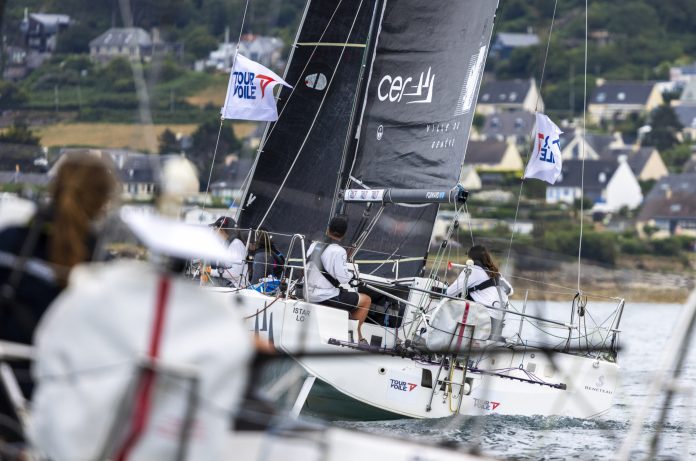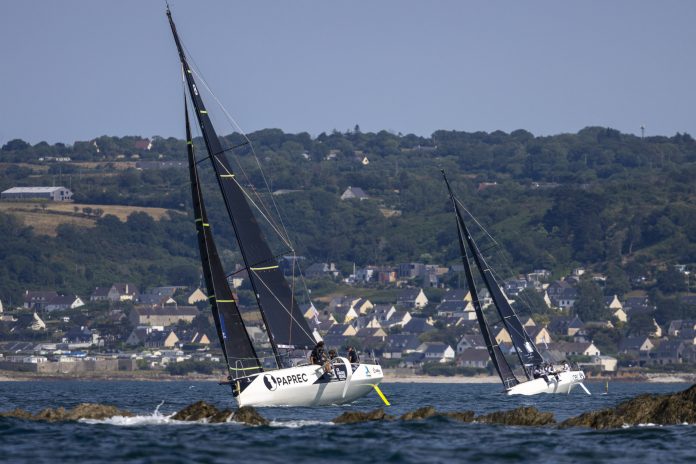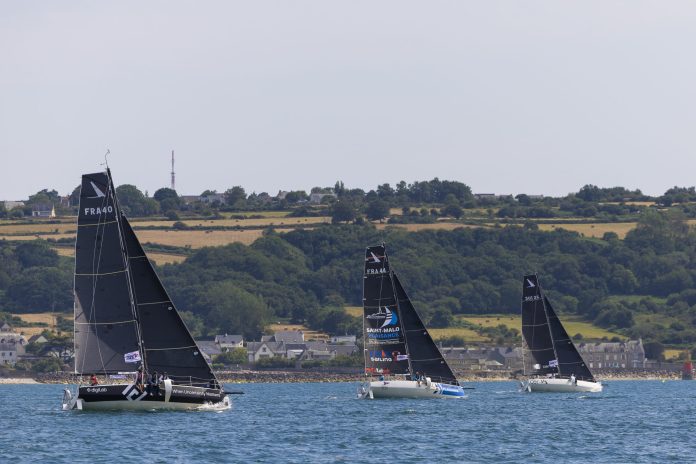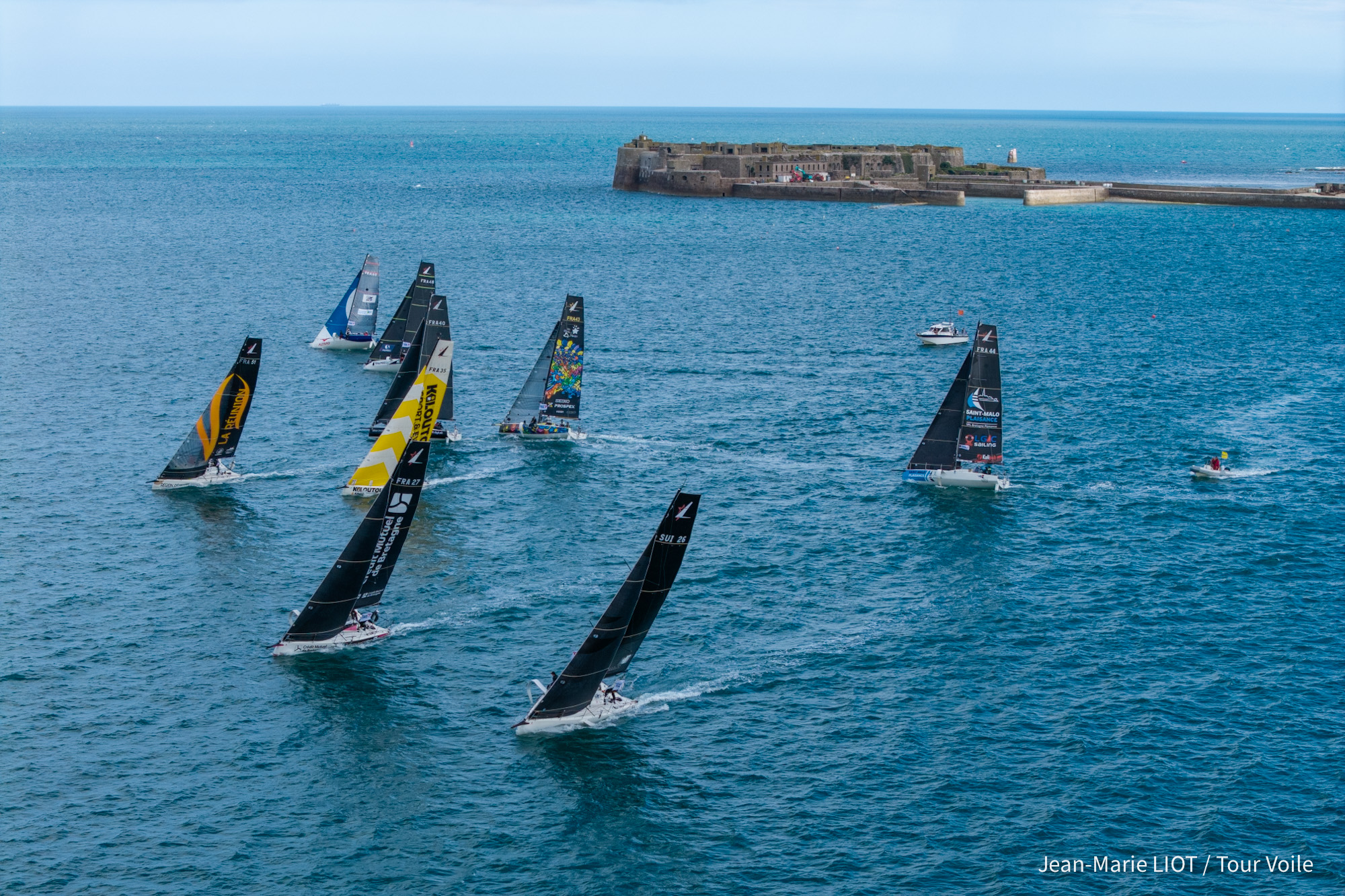
Nearly 90 sailors departed Cherbourg-en-Cotentin this week after the opening stage of Tour Voile 2026, the Figaro Beneteau 3 offshore racing series. The Norman port hosted nine crews from France, England, and Switzerland for a competitive introduction that tested boat handling and tactical awareness before the fleet disperses across French coastal waters for the remainder of the season.
The opening leg balanced two racing formats. Tactical courses in the Baie du Becquet demanded precision and crew coordination, while longer coastal passages took competitors along the Cotentin Peninsula’s dramatic shoreline. The waters around Cap Lévi—marked by powerful tidal streams and shifting winds—provided an unforgiving introduction to the weeks ahead.
A proving ground for future offshore talent
Tour Voile has long functioned as a talent pipeline, regularly producing the next generation of France’s offshore racing elite. Both male and female competitors who finish the series go on to contest the country’s most prestigious deep-water events. For the crews assembled in Cherbourg, the opening stage represented far more than a single competitive test.
The Cotentin waters were deliberately chosen for their technical difficulty and visual impact. Crews gained their first real measure of how well their boat handling and tactical judgment would hold up under genuine pressure.

Local investment in a sailing future
Christèle Castelein, President of the Cotentin Urban Agglomeration, highlighted what the opening stage meant for the region. The event allowed sailors to discover the Cotentin’s natural assets and nautical infrastructure before departing on what would become weeks of racing across France’s finest waters.
Philippe Augeard, the municipal councillor responsible for ports and maritime affairs, emphasized Cherbourg’s deeper commitment to competitive sailing. The city sees nautical sport as both an economic driver and a development pathway for emerging racers. Several locally-based sailors competed in this year’s edition, particularly within the Norman crews, reflecting a deliberate effort to nurture offshore talent at home.
The Yacht Club de Cherbourg managed the technical and organizational demands throughout the stage, ensuring the event maintained Tour Voile’s established standards.
As the nine crews now head out for the season proper, Cherbourg-en-Cotentin returns to its role as a maritime center—one that recognizes Tour Voile as both a celebration of seafaring heritage and an investment in French sailing’s future.