A rural hectare in New Zealand, a village in American Samoa, and a hundred-foot rowboat. This curious mix of backstories recently came together for one of the SW Pacific’s biggest sporting stories of 2026, where at this year’s Flag Day fautasi race near Pago Pago, an eight-month collaboration came together in an event as rich in cultural history and prestige as the America’s Cup or the US Super Bowl.
The New Zealand connection began over two decades ago when Dave Blair and his wife Julie bought a one-hectare block inland from Kerikeri in 2003. Dave had been building boats in California and Warkworth ever since completing his apprenticeship in Auckland during the early 1970s, turning out some impressively unique vessels, ranging from racing one-tonners and a gaff-rigged pilot cutter right up to the luxurious 65ft Herreshoff-style Tasmanian cutter Van Diemen. Already experienced in moving his vessels around the country by road, he had no need for a waterfront location.
The couple immediately erected a large boatshed on the property, plus various outbuildings that evolved organically over subsequent years. Blair Boats became a highly respected player specialising in refits and new builds. Dave’s stepson Laurie Jury became involved in the business 15 years ago when he and Dave built the racing trimaran Lucifer together.
Laurie, after years employed as coach for the Royal NZ Yacht Squadron, now runs the business while Dave and Julie enjoy cruising aboard their catamaran Razzel.

Blair Boats’ reputation extended beyond New Zealand’s shores and in April last year they received a request from a village in American Samoa regarding a 100ft (30.5m) rowing boat. Laurie was about to sail for Tonga with his wife Greta and their two children aboard their 14m sloop Monet, but Starlink enabled further communication, and while Monet was anchored in Tonga, Laurie took on the logistically complex task of catching various flights from Nukualofa to Pago Pago via Nadi and Apia to learn more about the Nu’uuli village requirements firsthand. The village community leaders were impressed by his swift initiative. Their brief was simple. They wanted a light, fast-rowing fautasi to outmatch thirteen 100ft rowing vessels for the prestigious 2026 Flag Day championship race.
Laurie stood out from other Kiwi boatbuilders for two reasons: he ran a family-owned yard, which has cultural significance for Samoans; and he was a proven ocean navigator/sailor, which is highly prestigious in all Polynesian cultures.
Details were worked out by email over the following weeks, but Blair Boats was ready to start when Monet arrived back in New Zealand. They had a big job and a deadline on their hands!
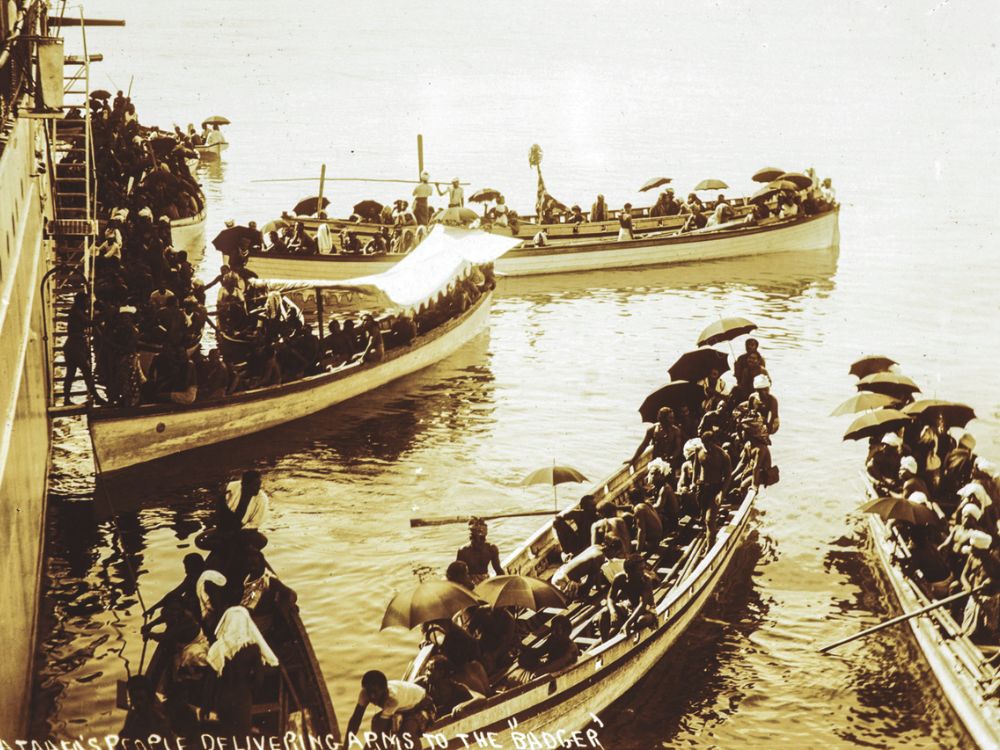
The Samoan backstory began in 1875 when a six-oared naval ‘pulling boat’ outpaced a 50-paddler war canoe over a two-mile course. During the following two decades, the 70ft stitched wooden war canoes (taumualua) became hybridised into copper-fastened rudder-steered, oar-powered vessels known as fautasi, intended principally as multi-purpose transport vessels. Contemporary reports describe them as having a ‘concave’ (hogged) keel profile, deeper at the bow and stern than amidships, possibly to alleviate the huge stresses in open water swells.

Initially about a dozen of these were built to a standard design by Auckland’s Bailey yard: a 64ft (19.5m), 34-oared pulling ‘cutter’ each capable of transporting nearly a hundred warriors between islands during the simmering tensions of the late 19th century. Meanwhile, local Samoan boatbuilders were constructing even larger versions, including a 100ft, 56-oared fautasi by the Kenisons in Savai’i, and a short-lived inter-village competition to build the largest (120ft/36.6m) rowboat.
It was inevitable that competition entered the fray almost as soon as there were sufficient fautasi on the water. So, for an element of fairness, maximum thwart limits were imposed. These have since increased from 36 oarsmen in the early 20th century to the current 50-oar limit, with ongoing design refinements for more speed. By 1934 average speeds over a two-mile course were about 10 knots, but by 1967 this had increased to 12 knots.
By the early 21st century the ‘high techs’ were dominating the competition, even powered by carbon sweeps. And this was the challenge that Laurie Jury from Blair Boats had accepted.
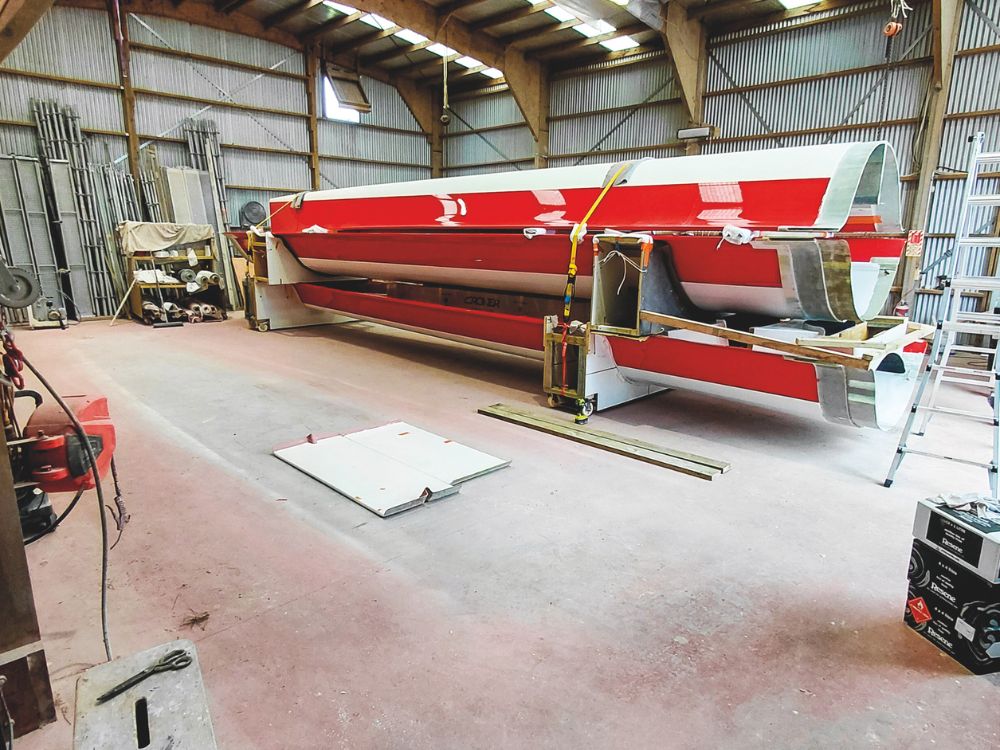
There is no size limit for competitive fautasi hulls, simply a maximum of 50 rowers, but the length of his shed and shipping containers dictated Laurie’s dimensions. By building the new hull in three sections he could cope with a 106ft (32.3m) hull with sliding-seat thwarts for 42 rowers. The construction would be foam core with an internal longitudinal strengthening member. It would weigh under 40% of the village’s existing four-ton, 40-year-old wooden Lowrider 1 (Manulele Tausala II).
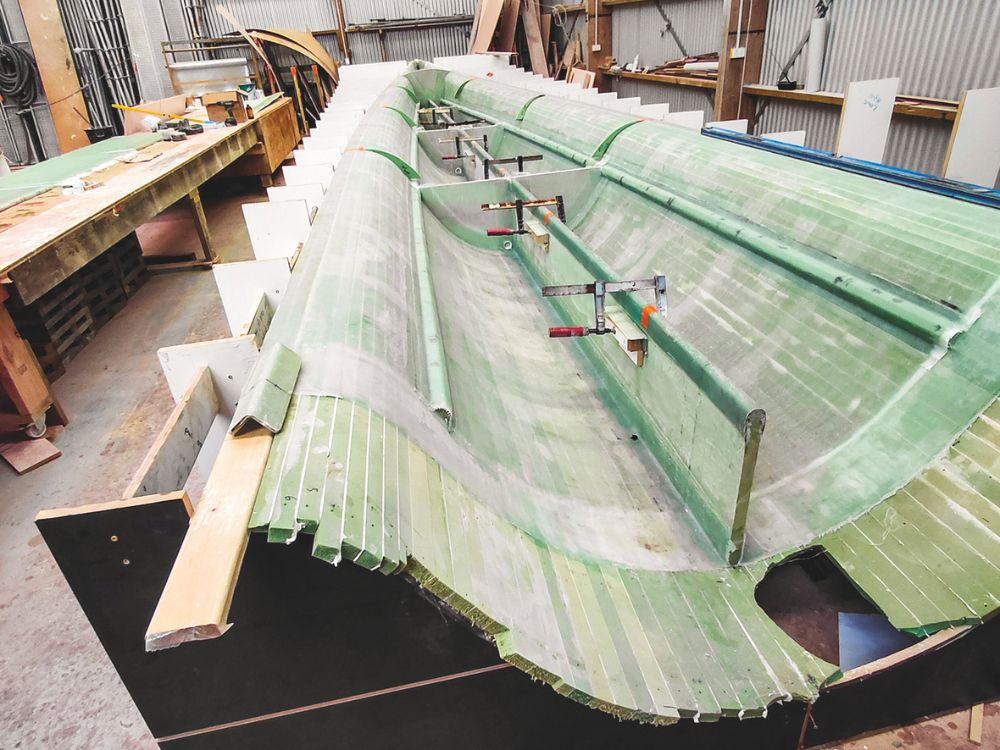
Kiwi yacht designer Kevin Dibley delivered the hull plans, after initial consultations with fautasi guru Garry Lidgard. Blair Boats added various tweaks for internal and structural details. This would be the first-ever fautasi built in three sections, and rumours were rife in the opposition villages that it would break up under load. Laurie was heavily reliant on Dibley’s engineering calculations to reassure the village committee of its guaranteed structural integrity.
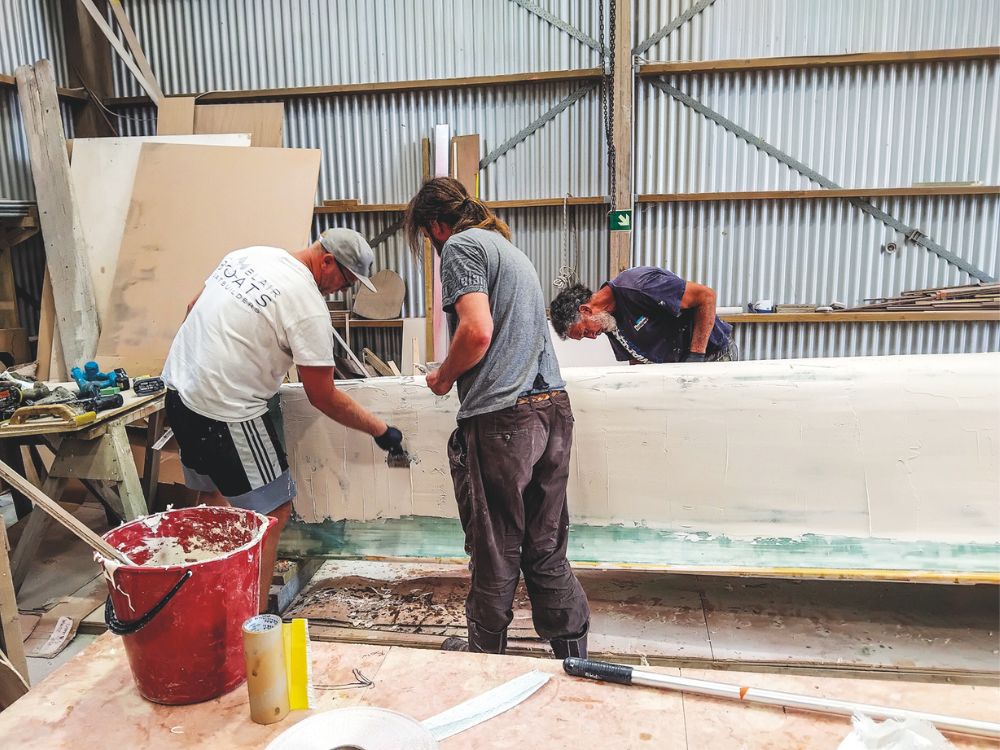
In September, working with a team of four, he began the layup, tackling the mid-section first, before moving it outside to construct the remaining two sections inside his big shed.
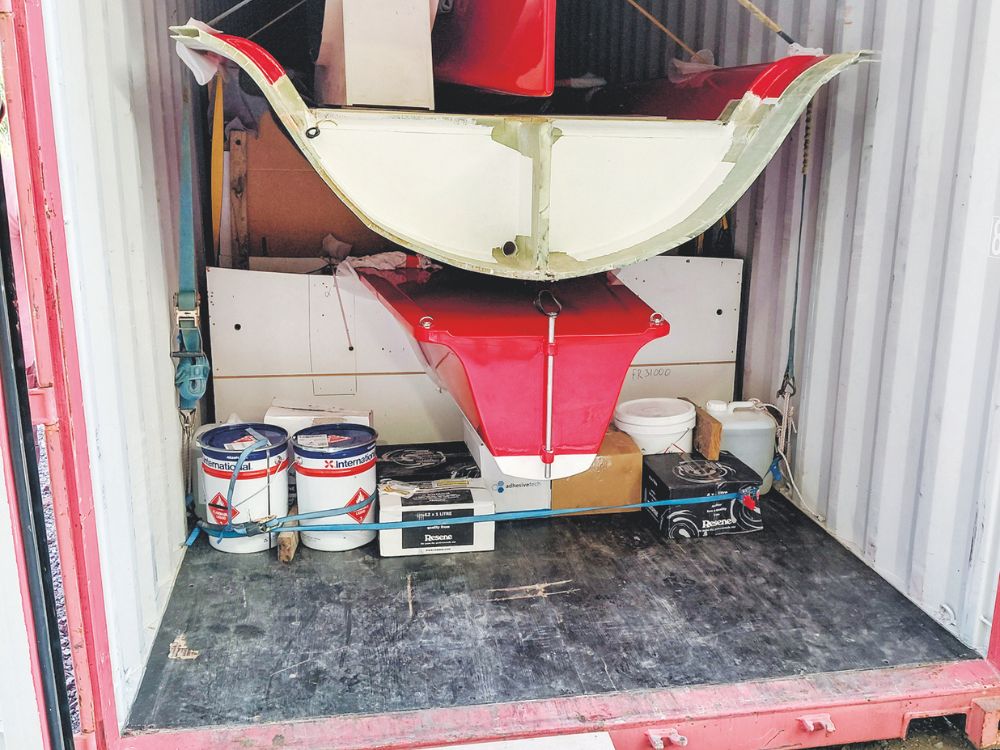
Naturally there was a deadline. Shipping schedules needed consideration, and the hull would need to be assembled on arrival at Nu’uuli in sufficient time for pre-race training. But despite the urgency, progress at the shed continued at a comfortably measured pace and the container was loaded for the last reasonably timed sailing.
In the village of Nu’uuli the anticipation was growing. More than a hundred hopeful rowers had already commenced training aboard the old Lowrider 1, knowing that only the best 42 would be picked for their new ‘high-tech’. Laurie and his offsider Ryan were there to help unload the 40ft container with its three-part red hull, sliding seats and assorted drums of paint and epoxy. Thirty village men constructed a massive new boatshed while the three segments were scarfed together and faired. Other locals then assisted with bolting on the seat rails and rowlock outriggers.

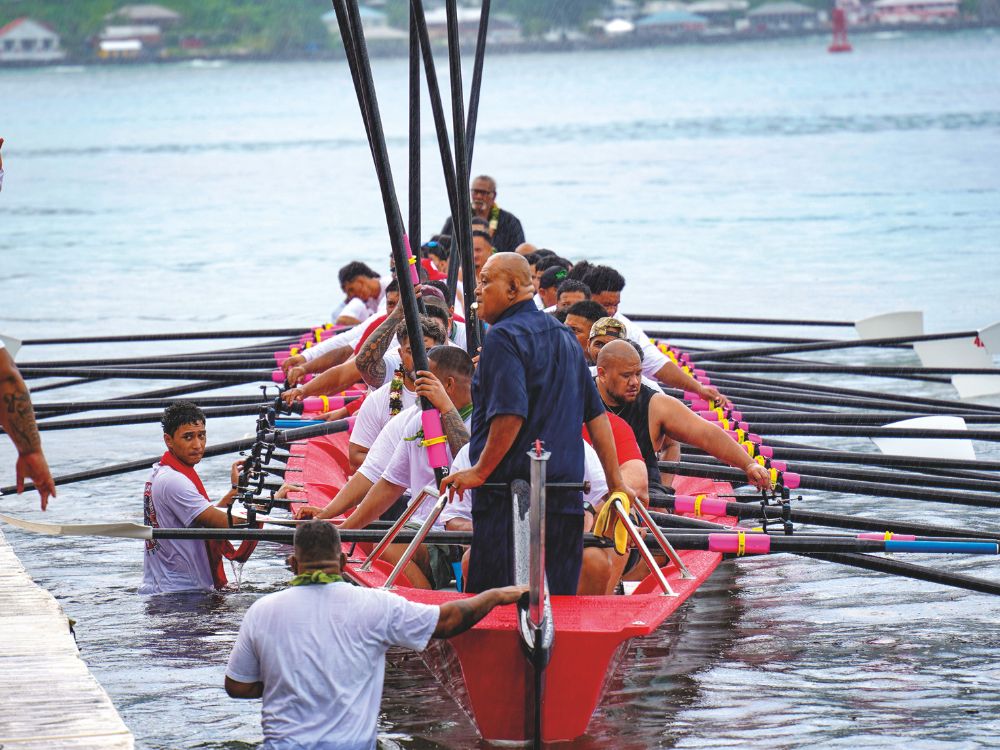
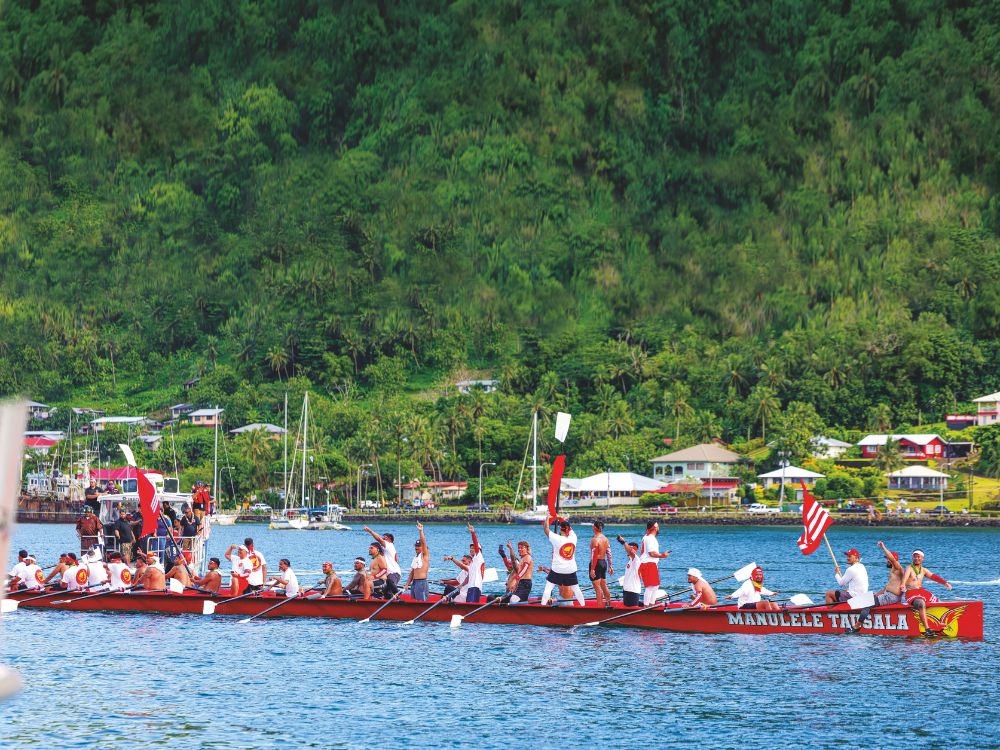
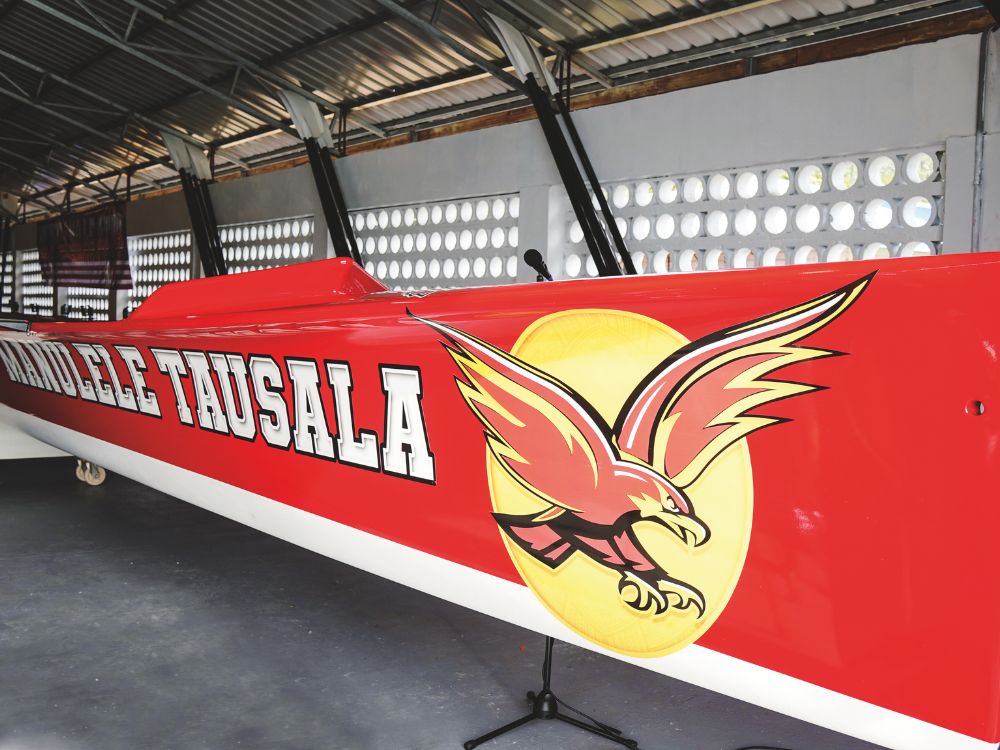
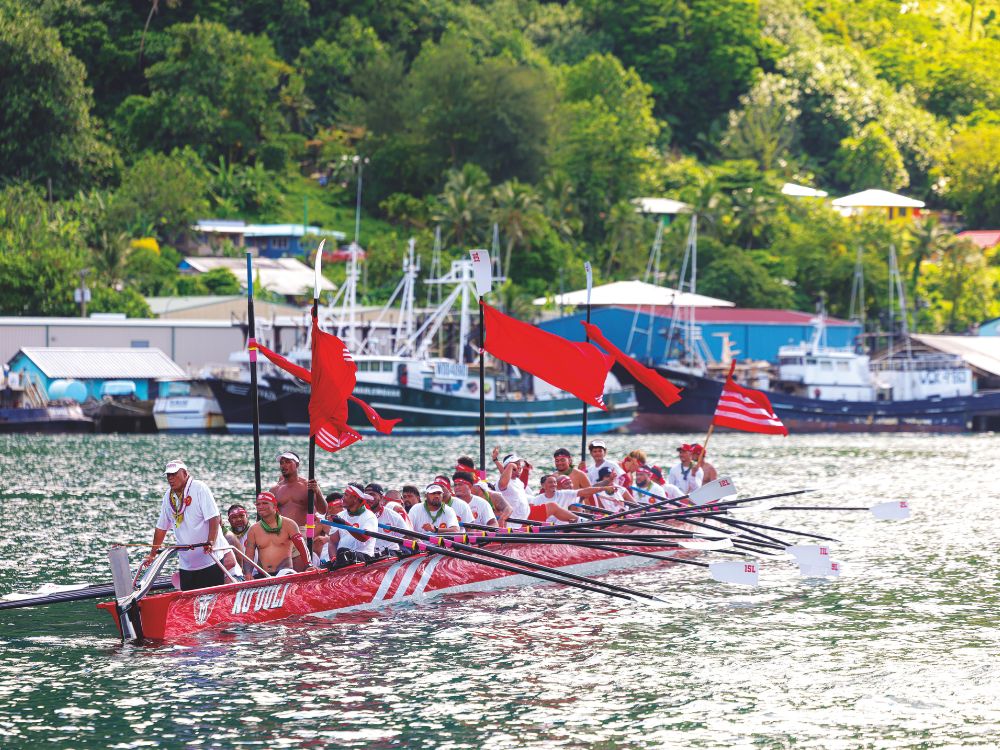
Finally the decals were added and the whole village attended the ceremonial breaking of a coconut, Samoan style, on March 24. The name was unveiled: Manulele Tausala III (Lowrider II).
Laurie was somewhat ambivalent about the boat’s competitive prospects for the 2026 event. He was quick to point out that having a new racing hull well under half the weight of the village’s older four-ton wooden vessel did not necessarily ensure a comprehensive advantage. By the time 42 hunky Samoans and their captain were aboard, each averaging about 110kg, their four-plus-ton dynamic load would reduce any relative wetted surface comparison or acceleration advantage. Besides, many competitors would also be rowing light ‘high-techs,’ including recent hulls by Kiwis Simon Miller and Steve Bull.
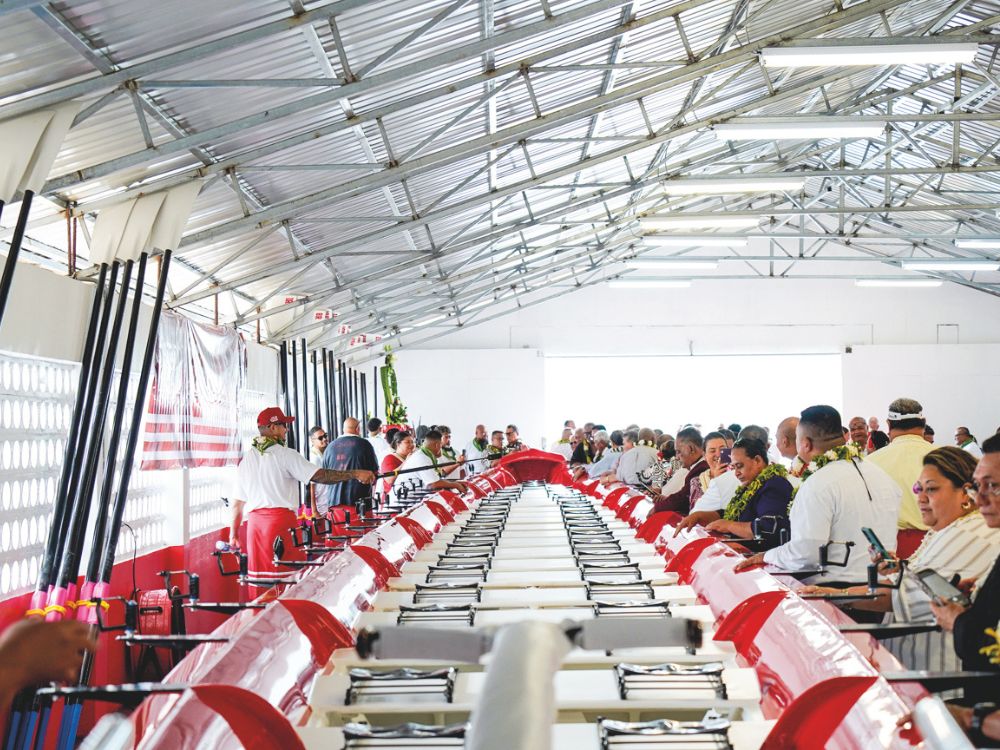
The biggest variable would be the introduction of sliding seats. These seats require a whole new rowing technique, which the Nu’uuli team had barely three weeks to master – and the only other fautasi to have ever used sliding seats finished at the back of the 2025 race fleet! In Laurie’s opinion it would be the teamwork rather than the technology that would be the ultimate decider – strength, stamina and technique.
Nu’uuli rowers have always been highly motivated, and had even won the 2024 race in their 40-year-old Lowrider 1. Both their fautasi were entries among this year’s competitive line-up. Strategies were in constant revision and the heaviest rowers were reluctantly relegated to the B-team despite their experience, to keep the crew weight in Lowrider II within a self-imposed maximum.
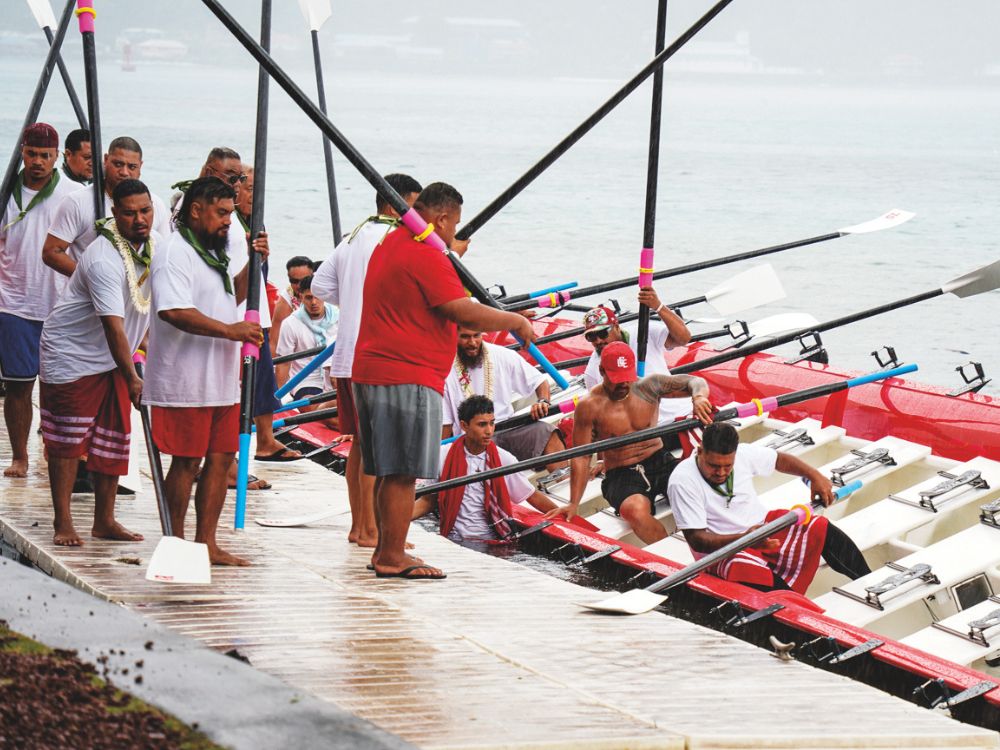
In the lead-up to the heat racing Pago Pago was filled with vehicles waving flags and wearing colours in support of their local village teams. Certainly the $25,000 first prize would go some way to offset village expenses, but ultimately it was community pride and prestige which were on the line, along with a century of tradition.
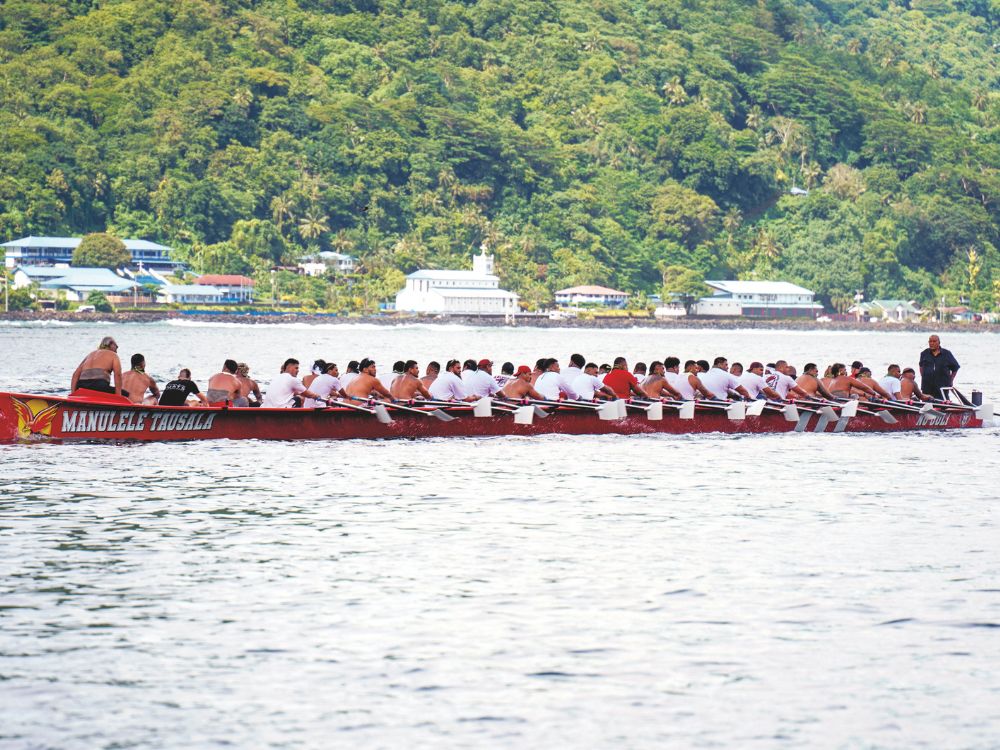
April 15th dawned clear and calm for the preliminary heats. The Nu’uuli community anticipation was rewarded in the second heat with an almost unprecedented spectacle. Surging off the start-line, Lowrider II was in a race of its own, streaking away from the field to finish six ‘fautasi-lengths’ ahead of the closest rival. Their number-two team aboard the village’s old Lowrider 1 finished in fourth place, putting both vessels in the nine-boat finals line-up for the championship event. Without question Nu’uuli had proven the mettle of all its rowers.
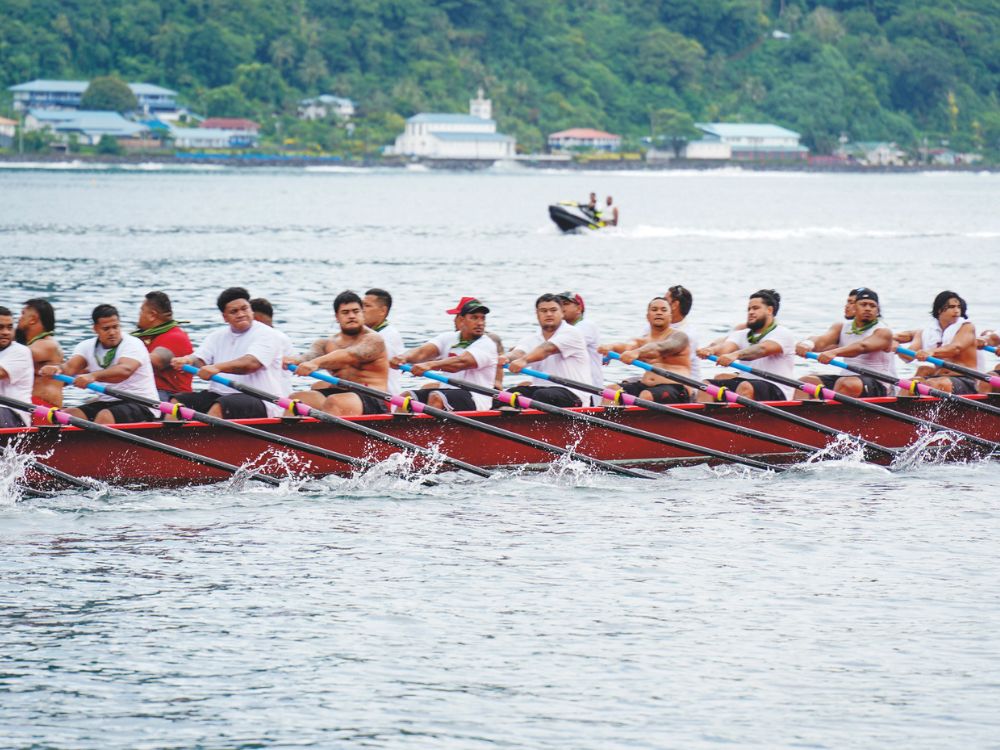
Laurie and Greta followed the grand final the next day with quiet anticipation, unlike the Nu’uuli villagers who, in typical Samoan exuberance could barely contain their excitement. The Pago Pago news (Talanei.com) described the race in a simple sentence: “The newest in the field of nine fautasi competing today, just sliced through the water and distanced itself from the rest of the fleet all the way to the finish line.” Nu’uuli and Laurie’s team had pulled it off in style!
Meanwhile the B-team rowers aboard Lowrider I finished in eighth place – a respectable result in their 40-year old fautasi, but clearly the competitiveness of the older wooden vessels had now changed forever. Within a few hours, Facebook posts were already suggesting that more Blair Boats hulls would be needed to even the field.
But the Nu’uuli committee’s mind was already turning to their next challenge – the Samoan Independence Day Fautasi Race in June, across the water at Apia, where the five top American Samoa teams had been invited to race against the fautasi fleet from Upolo and Savai’i islands.
This racing is the coxed-eights on steroids! BNZ