Snapper are where you find them, and sometimes that is in the shallows – really shallow, shallows!
The reasons for their presence in ‘skinny’ water vary quite a lot, but are generally connected to food and usually tide and season dependent.
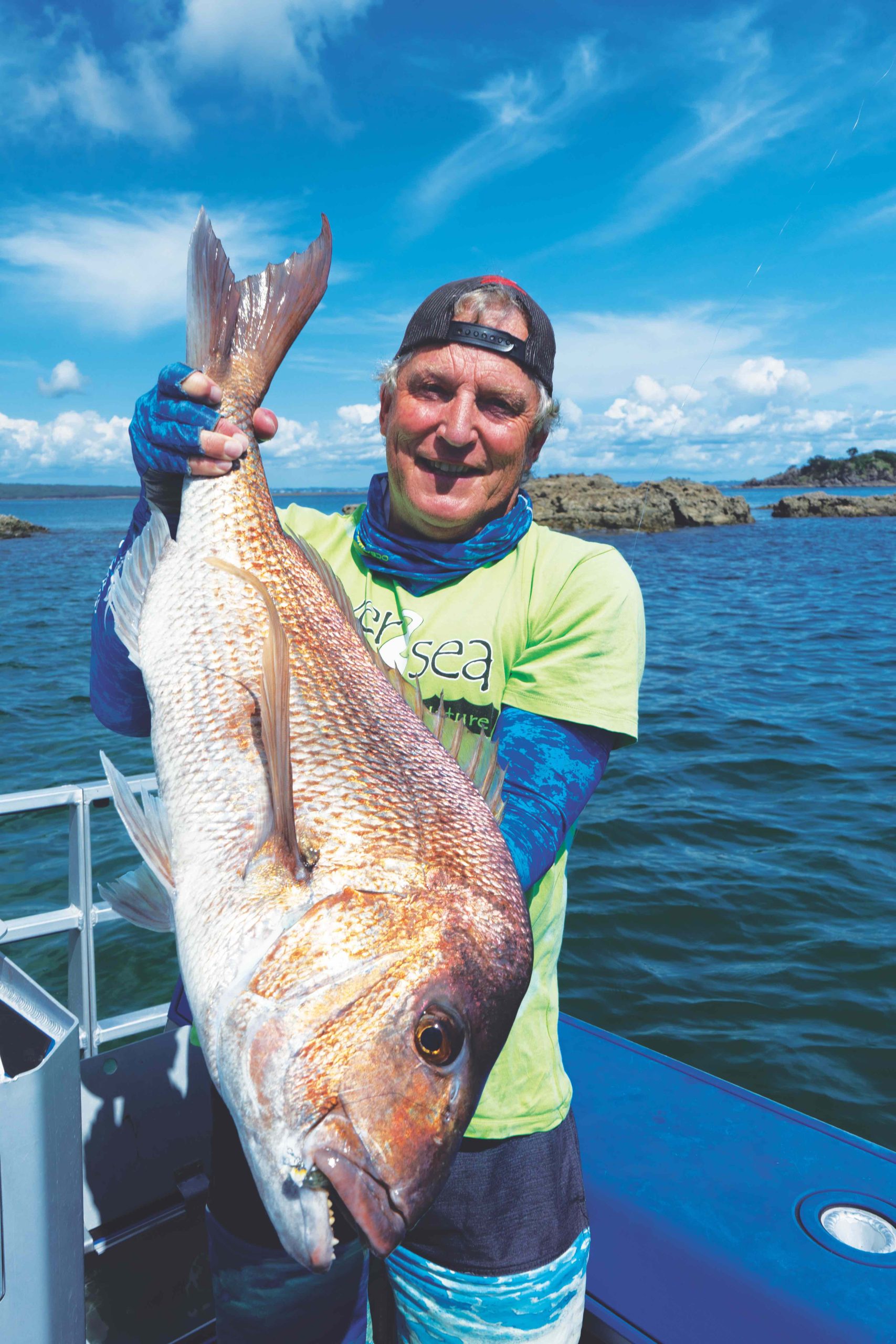
Snapper are real opportunists, as well as being highly predatory, so they can be found feeding on mussels, crustaceans and small fishes right in close to kelp-covered rocky shorelines, grubbing up shellfish, crabs and sea worms in estuarine shallows, or similar food sources among the roiling surf of our beaches, especially when conditions are dull or the water is murky.
At other times, they can be seen charging around with kahawai, kingfish and trevally in pursuit of schooling anchovies and juvenile pilchards – and when these predators manage to corner these tasty treats against the shoreline, it’s often all on!

‘Wash’ fishing
The ‘wash’ refers to the water pushing up against a rocky, weedy coastline, isolated rocks or islands. Fishing the wash typically involves casting soft baits into water that’s anywhere between less than a metre and up to four or five metres deep. For this style of fishing, ideally, use a long soft-baiting rod of between 7’10” and 8’6″ (2.4-2.6m) rated for lines of 8-10kg breaking strain, coupled to a 3000-5000 size reel loaded with 20lb (9kg) braid and armed with 3m of 20-30lb (9-13.6kg) fluorocarbon. A long trace provides the best insurance against getting busted off, as it’s much thicker and therefore more abrasion resistant than the braided main line.
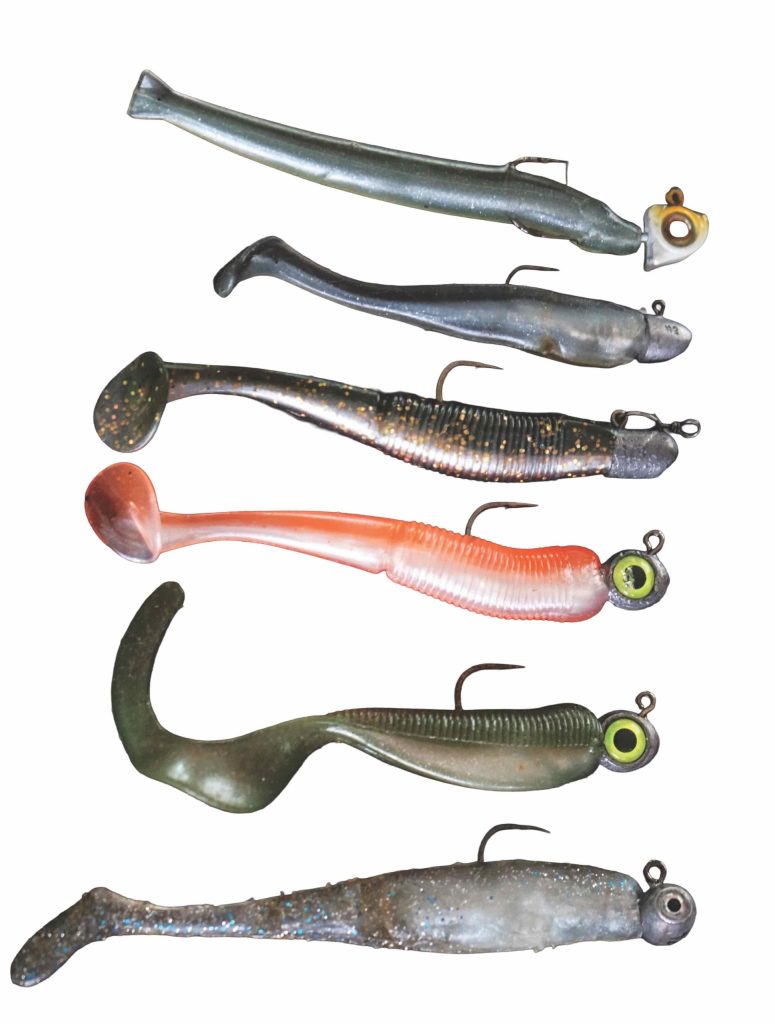
The choice of jig-head weight is important. A soft plastic rigged on a quarter-ounce head will snag up less often, but won’t cast as far as one on a 3/8oz jig head, and sometimes the heavier weight’s slightly faster lift-and-drop movement can be the bite trigger. At other times the slow waft of the quarter-ounce does the trick – so it pays to experiment.
Choosing the right soft-bait is often key, too. The 5-inch (13cm) versions will attract a wider range of snapper sizes and are more likely to get anglers a feed, but the 7-inch (18cm) models will often cast further and usually sink more slowly (brands such as Bait Junkies and Z-Mans are slightly buoyant), giving snapper longer to see and attack them. If in doubt, use a 6-inch (15.25cm) soft bait!

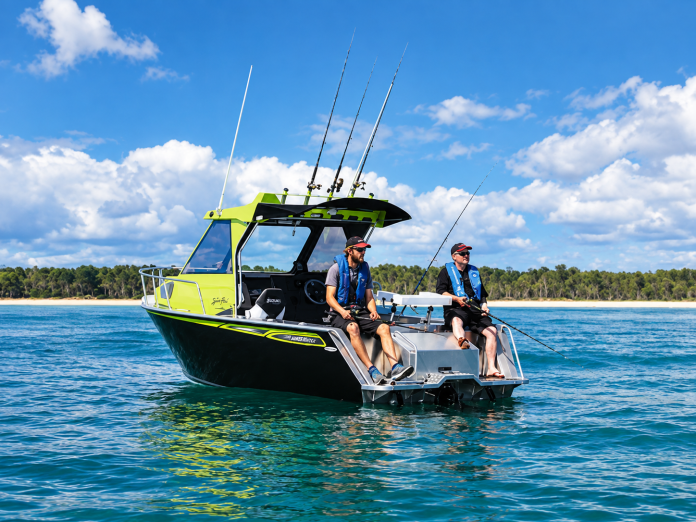
Smaller 3-5m craft, including inflatables, kayaks and jet-skis, are ideal for wash fishing, their smaller ‘footprints’ creating less disturbance that may scare fish away. Needless to say, no loud music, either (sorry!).
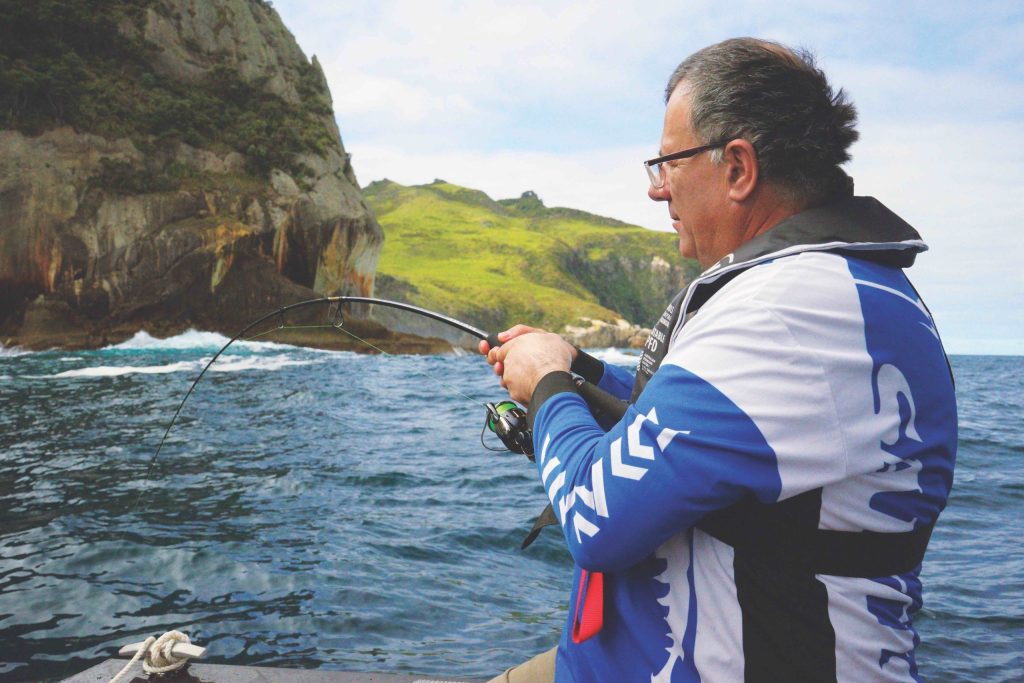
Look for shaded areas with some wave action washing up onto the rocks. The waves dislodge food items and disorients them, attracting hungry snapper – if there’s some current present as well, so much the better.
Try to hold the boat/jet ski at a decent casting distance away from the area you are fishing so disturbance from the boat and its occupants is kept to a minimum and the snapper keep feeding. Bow-mounted electric motors are a huge advantage in such situations, moving slowly and quietly along the rocky shore and maintaining a constant stand-off distance.
Look for interesting bottom structure such as weed clumps, rocky structure. or darker-coloured water. Cast to the fringes of the weed or rocky outcrop, or just past holes or gutters, allowing the lure to sink for a few seconds – jig-head weight and water depth will determine how many seconds – before jiggling the soft-bait back to the boat. As snapper are very happy to zip upwards a metre or two, even just slowly retrieving a soft-bait will do the job sometimes.
It pays to point the rod down the line whenever possible, so there’s less line above the water to blow around and you maintain the most direct contact with the bait.
Watch the line like a hawk, as it will alert you to any bites by jerking, jiggling or suddenly slackening. In all cases, respond to a bite with a quick rod jiggle, followed by an equally quick wind or two of the reel. The snapper feels the rod jiggle at the lure end and clamps down harder, thinking its ‘prey’ is trying to escape. When they then feel pressure, they often hold on harder still and everything comes tight, which is when the angler should firmly lift the rod and set the hook. If the lure has been dropped or pulled free on the strike, don’t despair – upon seeing it zipping away, snapper will often grab it again (the same fish or another one), providing a second chance for success.
Harbour and estuary shallows
Harbour fishing for snapper can be rather seasonal, with most opportunities coming during the warmer months.


The first scenario often occurs in near-coastal areas, including harbours, gulfs and bays, during the anchovy/whitebait run, which can extend from spring right through to autumn; the second occurs in bigger estuaries, when the snapper head up the tidal waters to feed on shellfish, sea worms and various crustaceans in the shallows, including right up in among the mangroves.
The anchovy run
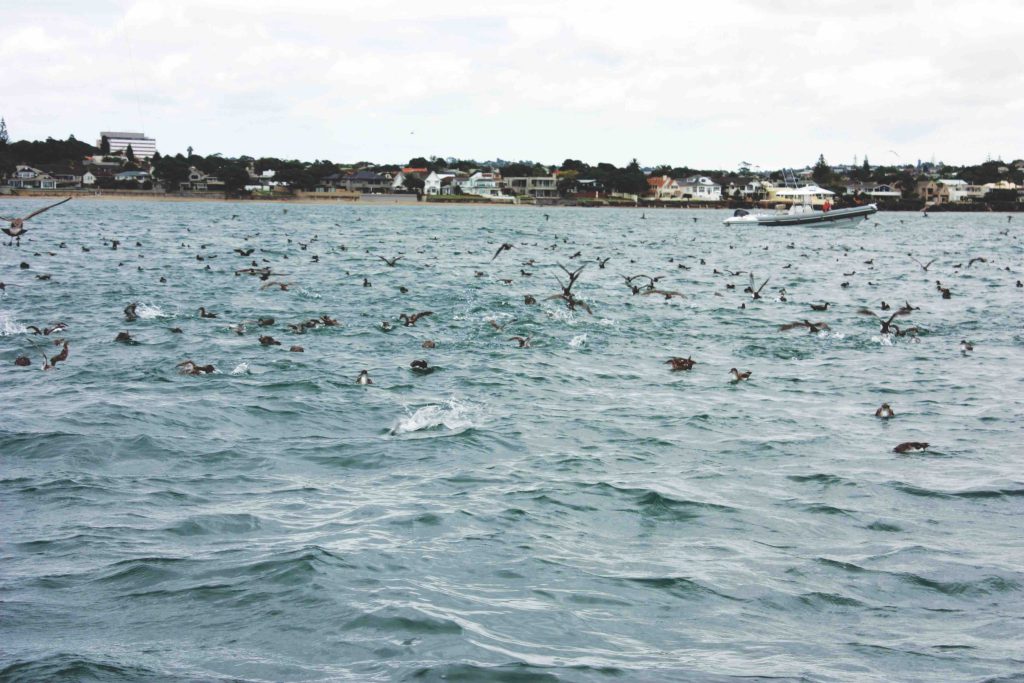
The sight of wheeling terns, diving mutton birds and surface-crashing kahawai signals the anchovy run is underway. Fish and birds feed on anchovies in water up 20m deep, but for anglers the most memorable situations tend to be when the kahawai/kingfish/mackerel/trevally/snapper push the baitfish right up against the coastline, trapping them against rocky shores or sandy beaches. At such times it’s possible to actually see predatory fish chase and eat soft-baits cast into the carnage of the feeding frenzy.
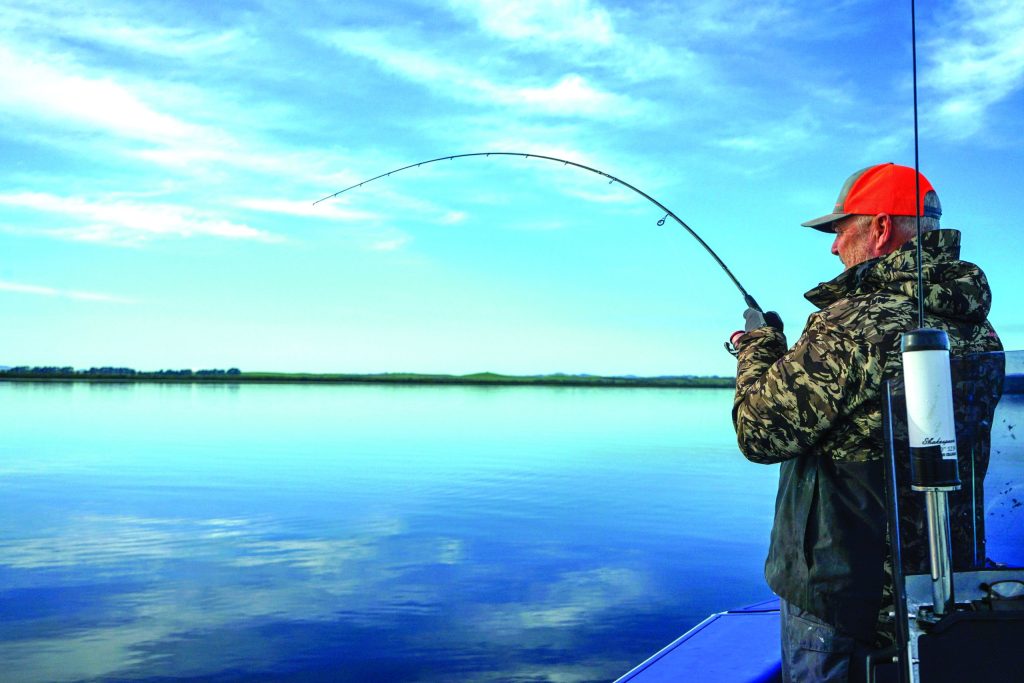
A light, whippy soft-bait rod with around 3-6kg capabilities is perfect here, accompanied by a 2500 size reel spooled with 8-12lb (3.5-5.5kg) braid with 2-3 metres of 10-15lb (4.5-6.8kg) fluorocarbon leader.
Fishing is basically a case of ‘matching the hatch’ – but not too closely, or your little soft-bait will not get noticed among all the thousands of tiny baitfish. If the water is reasonably clear, choose 2.5-4in (6-10cm) soft-baits in realistic, natural hues – grey-pearl, brown-pearl and blue-pearl all work well.
Although the water is shallow, I still recommend jig-heads no lighter than 1/8oz (3.5g). Although it must be retrieved a bit more quickly to avoid any weeds or rocks, 3/16oz (5.3g) does the job nicely for me. It casts further, has a nice lift-and-fall action, and doesn’t need to be changed if the activity moves into deeper water. For best results the hooks should not be bigger than 2/0.
Bites can take place from the moment the lure hits the water, so after making the cast, immediately wind out any slack line, point the rod down along the line, and be ready to execute the quick jiggle and wind should the line move unnaturally in any way. The jig-heads small hooks mean a simple lift of the rod is usually enough to set the hook.
Estuarine shallows
As tidal estuarine waters tend to be calm as well as shallow, the approach here is all about keeping quiet and fishing with very similar, lightweight tackle as is used to fish the anchovy run. A long rod is advantageous, enabling longer casts to cover more area per cast.
Two or three hours before high tide and then the first 1.5-2 hours of the ebb tide is my favourite fishing period. Cast to the channel edges and into any slightly deeper holes. If the conditions overhead are dull or overcast, so much the better.
The main differences when fishing estuaries come down to the soft-bait colours and the techniques used. As these snapper tend to be grubbing around on the bottom feeding on shellfish and crustaceans, soft-baits in browns and creams are effective, with orange and pink often working better when the water is murkier.