Welcome to ‘A very brief history of …’ researching the history of everyday marine technology, innovation and events Kiwi boaties love (or loathe).
Our love of sails
From local Optimist regattas to SailGP and the America’s Cup, Kiwis have always had a great affinity with sailing. However, how did the concept of using wind to get about on the sea actually start?
The birth of sail
The earliest use of sails can be traced to around 3500BC in ancient Mesopotamia, where settlements on the banks of the Tigris and Euphrates Rivers developed basic sailing vessels for transportation and commerce along generally calm inland waterways. Sails on reed boats became common, with depictions from the Akkadian and Sumerian periods showing rigid square sails, which would have been limited in their effectiveness in changing wind conditions.
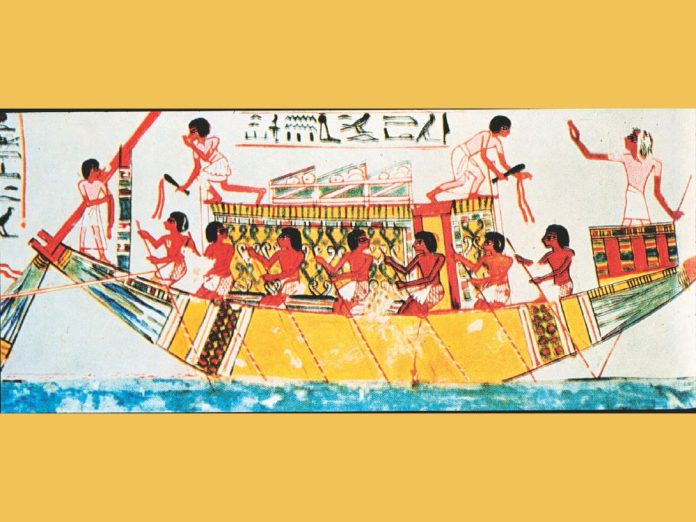
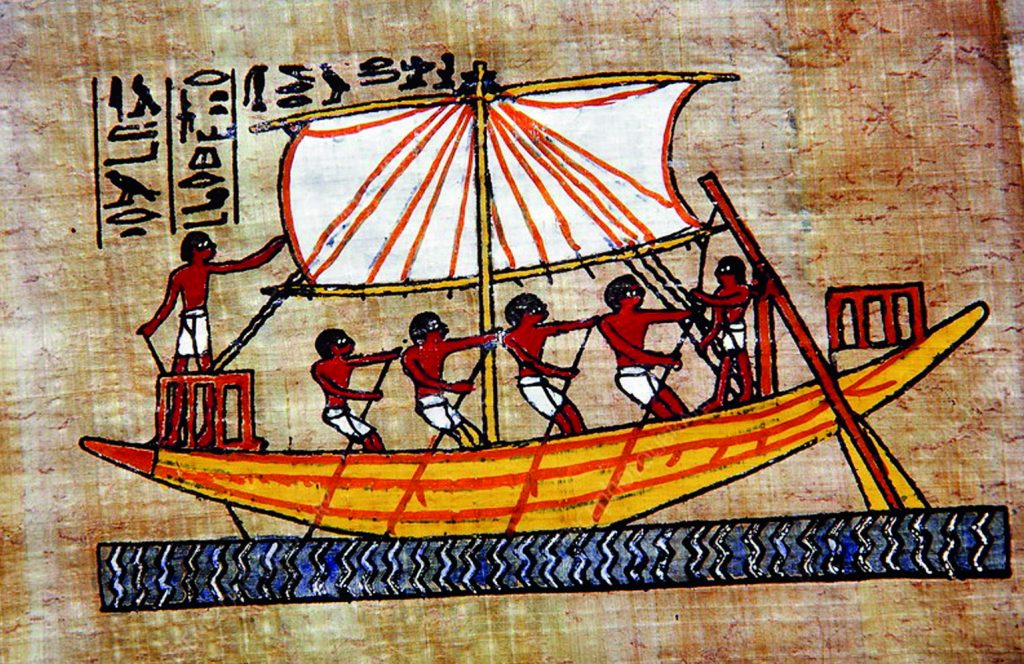
Egyptian archaeological evidence from around this time period also depicts boats with single square sails mounted on a central mast. The Nile River provided a perfect staging ground for early sail development with the prevailing winds blowing from north to south, countering the river’s south-to-north current. This allowed boats to travel in both directions efficiently – by sail downstream and by oar upstream. Egyptian ships were used for both trade and warfare, enforcing shipping laws, and transporting troops and supplies.

The Phoenicians and the expansion of maritime trade
Emerging around 1200BC in the eastern Mediterranean, the Phoenicians were among the first great seafaring civilisations. By focusing on innovation, efficiency, and durability, they significantly advanced sailing technology, developing larger ships capable of longer voyages across the open sea.
Like earlier designs, Phoenician vessels used square sails. However, they began experimenting with innovative sail placement and steering mechanisms like the stern rudder, allowing them to more easily handle various wind conditions and make far longer voyages than any of their Mesopotamian and Egyptian predecessors.
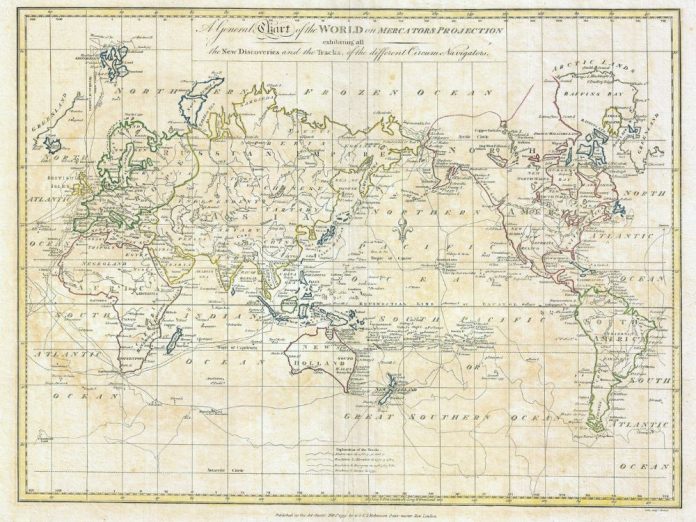
These successful innovations allowed the Phoenicians to sail westward from their homeland, establishing colonies on the Atlantic coasts of Spain and Morocco, as well as developing significant trade routes (reaching as far as Britain to trade for tin).


Classical antiquity: Greek and Roman contributions
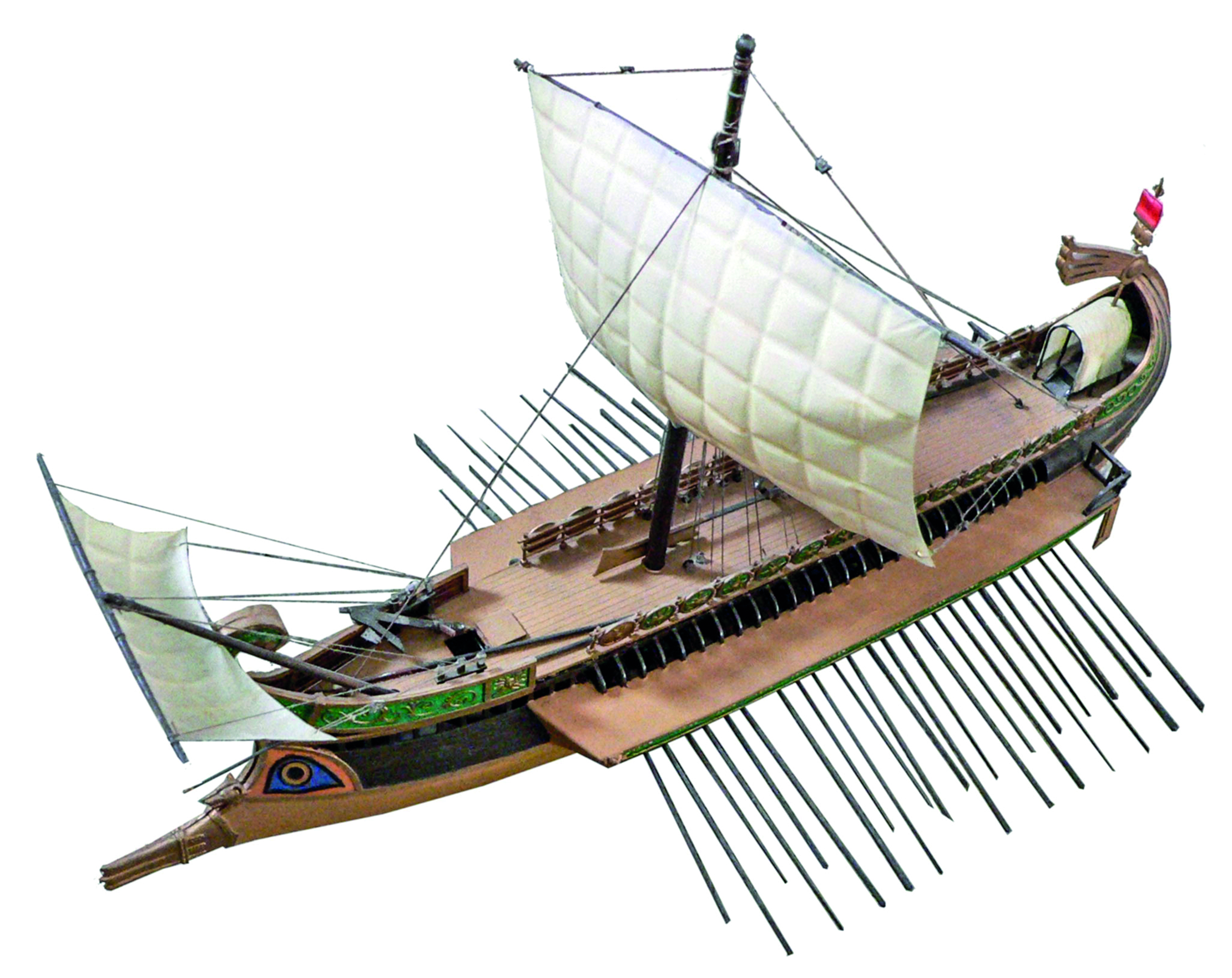
By the 5th century BC, the Greeks had developed sophisticated sailing ships like the ‘Trireme’, which used oars for combat but also featured large square sails for cruising. Greek ships continued to favour square-rigged designs, which were efficient for downwind sailing but offered limited manoeuvrability.
The Romans, inheriting Greek nautical traditions, expanded maritime networks across the Mediterranean. They developed the ‘Corbita’ (think of the pirate’s ship in the Asterix comics), a type of merchant ship that used square sails and featured a more robust hull. However, sail technology remained rudimentary, and vessels were largely constrained by seasonal wind patterns and coastal navigation.
The amazing ‘leteen’ sail
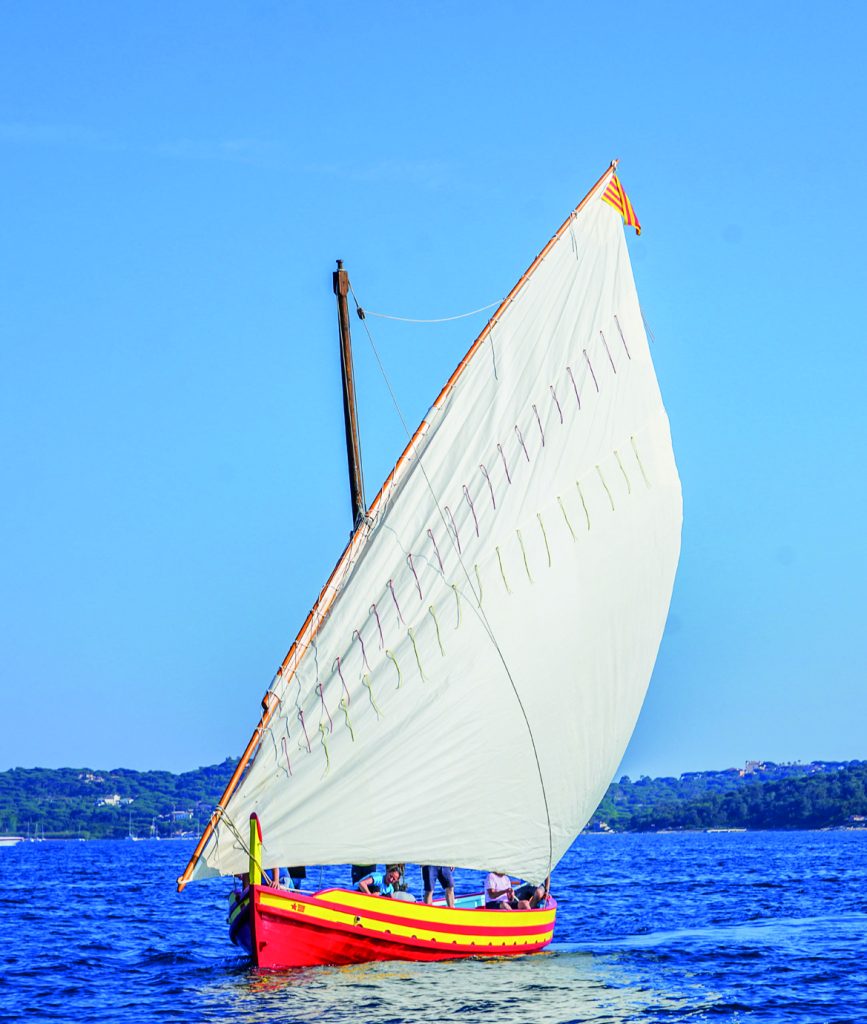
A major leap in sail evolution came with the development of the lateen sail, which emerged in the eastern Mediterranean around the 2nd century AD. This triangular sail, mounted on a long, slanted yard (called a ‘lateen yard’), allowed ships to sail closer to the wind, effectively inventing the mind-blowing and game-changing art of ‘tacking.’ This innovation offered far greater navigational flexibility and enabled longer voyages in less predictable wind conditions.
Chinese innovation
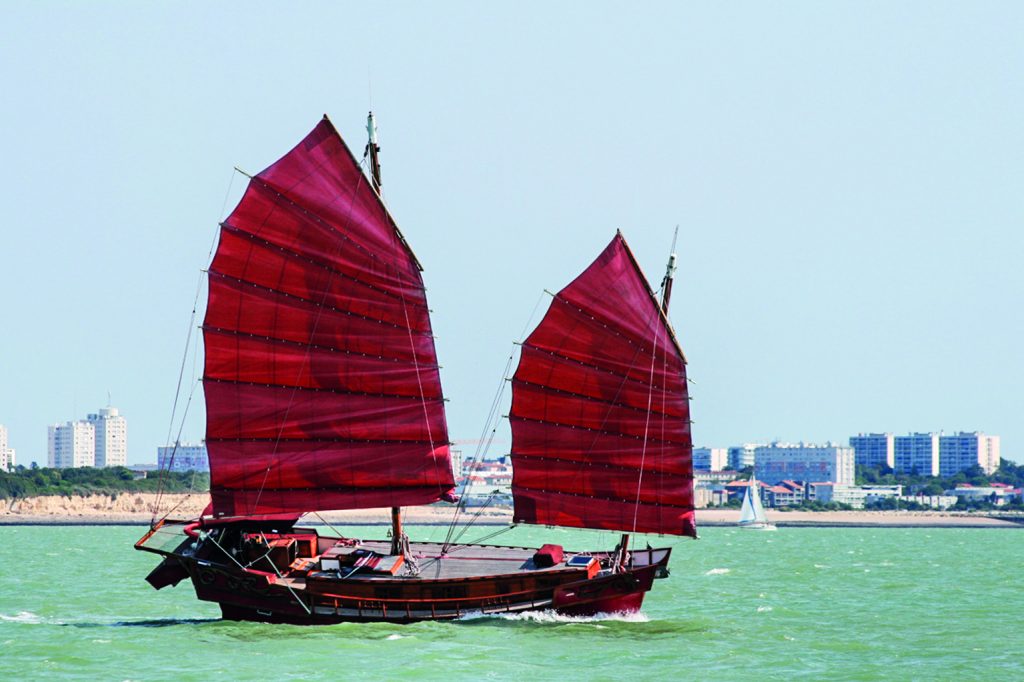
At the same time, in the Far East, the Chinese were making equally revolutionary advances. During the Han Dynasty (200BC to 220AD), Chinese sailors developed the junk rig, featuring multiple battened sails mounted on multiple masts. These sails were made from bamboo and silk or cotton and could be reefed, lowered, or adjusted easily, giving Chinese ships an unprecedented level of control and efficiency.