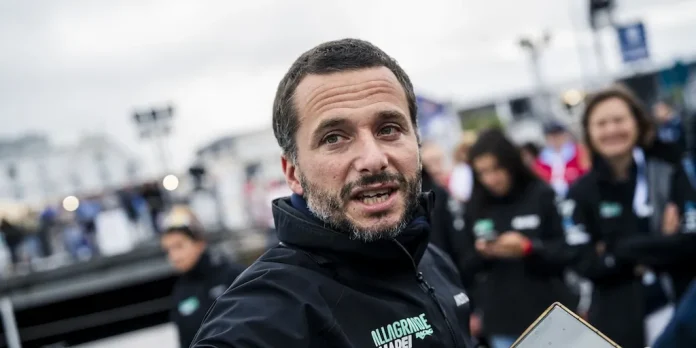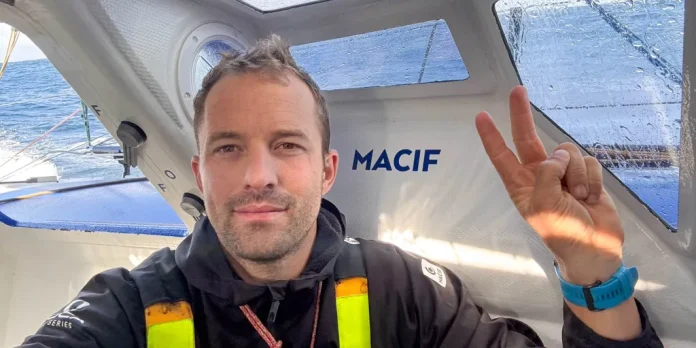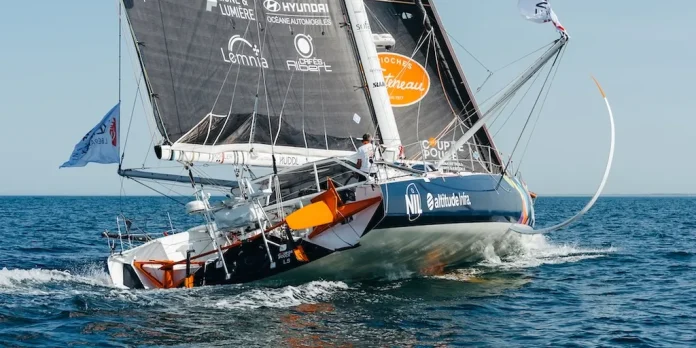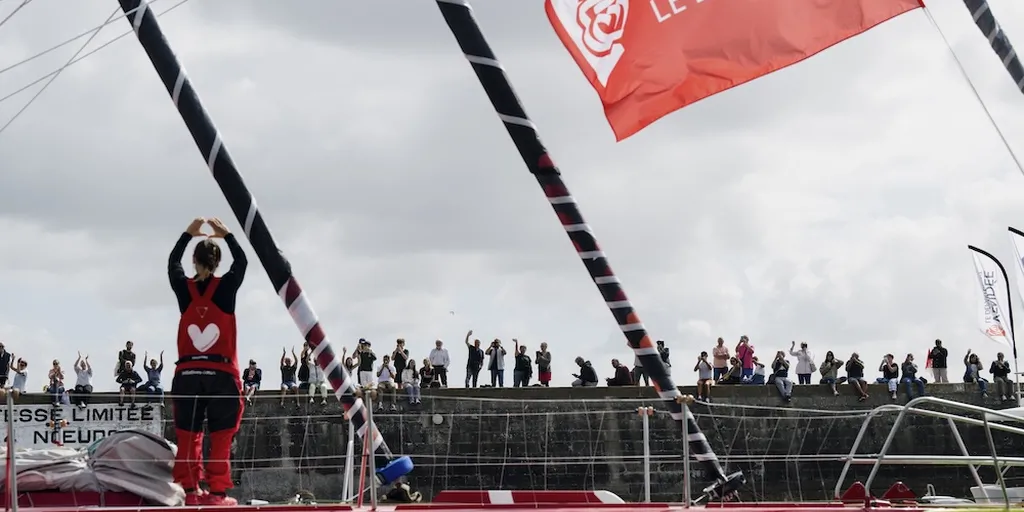
Nine IMOCA skippers pointed their boats toward the Arctic last Sunday, and Les Sables-d’Olonne put on a show that nobody who was there will forget. Two kilometres of cheering lined the channel, smoke canisters cut bright trails across the sky, and thousands of voices rose in a roar that carried across the water as the fleet slipped into open ocean for the Vendée Arctique 2026.
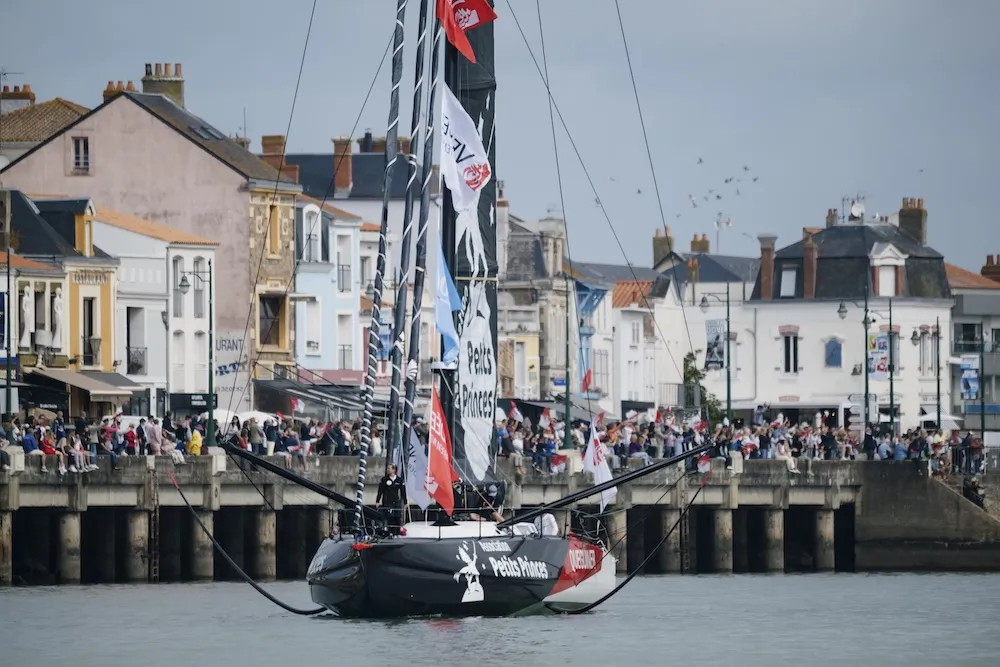
For three hours it was Vendée Globe energy compressed into a Sunday morning. Spectators lined every metre of accessible bank, arms raised, signs waving. On deck, the nine skippers grinned through the noise even as the weight of what lay ahead—a race beyond the Arctic Circle and back again—began to settle. The intensity of it all, one skipper would say, was the kind of thing that stays with you.

Francesca Clapcich, racing for 11th Hour Racing, has done this before. She sailed solo in a Figaro Beneteau through the Solo Maître Coq a few years back, and she thought she knew what a departure felt like. But standing on an IMOCA heading toward polar waters with a channel full of humanity behind her, something shifted. “It’s always a magical moment,” she said. “But doing it again in an IMOCA—that’s something else entirely. It gives you the shivers.”
By Monday afternoon, the magic would have worn off. The wind was due to strengthen, and these sailors would be locked into the rhythm of the ocean, scanning weather systems, trimming sails, watching every detail as the miles accumulated northward. That’s when the real work begins—when the shore is days behind and the only thing that matters is what the boat does and what you can make it do.

Yet there’s a peculiar gulf between what happens onshore and what happens out there. For the spectators and television viewers watching last Sunday, the moment crystallised everything: the courage required to race toward the unknown, the community that gathers to honour it, the strange alchemy that turns nine people and nine boats into ambassadors for something larger than themselves. The skippers carry those faces with them now, even if only in memory. By the time anyone sees them again, the Arctic will have changed them in ways that a cheering crowd on a summer morning in France can barely imagine.