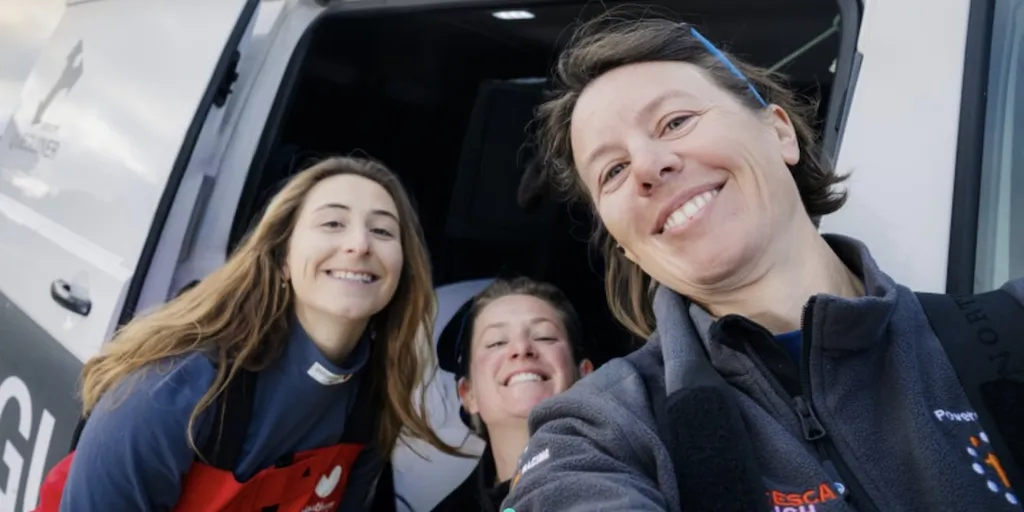
Three women have entered the Vendée Arctique starting in four days. Élodie Bonafous, Francesca Clapcich and Violette Dorange aren’t here to make up the numbers, and the race itself signals something profound about how far offshore sailing has come.
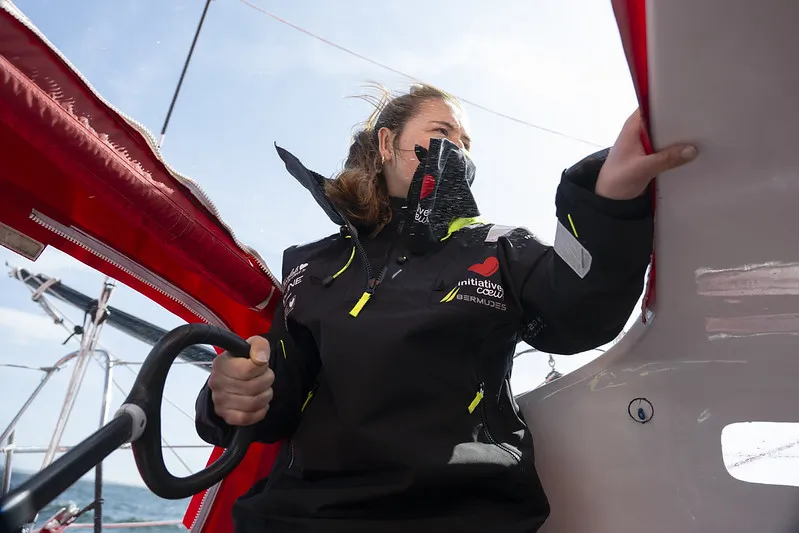
Among nine skippers lining up on 7 June, they represent a third of the fleet. Bonafous carries Association Petits Princes – Quéguiner colours, Clapcich sails for 11th Hour Racing, and Dorange races under the Initiatives-Cœur banner. All three arrive with serious competitive intent.
Twenty-five years ago, being a woman on the dock in professional offshore racing meant isolation. Florence Arthaud won the Route du Rhum in 1990, a stunning achievement that also came with a cost. In her own words: the only woman in the field meant constant competition with rivals who didn’t take her seriously, and the attacks she endured were relentless. That world feels almost unrecognisable now.
The shift didn’t happen overnight. Tracy Edwards built the first all-female crew for the Volvo Ocean Race. Catherine Chabaud and Isabelle Autissier tried the Vendée Globe in 1996-1997, breaking the barrier for women in the world’s toughest solo race. Ellen MacArthur came closest to victory, finishing second in 2000-2001 and remaining the only woman to medal in the event. Six women started in each of the last two editions.
What changed most visibly was speed. Clarisse Crémer set the women’s record at 87 days and two hours around the world in 2020. Justine Mettraux smashed that just two years ago, finishing in 76 days and one hour. Before that, Samantha Davies claimed third place in The Transat CIC. Mettraux later put it plainly: “What changes is that we now have competitive projects.” Not participation trophies. Not tokenism. Real campaigns.
Bonafous, Dorange and Clapcich arrive at the Vendée Arctique in that tradition. They’re not chasing history or proving anything beyond what matters: can they race the boat fast? The answer coming on 7 June will tell.