Engaging a boat yard, here in New Zealand or overseas, for a new vessel or to refit an existing one is a major commitment, so the contract should be fit for purpose.
We have had a busy few years advising on vessel build contracts and refit agreements. The vessels that have passed across our desks range from 8m to 100m-plus, however in this article I will focus on the build of pleasure vessels under 24m (78ft), as this is where I see many owners contracting with yards to build vessels. Relevantly, this is also the area where we see production, custom and semi-custom yards operating at scale in New Zealand and Australia, and where we commonly act for owners and yards alike.
New Zealand has several well-known yards building these vessels. For example, Voodoo Yachts in Tauranga has a growing international footprint building high performance foiling catamarans. Australia’s Maritimo builds high performance semi-custom vessels particularly in the 50-75ft range and Riviera yachts is a specialist in long-range, offshore-capable, semi-custom motor yachts.
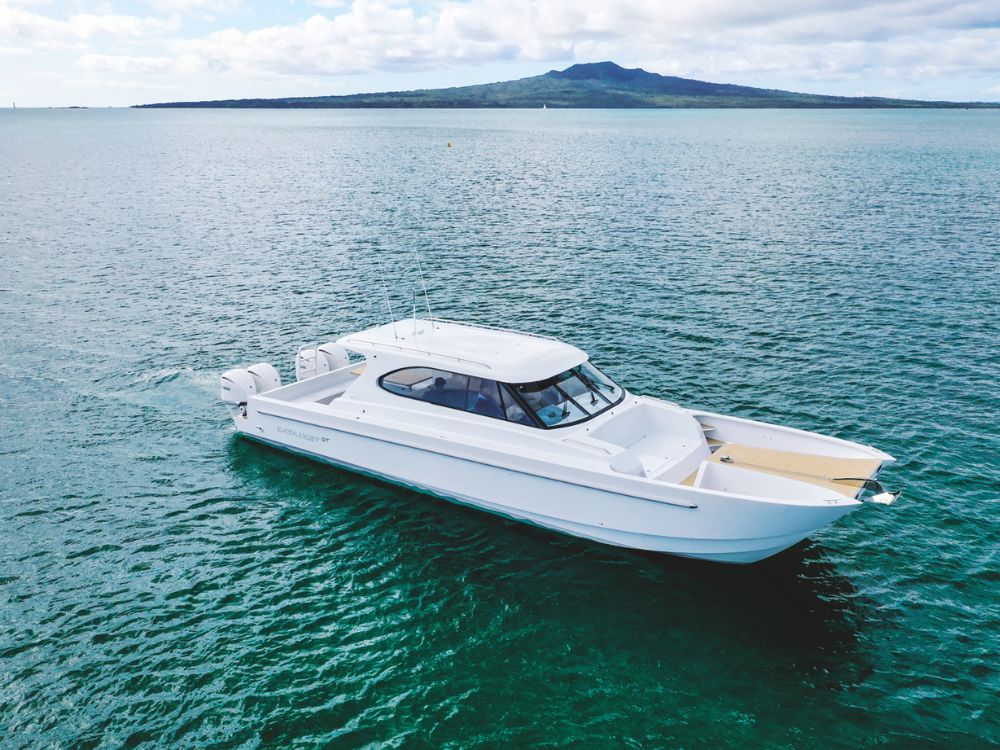
We are also seeing a trend in NZ yards building custom or semi-custom tenders to superyachts, recognising NZ’s expertise in building high performance, well-built and good looking craft. Lloyd Stevenson Yachts come to mind with its Catalyst series.

A few years ago, I wrote an article pointing out that many of the disputes we were then seeing in the vessel build and refit sector had less to do with technical skill and expertise of the builders and much to do with inadequate contracts and unclear expectations on the part of yards and owners. Six years on, through representing owners and yards across New Zealand, Australia, Europe and Southeast Asia, it is clear those same problems continue to present themselves. However, I have seen a marked improvement in the quality of the contracts and the professionalism of New Zealand and Australian yards at the contracting stage.
It is fair to say the most egregious complaints that have come across our desks in the past two years are about delays, poor build quality and indifferent aftersales service by overseas yards. I will not name and shame them (much as I am tempted to) but notable mentions of matters we have advised on include deliveries overdue by up to two and a half years, and liquidated (overseas) yards with vessels under construction needing urgent relocation for finishing. Needless to say these matters cause enormous aggravation and stress for owners.
Getting the fundamentals right at contract stage
From my perspective as a maritime lawyer, the contract stage remains the single most important area of risk in any build or refit. Too often we still see agreements based on outdated templates or “standard terms” that have not kept pace with modern build complexity. Good relationships are important, but they are not a substitute for clear contractual allocation of risk.
At a minimum, a sound build contract should identify clearly how the vessel will be used – pleasure, commercial, or mixed. This decision drives design standards, equipment, certification requirements and cost. It is surprising how often owners assume a pleasure vessel can easily transition into commercial use later, only to discover late in the piece that additional build requirements apply. For example, a vessel that is to be used for commercial charter work will have additional fire insulation and suppression requirements that will add cost and complexity to the build – and which are much cheaper and easier to install at the outset of the build rather than trying to retrofit a few months prior to completion.

Closely connected are three early decisions that should be nailed down: whether the vessel will be built to class, on which flag or registry will the vessel be registered, and what flag state compliance regime will apply. Changing any of these mid-build is expensive and disruptive. Decide early and contract on that basis.
And don’t be sucked into relying on generative AI for advice. We are seeing a rising trend in matters where clients rely on AI to provide advice on their build with negative downstream (excuse the pun) consequences.
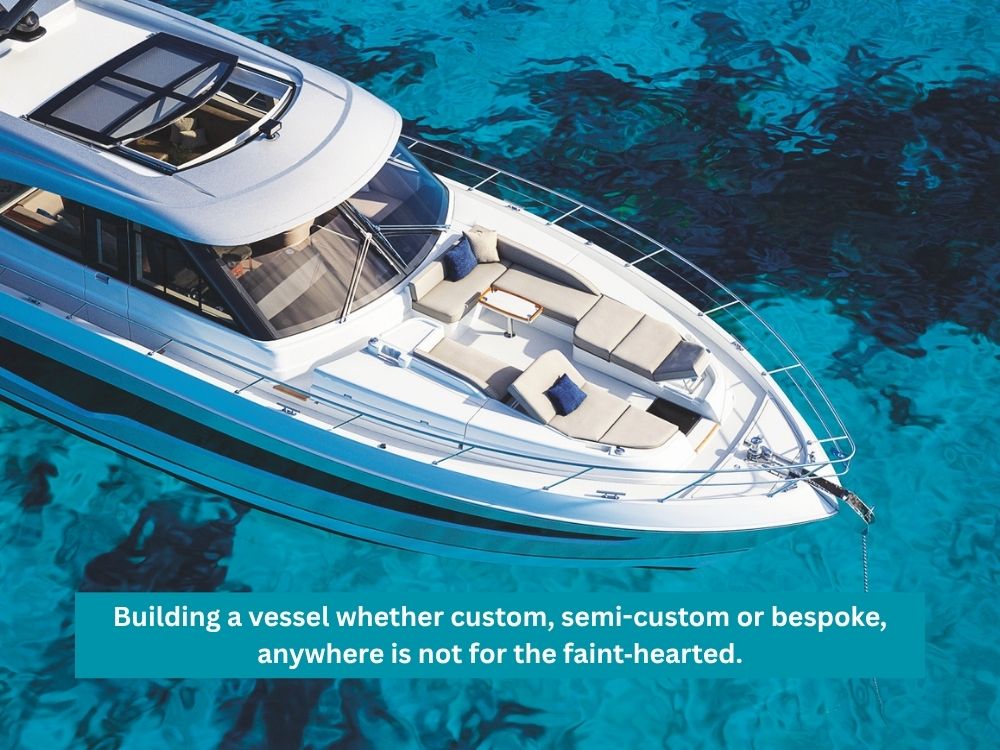
“Building a vessel whether custom, semi-custom or bespoke, anywhere is not for the faint-hearted.”
A detailed specification is not just marketing material
Many disputes can be traced back to an inadequate specification. A detailed specification normally forms an addendum to the contract. Outlines and glossy specifications with tick box options are useful sales tools, but form a weak foundation for an argument with the yard around build quality and standards.
A proper specification should lock down materials, systems, machinery, equipment models, finish standards, among others. If performance matters, then performance must be expressed in measurable terms: speed, fuel burn, range, noise, stability, and how those metrics will be proven at sea trials. A builder can be incentivised to meet or exceed these requirements, but similarly penalised if performance standards are not met.
Equally important is clarity around the designer–yard–owner relationship. Who warrants the design? Who is responsible if the vessel is overweight or fails to meet performance targets? Large yards with in-house design teams can deliver advantages, but in my experience there is very little latitude to argue on build quality.
Managing variation, delay and payments
Changes driven by the owner, yard or regulation during a build are normal. Every contract should include a disciplined variations regime requiring written variation orders, agreed cost and time impact, and a process if agreement cannot be reached quickly. Informal changes, even if well-intended, are the fastest way to lose control of both budget and programme. We speak from experience that trying to unpick years’ worth of undocumented or informal variations in the event of a dispute is a long and complicated matter which can usually be easily avoided at the front end of a contract.
Timing of delivery of the build deserves similar attention. Vague “indicative” delivery dates inevitably create tension, and we often advise on contracts where yards are delivering vessels months, if not years, late. A good contract should differentiate between owner-caused and yard-caused delay, and spell out the consequences of each, including well thought out penalty clauses that bite should the build be delivered beyond a defined grace period.

Payment terms should also be tied to demonstrable progress. Milestone payments work best when they are supported by objective evidence of work completed, materials procured and tasks finished. These can be verified by third party surveyors.
Ownership and risk allocation are often overlooked. Contracts should state clearly when title passes, who bears risk during construction, and how builder’s risk insurance, warranties and any performance bonds interact. These provisions matter most when something goes wrong – but that is precisely why they must be settled at the outset.
My general rule of thumb is that if you are contracting with a small yard, that as owner you should retain title to avoid arguments if the yard goes into liquidation as to who owns the partly-built vessel.
Defects, disputes and keeping the project moving
No build will be free of defects. What matters is how defects are identified, recorded and resolved. The contract should include a structured acceptance and defect rectification process with clear timeframes and remedies if problems persist beyond delivery.
Disagreements during a build are normal. What differentiates successful projects from unhappy ones is whether the contract provides a workable dispute resolution pathway. In most technical disputes, early expert determination by an independent marine engineer or surveyor is faster, cheaper and more effective than legal escalation. Lawyers should not be the first responders in technical arguments.
In parallel, the value of an experienced owner’s representative cannot be overstated. A competent intermediary who understands both technical and contractual issues will often prevent disputes from crystallising at all.
Many New Zealand yards deliver first-rate craftsmanship but struggle with contract administration. Weak reporting systems, poor vessel weight control, limited visibility of the costs of materials and subcontractors, and inconsistent progress reporting all create friction with owners and stress for the yard.
In a competitive international market effective contract management is not overhead; it is part of the product. Owners expect clarity on how money is being spent and how the build is tracking. Yards that invest in robust systems gain a genuine competitive advantage.
Final thoughts
New Zealand has a deserved reputation for producing high-quality vessels. But reputation is fragile and where a yard fails, it impacts our national reputation. A successful build or refit is a powerful advertisement for both the yard and the wider industry; a failed one is equally visible.
If you are embarking on a build or refit, the message is simple. Invest time at the front end. Be clear about use, standards and expectations. Insist on a detailed specification and a balanced contract. Put proper processes around change, payments and disputes. Surround yourself with experienced advisers.
Building a vessel whether custom, semi-custom or bespoke, anywhere is not for the faint-hearted. But with the basics done properly, it does not need to become an exercise in damage control either.