Each year in May/June once the cyclone season is coming to an end, a fleet of Kiwi boats starts looking for weather windows to sail up to the island groups of Vanuatu, Fiji, Tonga or even the Cook Islands and French Polynesia.
The crews prepare for rough weather, and most do indeed get quite a beating on the notoriously rough stretch of ocean between New Zealand and the little island nations further north and northeast. The yachties then spend a sailing season in breezy and often quite cool weather exploring the islands, before braving the boisterous trip back home to New Zealand.
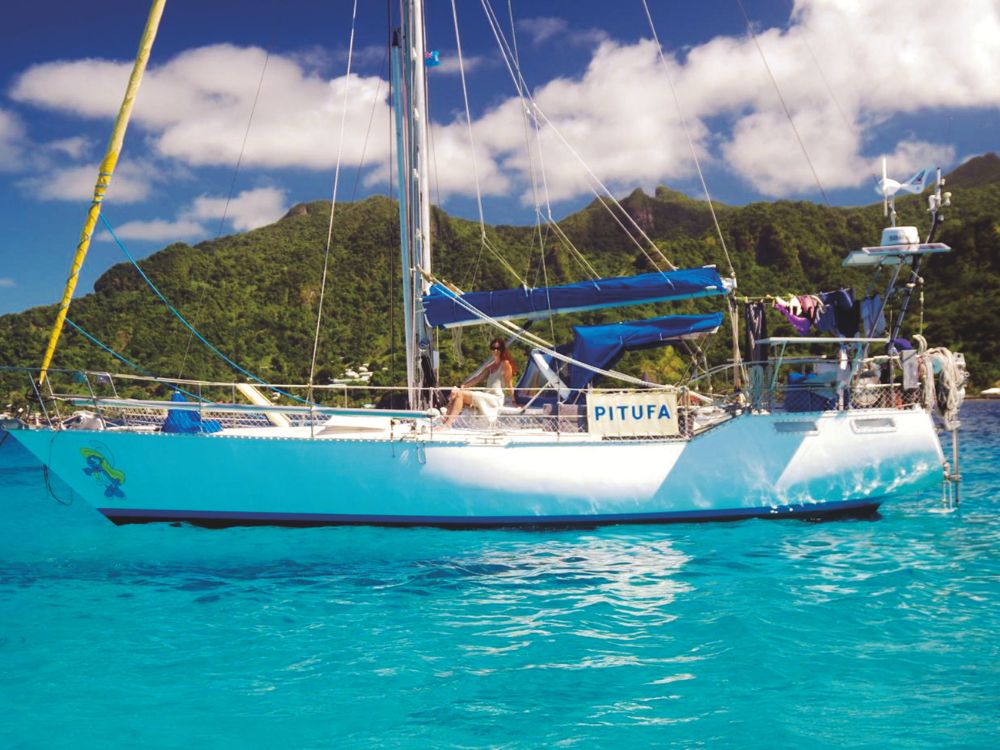
Quite a few crews leave their boats in one of the marinas and boatyards in Fiji, Tonga or French Polynesia and fly home for the summer. But there’s yet another option: to keep cruising in the islands and enjoy empty anchorages and gorgeous snorkelling in warm, calm waters. Yes, there is of course a certain risk of encountering severe cyclones, but with good preparation and an eye on the weather, cruising can still be very enjoyable!
Having set out from Europe, we arrived in the South Pacific in 2013 and planned to tick off the island groups in just one season so as to arrive in the safe harbours of New Zealand before the onset of the cyclone season. This is what most cruising boats on the barefoot route around the world do. But upon talking to fellow cruisers and locals in French Polynesia, we quickly realised that the risk of being hit by a cyclone there is extremely low.
Upon arrival in Tahiti, we met many French cruisers who were amused by our cyclone worries, as they had spent years or even decades sailing between the islands of the Societies, Marquesas, Australs and Tuamotu groups unscathed by cyclones. Of course, we just didn’t take their word for it but sat down and did our own research. We found that the whole of French Polynesia and surrounding areas has indeed a very low risk for cyclones, although that can change during strong El Niño events.
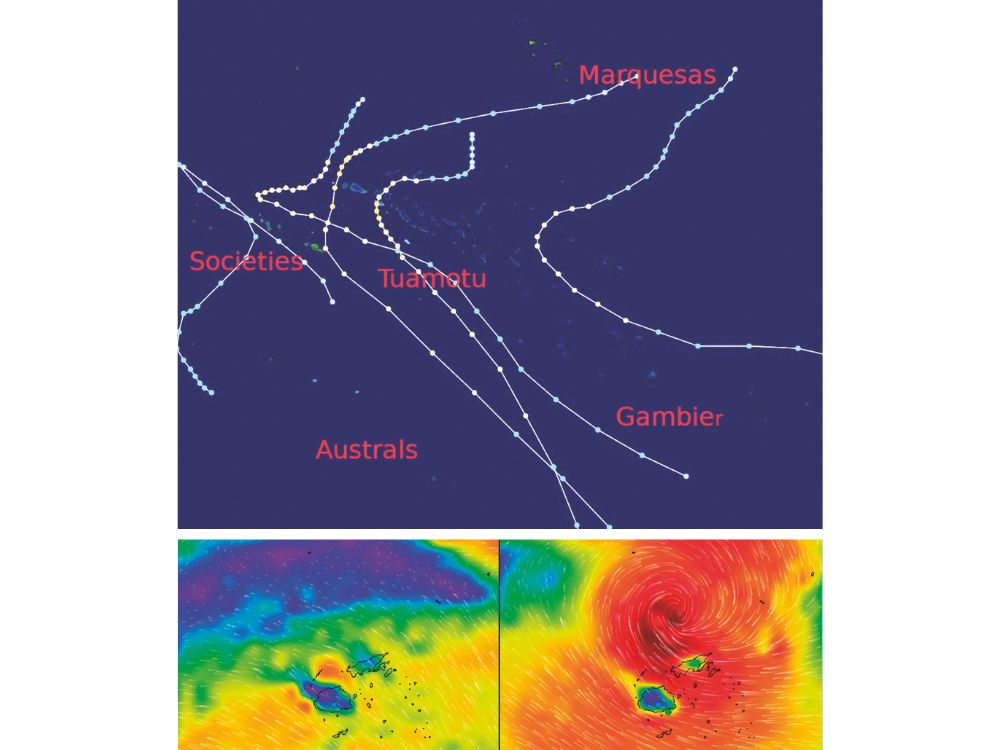
The 1982–83 season was one of the most active and longest South Pacific tropical cyclone seasons on record, with fourteen tropical cyclones. No less than five of these hit the island nation of French Polynesia (see tracks right), with Orama devastating the low-lying atolls of the Tuamotu Archipelago, which was deemed generally safe at the time, as it had not been affected by severe cyclones since 1906. The next strong El Niño season, 1997-98, brought two severe tropical storms: Osea destroyed 95% of the infrastructure on Maupiti (Society Islands) and during the El Niño of 2009-10, Cyclone Oli badly hit the Societies and Austral Islands.
Our conclusion was that we could safely cruise throughout all five widespread archipelagos during neutral seasons or with La Niña dominating the weather patterns. In the Society Islands, November to May brings the rainy season though, so we decided to avoid this hot-humid experience and spend our summers in the pleasantly breezy and dry climate of the Gambier and Austral Islands, where we knew we would have sheltered anchorages in case a tropical depression came close. The strongest winds we experienced there were around 60 knots – bumpy, but no problem with good holding in a sheltered bay.
We did not dare to linger in the Tuamotu region, as low-lying atolls would give no shelter during a cyclone. The surge before such a storm already floods the outer motu and the devastating waves can then enter a lagoon unhindered. The distances between the archipelagos are considerable, so you cannot just dash to a safe anchorage in the Marquesas or Gambier from one of the Tuamotu atolls whenever the weather forecast shows a storm building.

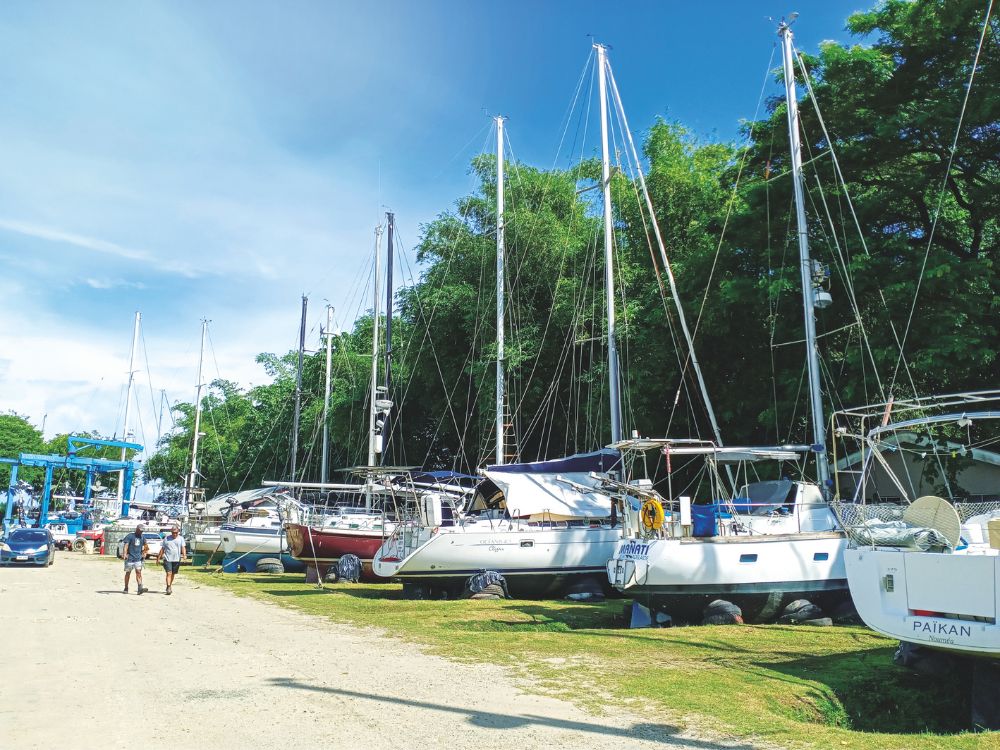
In 2015 an extra, extra-strong El Niño was building and we were on high alert just like everybody else: TV and radio stations warned the locals to secure their homes and prepare for the worst and everyone was convinced that the season would be disastrous for the island nation.
The only region that has never been affected by a cyclone is the Marquesas Islands, which lie so far east and so close to the equator that, while storms may form near them, they then move away westwards or occasionally southeastwards before picking up strength, so we sailed there to spend the summer. Most other crews had the same idea, so the anchorages were full and everybody waited in anxious anticipation, but fortunately nothing happened: The 2015-16 South Pacific cyclone season was one of the most disastrous on record, but no cyclones came close to French Polynesia.
During our nine years in French Polynesia, we sailed to the Cook Islands and Tonga, but always returned to our cyclone-season base for summer. Cook Island authorities advise yachts to leave their territory before December anyway, and while the Vava’u group of Tonga is considered safe enough by some to spend the cyclone season, we felt the area was too small to spend half a year in, plus we were not convinced that a category 4 or 5 storm would not wipe out the anchorage.
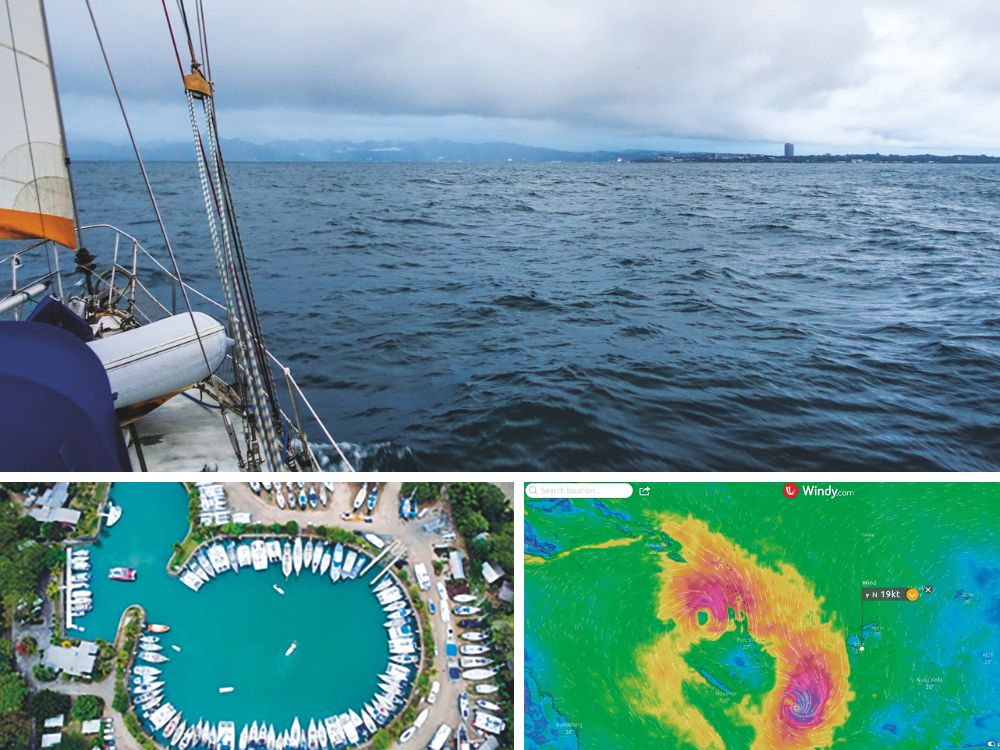
During our first years in the Pacific, we did not just check weather forecasts for our immediate surroundings, but across this vast ocean, to get a feeling for patterns. Watching cyclones leaving a trail of destruction over the island nation of Fiji, we categorically ruled out spending a summer there. But arriving in Fiji in May 2022 and starting to get our bearings, we were once again surprised to meet quite a few old salts who had successfully sat out numerous cyclone seasons there. We looked at options and found that many crews leave their yachts in Vuda Marina on the west side of Viti Levu, the main island of Fiji.
The safest option is, of course, to go into a cyclone pit, but boats then have to stay there for the whole season, which is a great option for crews who want to fly out anyway. We even met a female sailor who spends her summers as a live-aboard in a pit. This hobbit-like lifestyle wouldn’t appeal to us though, so we looked at other options.
We considered reserving a berth in Vuda Marina, but that would have meant staying close to the marina all the time in order to get in before they close off the entrance with a surge barrier in anticipation of a storm and tie all boats in the round basin to a massive weight at the centre. Another option would have been to sign up with Denarau Marina, which has an arrangement with the elders of the nearby village that allows them to take a fleet of boats up into the mangroves to secure them there. But we didn’t really enjoy the western side of Viti Levu with its many resorts and its touristy atmosphere enough to be eager to spend a whole summer there, so we remained undecided.
We sailed eastwards to the remote Lau group of Fiji, an area with little islands and beautiful nature, authentic villages, and hardly any tourism – just the kind of cruising we enjoy most. But during July and August it was uncomfortably cold and windy there for our tropically adjusted bodies and we wished we could return during the warmer months, as they had always been our favorite time for water activities in French Polynesia.
At Lau we met Tony Philp, the owner of the Tradewind Group that includes Vuda Marina, the Coprashed Marina and the Yacht Shop. The three-time Olympian sailor, boatbuilder circumnavigator laughed, when we tentatively expressed our idea of staying in this area during the summer months. “Of course! Summer’s the best time to cruise in Fiji! Calm seas, beautiful weather, you just need a cyclone hole you can run to if severe weather is forecast…” Tony recommended the anchorage in Lami Bay within Suva harbor and pointed out a list of bays he deems safe enough to sit out a cyclone (www.fiji.travel/things-to-do/sailing/yachting-havens-in-fiji), so we stocked up on additional lines and chain pieces and started scouting out these places.

As a general rule, you can say “If you can see the ocean, it can see you”, meaning waves can enter the anchorage. We looked at past records, cyclone tracks and wind strength. Was a cyclone more likely to pass over certain areas? Not really – they have hit all parts of Fiji in the past. Could we count on a certain wind direction? If it passes far enough away, you know in advance which wind direction you have to prepare for, but if it suddenly changes direction or the eye passes over you, you’d better be protected from all sides.
Some possible cyclone holes were too shallow for our seven-foot draft; others seemed too wide to securely tie up to trees and mangroves; or to our critical eyes the holding wasn’t good enough; or we found potentially dangerous obstacles like rocks and reefs on the fringes. Finally, we found one that seemed perfect – a narrow, six-metre-wide entrance to a 50-metre-wide basin – basically a private marina made by mother nature. We did a dress rehearsal: It was quite an exciting experience to steer the boat around the narrow U-turn with Christian pushing branches away with the boat hook. Then we anchored in the middle of the basin in seven metres with a sandy bottom and gazed around, contemplating where to tie up so Pitufa would be nestled safe in a spiderweb of lines and chains.
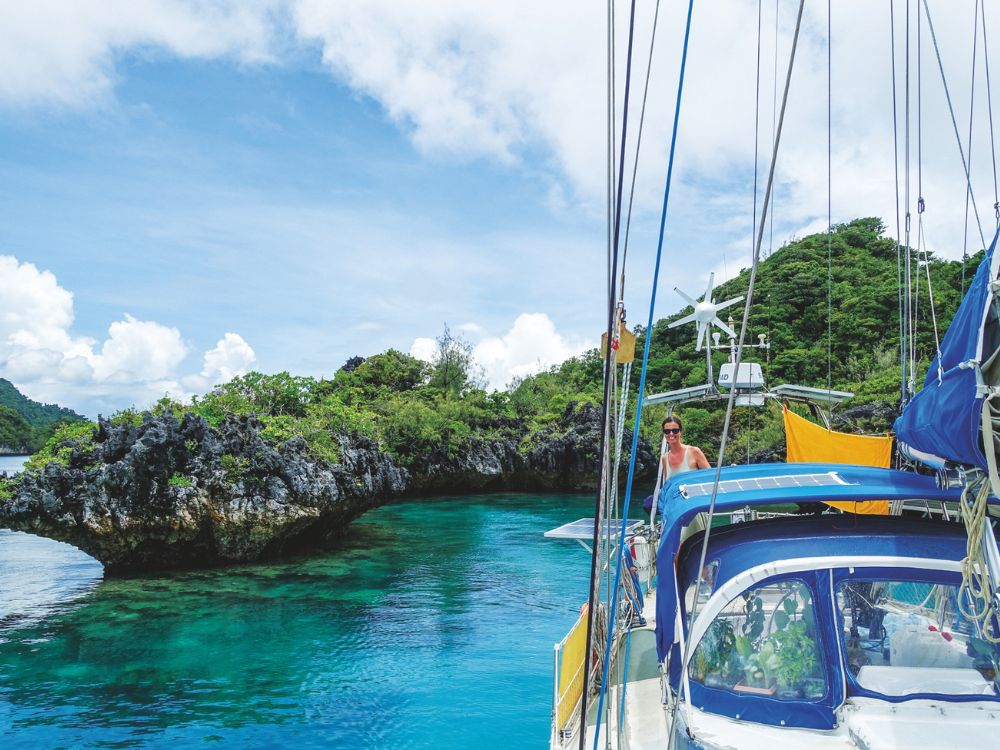
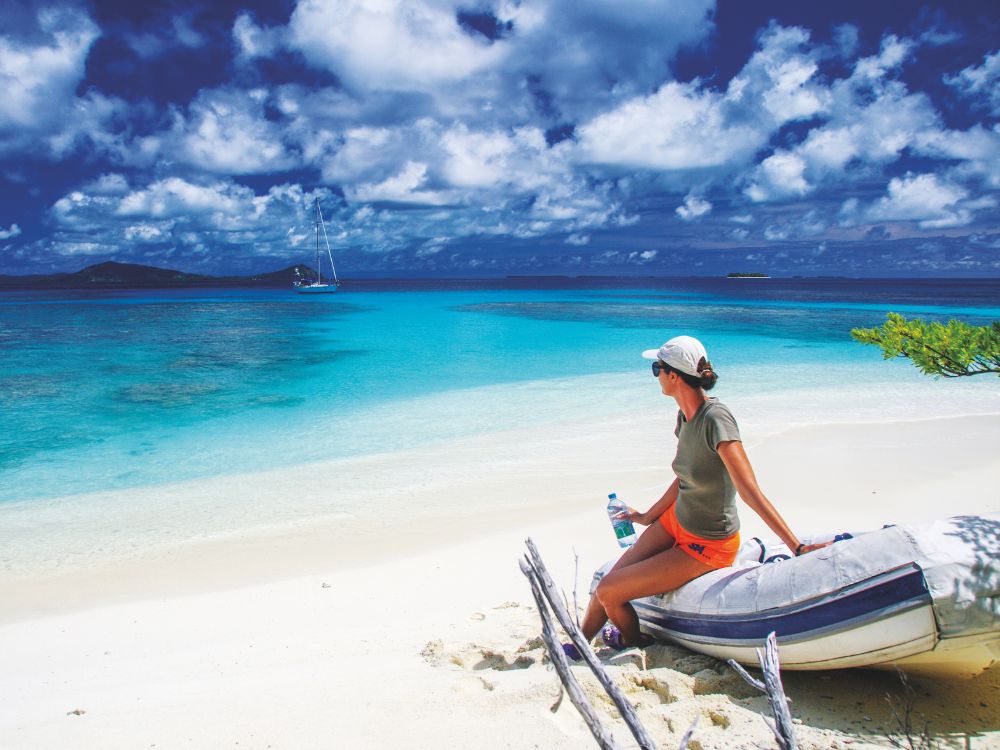
Thus reassured, we set out exploring the many islands of the Lau group, had picturesque anchorages that are packed with yachts during the high season just for ourselves, anchored out on exposed reefs, and spent several hours a day in the water snorkelling. During January and February it got so hot that this activity wasn’t just enjoyable, but really necessary to cool down at least a bit in the 30°C warm sea. We studied weather forecasts twice daily and were prepared to run to safety if something resembling a whirly would start building up in the vicinity. Distances in Fiji are small and we were never more than 24 hours sailing or motoring away from our hidey-holes.
A few times the GFS model gave us quite a fright by predicting cyclones that never materialised in the end. In the end the storms stayed away during this La Niña summer, and we mainly had light NW breezes and sunny weather as all systems stayed to the west of Fiji.
The next summer posed a considerably higher risk as conditions had switched to El Niño and when the first Category 1 cyclone passed to the SW of Fiji in October already, we thought we were in for a horrible season. It got even hotter that year and February and March brought torrential rainfalls, but again, all cyclones stayed a safe distance away.
Of course, many seasoned sailors will say that our itinerary is reckless and that we just got lucky. Due to climate change, cyclones are likely to get stronger with each degree the oceans warm up. Weather is also becoming even less predictable than it used to be, so cyclones are now more likely even outside the ‘official’ cyclone belt. Cruising is therefore becoming more risky in general, so we need to check weather forecasts even more
regularly and have a worst-case scenario plan if a cyclone starts building nearby. BNZ