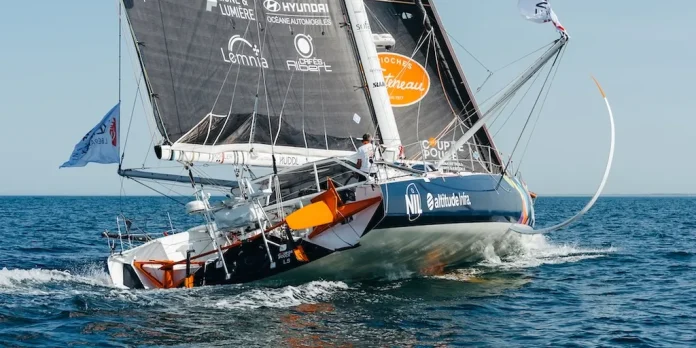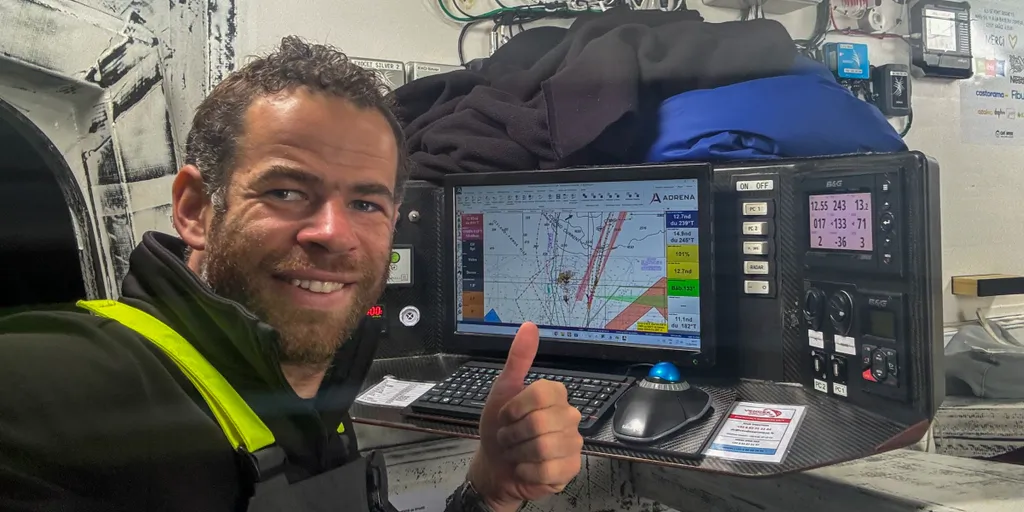
Sam Goodchild crossed the Arctic Circle first, but the real milestone belongs to the entire fleet. By Friday morning, five competitors had pushed past 66 degrees North in the Vendée Arctique, with Nicolas d’Estais and Arnaud Boissières expected to join them within hours. It’s the kind of line that doesn’t exist except on a map, yet it marks something profound in a sailor’s career—like the first crossing of the equator, or discovering the Roaring Forties. You don’t pass 66 degrees North every day.
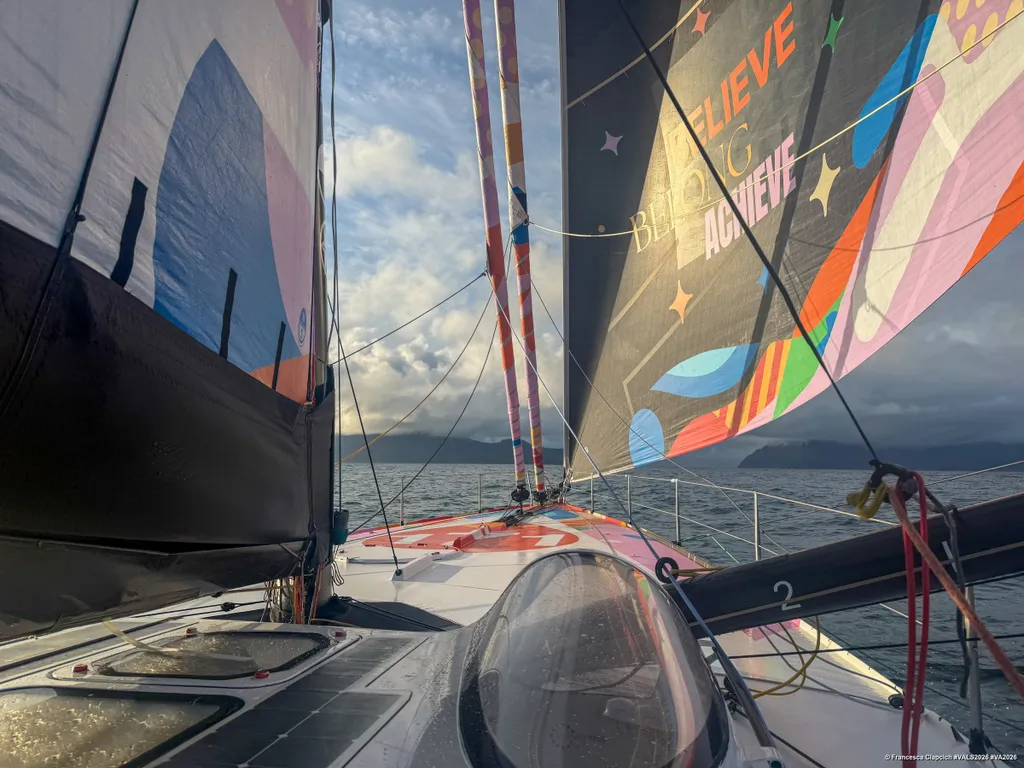
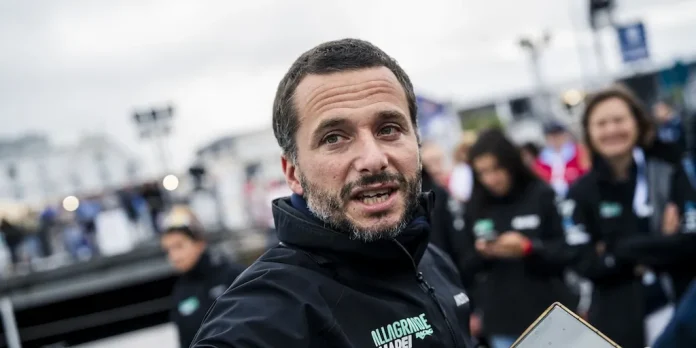
Ambrogio Beccaria didn’t hide his satisfaction aboard Allagrande Mapei. He celebrated with risotto, a small ritual to honour something he may never repeat. “We did something important,” he said. “We went really very far north, to places we don’t go every day, and today we can say: we did it.”
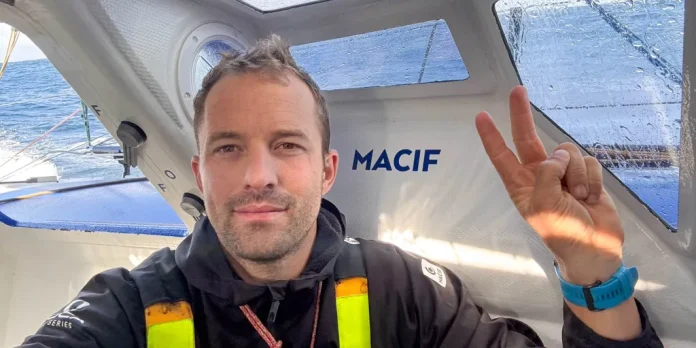
Élodie Bonafous felt much the same way. “There’s definitely a small pride. We get lots of messages reminding us what this race represents. This latitude—you don’t cross it every day. It’s done. It’s ticked off. And it’s certainly not one of the most ordinary boxes in this profession.” But crossing the circle didn’t pause the racing. Within hours, the leaders had to refocus on route choices and manoeuvres, beginning their long descent toward Les Sables d’Olonne.
The foils are singing again as the leaders glide at speed off Iceland’s coast. Bonafous found her rhythm on the downwind legs. “The reaches are really pleasant,” she reported. “I managed good sail trim and got proper rest. That lifts the spirits.” She knows it won’t last. The waters off Iceland can turn violent, and Bonafous worries about sudden accelerations as cold Arctic air spills south. The southern hemisphere has taught her lessons already. “Note to self for the Vendée Globe,” she joked, “bring several sleeping bags.”

The fleet now faces a new weather puzzle. After the vigorous run off Iceland, several transition zones will slow them before stronger wind arrives. Goodchild will enter this next system first, facing tough conditions on the Irish approach with seas reaching four metres. Behind him, small differences in positioning could swing outcomes dramatically as each skipper navigates the obstacles ahead. The Arctic Circle fades in their wake. Plenty of trouble still lies between them and France.