Google search results for ‘Pluto’ typically bring up the Disney dog, the planet, or a Kiwi rock band (early/mid 2000s). Further down you might find references to a relatively obscure WW2 operation – PipeLines Under The Ocean (PLUTO).
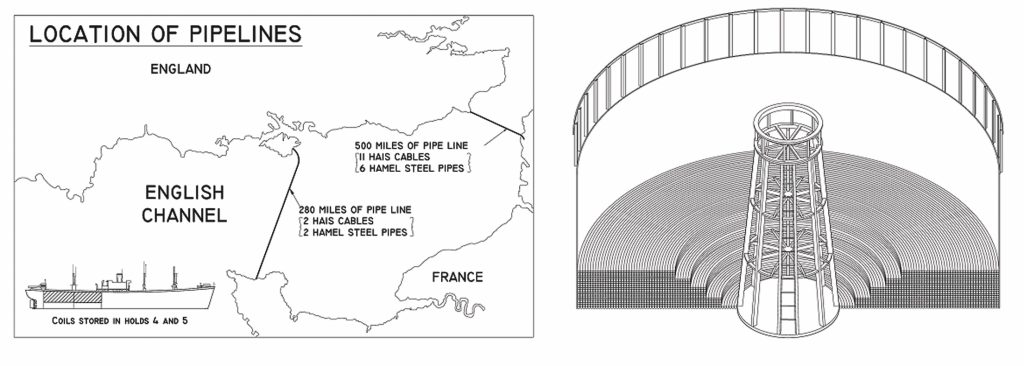
The pipelines (21 in all) were laid across the Channel seabed. They connected hidden pump stations along England’s southern coast to various points along the French coast – a complex, cross-Channel infrastructure designed to keep trucks, tanks and jeeps moving as the Allies advanced through France into mainland Europe.
Each pipeline was laid in a matter of hours under the cover of darkness (using modified ships). They were a clever alternative to conventional fuel transportation: slow-moving tankers that were easy targets for mines, German U-boats and bombers. Besides, even if the tankers did get through docking was impossible: the French ports were badly damaged.
The D-Day landing of more than 150,000 Allied troops on Normandy beaches (6 June 1944) remains the largest amphibious operation in military history. Getting fuel across the Channel for their vehicles was an equally ambitious operation. It was delivered via Pluto – an ingenious network of underwater pipelines.
PLUTO was a significant component of the Allies’ operation. The pipelines collectively delivered around 800 million litres of fuel between August 1944 and May 1945. Their success was particularly extraordinary given the speed with which they were fabricated and laid.

Construction
Building – and then laying – the top-secret pipelines presented formidable engineering challenges. While the concept was approved long before D-Day, engineers had little experience with undersea pipelines – pumping volatile fuel at high pressure over long distances was a daunting ask. While the Channel is 34km wide at its narrowest point the indirect routes eventually selected were far longer.
Strength and flexibility added to the challenge: the pipelines had to be able to absorb inside/outside pressures at variable depths, undulating seabed contours and strong currents. But they also had to be fabricated in a tightly-wound, continuous length (a bit like a fishing reel) – so that they could be carried on a ship and deployed quickly.
And, of course, the operation had to be kept secret from enemy reconnaissance (and curious locals). Each pipeline had to be laid within a few hours (during a single, cross-Channel voyage) under the cover of darkness.
After much experimentation and development two types of pipelines were selected: the HAIS system (a reinforced lead tube) and the HAMEL system, a conventional steel pipe.

HAIS
The acronym derived from Hartley-Anglo-Iranian-Siemens – the multi-national design/manufacturing team. The pipeline comprised a 7.6cm extruded lead pipe covered by a layer of asphalt and paper impregnated with vinylite resin. Protective windings of steel tape and a layer of galvanised steel wires added strength and flexibility.
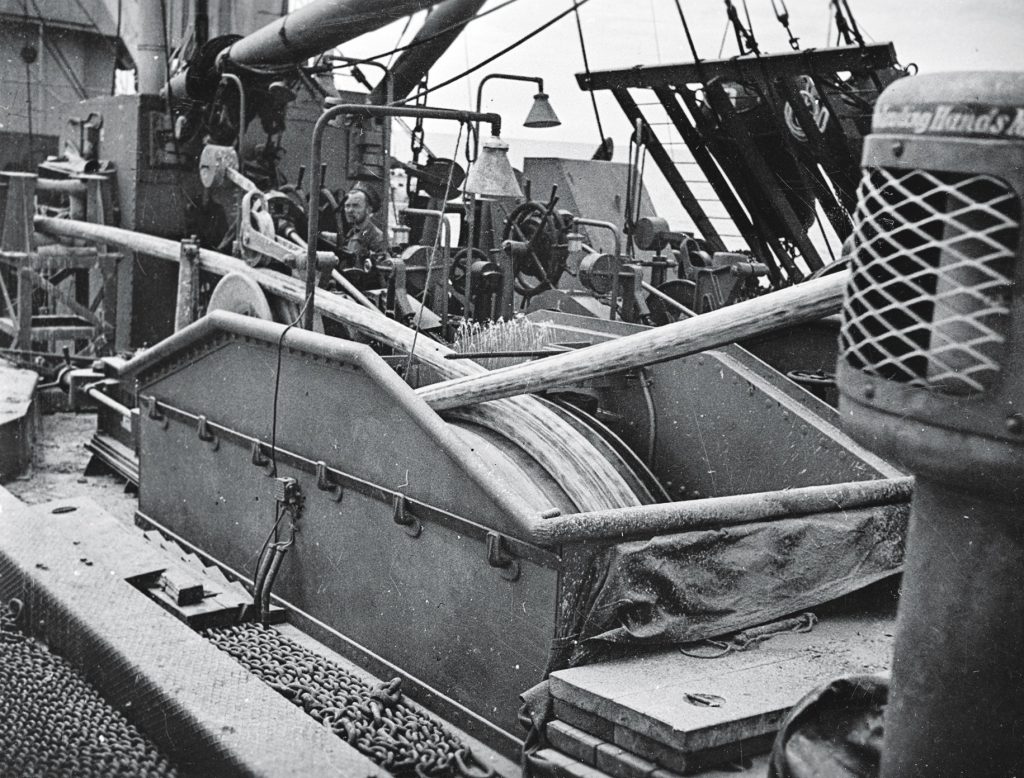
Crucially, because it would be transported as a single, continuous length, the pipeline had to be sufficiently flexible to be wound into the hold of a ship and fed astern as the vessel steamed slowly ahead.
HMS Algerian – a modified merchant ship – could carry 48km of the pipe in its hold. Two US-built Liberty ships – HMS Sancroft and HMS Latimer – were converted to each carry 160km of the pipeline weighing about 6,500 tonnes.
HAIS pipelines could deliver 16,000 litres per day at a pressure of 3,400 kPa (500psi).
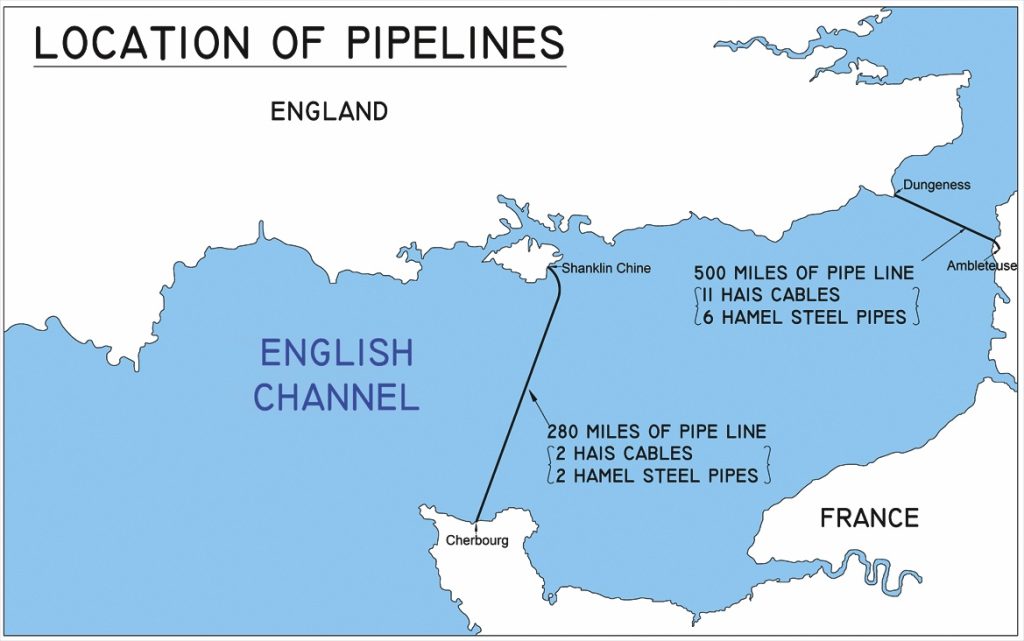
In total, 800km of HAIS/HAMEL pipelines connected the two coasts.
HAMEL
Given the chronic shortage of lead (earmarked for ammunition), PLUTO engineers quickly explored a cheaper alternative to HAIS and designed a mild steel tube (8.9cm diameter with 5.4mm walls). It was manufactured in 6m lengths and welded together to form a continuous 140km pipeline.
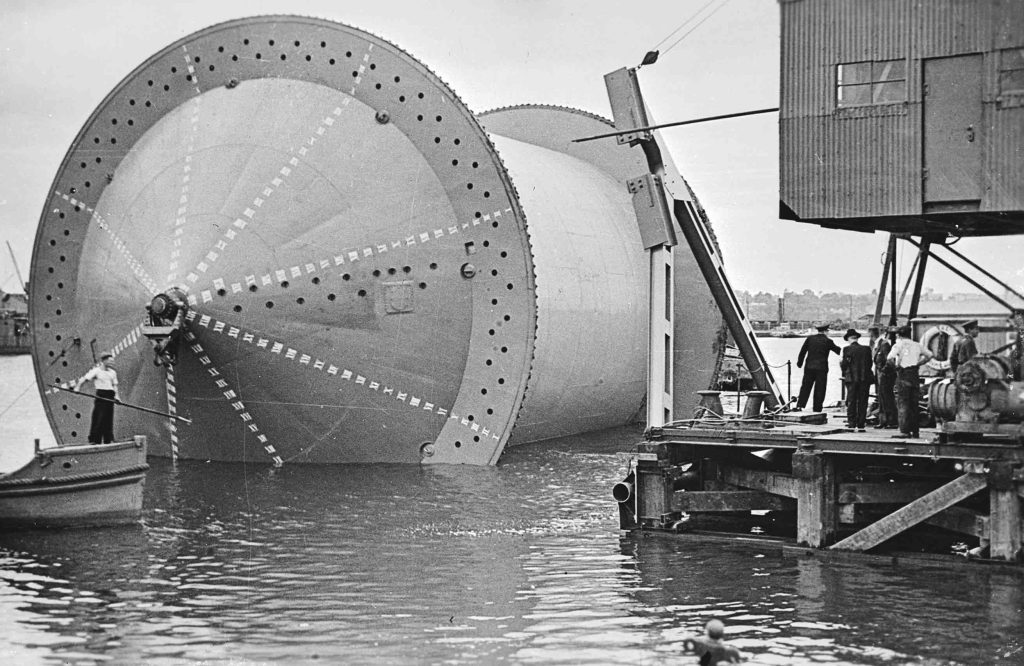
HAMEL was an amalgamation/contraction of the two chief designers’ surnames – H.A. Hammick and E.J. Ellis. Though cheaper, these pipelines weren’t sufficiently flexible to be wound into a ship’s hold. Instead, the developers opted to wind the pipe around a revolving, buoyant steel drum (in effect, a gigantic, floating cotton reel) that could be towed behind a ship, unspooling the pipeline as it moved ahead.
Some 18m wide and 12m in diameter, these reels were labelled ‘conundrums’ (the ends were ‘cone-shaped’ and it was a ‘drum’) – no doubt with a healthy measure of mischievous wordplay. Six conundrums were built, each holding 140km of pipeline. A converted twin-screw, 61m hopper barge towed the conundrums.
Routes
The pipelines followed two routes. In keeping with the Disney theme, the first corridor was called ‘Bambi’. It connected the Isle of Wight pump station to Cherbourg in France (112km). The second, ‘Dumbo’, connected Dungeness and Greatstone on Romney Marsh to Boulogne in France (50km).

In total, 1,200km of HAIS/HAMEL pipelines connected the two coasts. As the Allies advanced into Europe Dumbo was connected to an inland pipeline system – extending the network into the Netherlands, Belgium and eventually Germany itself.
To cope with the high pressure required to get the fuel across the Channel, the pumping stations set up on the English coast were mechanical behemoths. Each was equipped with diesel-powered reciprocating pumps and four centrifugal pumps.
These facilities, too, were disguised to prevent enemy detection and operated from buildings that looked like ordinary villas and cottages. After the war some of these buildings were converted into homes. Locals still refer to them as the ‘PLUTO bungalows’.
Recovery
More than 85% of the pipeline network was salvaged after the war – some 22,000 tons of lead (the HAIS pipelines originally used 23,000 tons) and 3,300 tons of the original 5,500 tons of steel used on the HAMEL pipelines.
The value of the scrap metal in post-war Europe was well above the recovery costs. While most of the pipelines were recovered, parts of them can still be seen around the Isle of Wight – and sections remain on the Channel seafloor.
Once the Allies established beachheads along the Normandy coast and advanced into Europe, they were able to rebuild the damaged French ports, allowing conventional fuel tanker deliveries to resume. The reliance on PLUTO diminished.
But it’s fair to say the pipelines delivered a critical component of the war effort at a crucial time – allowing the Allies to maintain momentum. US Army chief Dwight Eisenhower said his forces would have run out of fuel without the pipelines. Churchill declared PLUTO to be “a wholly British achievement and a piece of amphibious engineering skills of which we may be proud.”
And there is some evidence that the German High Command – as its forces steadily retreated – was perplexed by the Allies’ ability to keep their vehicles operational.
Further reading
A number of books have been written about Operation PLUTO. Here are three – but getting hold of copies isn’t easy. If all else fails, Amazon – and secondhand book shops – are good options.
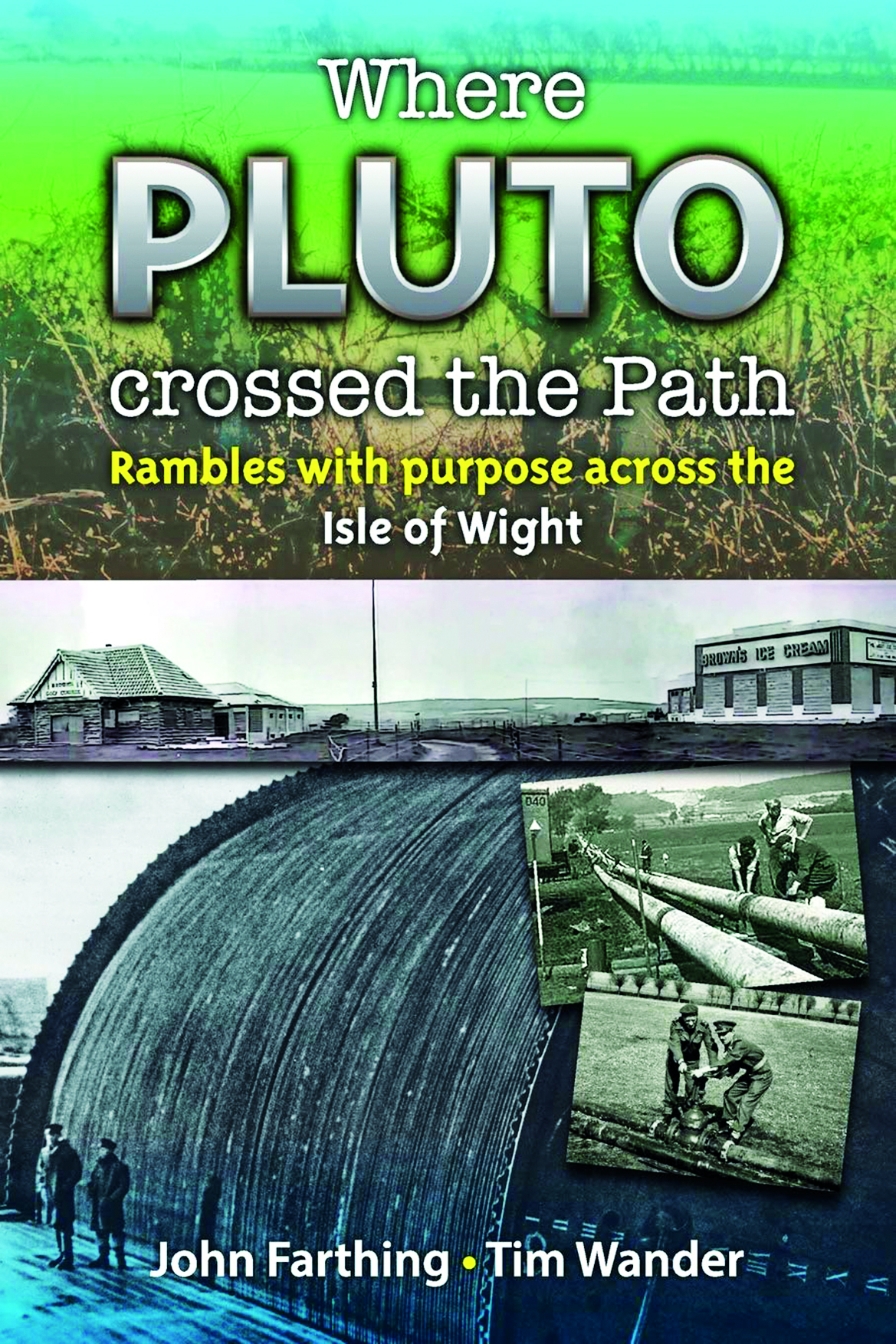
Where Pluto Crossed the Path – John Farthing & Tim Wander (www.marconibooks.co.uk)
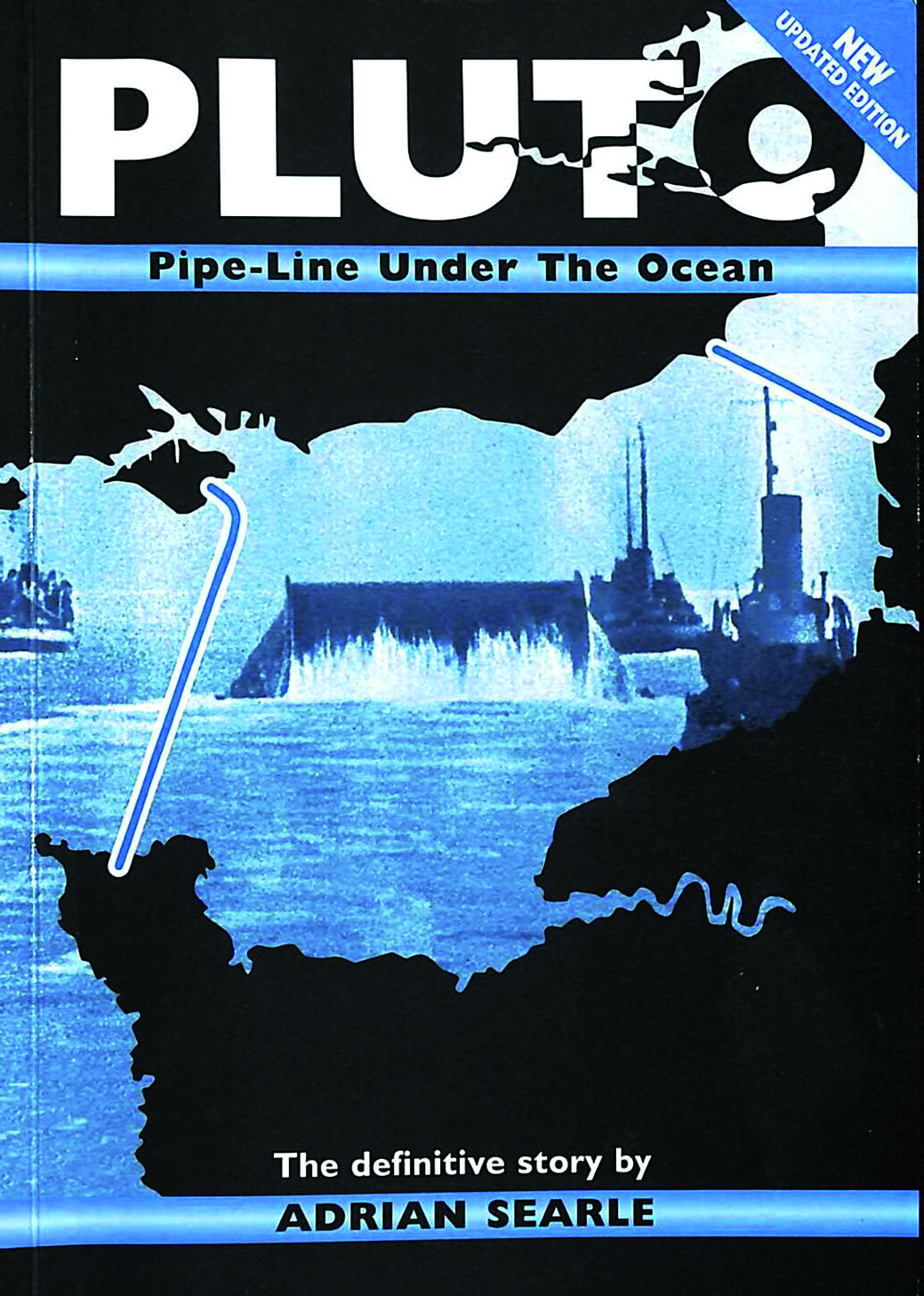
PLUTO – Pipe-line Under the Ocean – Adrian Searle. A few copies are for sale at the Shanklin Gift Shop on the Isle of Wight (www.shanklinchine.co.uk)
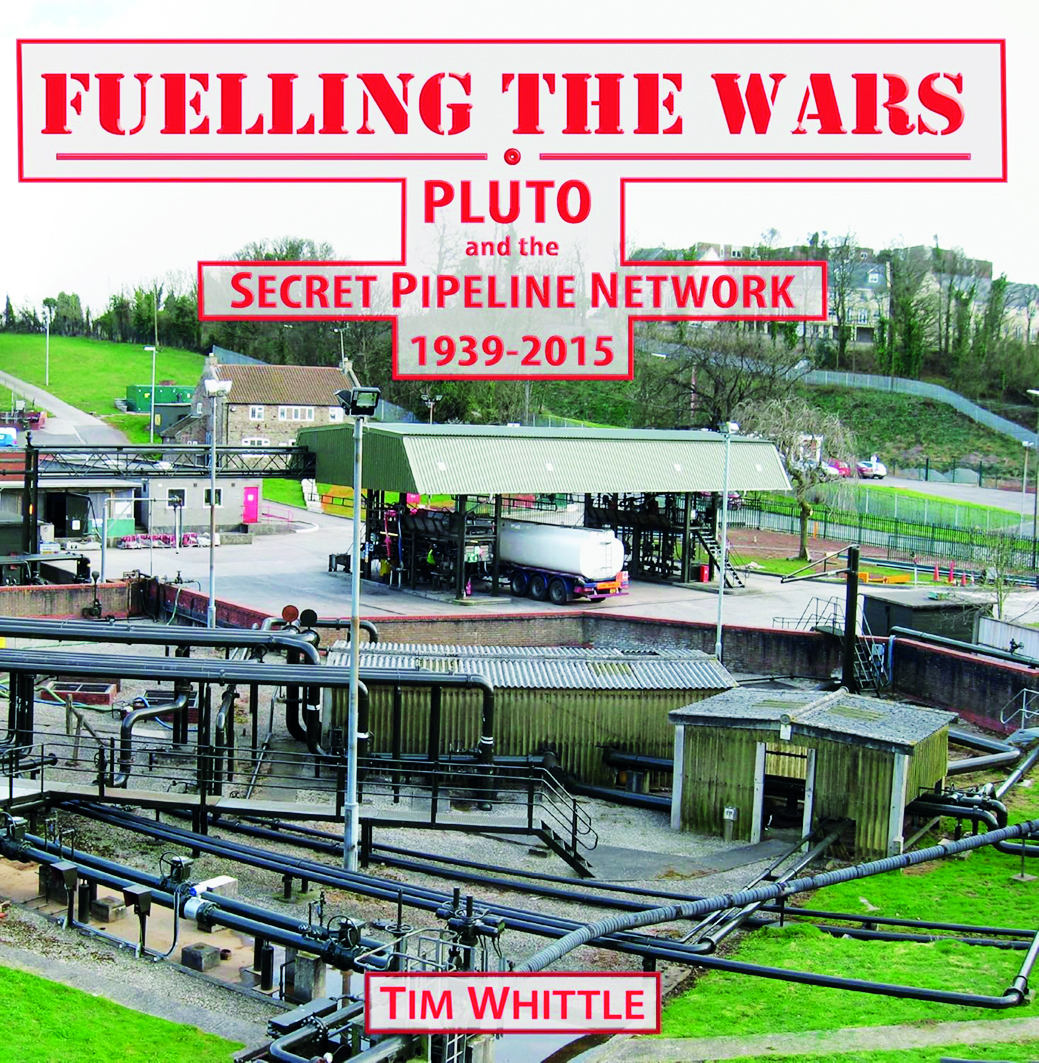
Fuelling the Wars – Tim Whittle (Folly Books Ltd – www.bradford-on-avon.org.uk)
A YouTube video (www.youtube.com/watch?v=6jIW2g7IkFA) – provides fascinating footage of the conundrums in action.