Sam Goodchild crossed into the Arctic Circle west of Iceland at 9:45 am on Thursday morning, becoming the first solo sailor to reach that latitude aboard an IMOCA raceyacht. For the Franco-British skipper aboard his boat, the moment marked more than a personal milestone: it was a first in the history of offshore racing itself.
The Vendée Arctique had never seen conditions that allowed competitors to push this far north. In two previous editions, weather had kept the fleet south of 66 degrees. This third edition has changed that entirely. Goodchild’s achievement opens the door for the seven other remaining competitors to follow. Élodie Bonafous, Violette Dorange, Ambrogio Beccaria and Francesca Clapcich were expected to cross the Arctic Circle in the hours following Goodchild’s passage, each stepping into waters their sport has never truly explored at competitive pace.
The passage came after nearly three days at sea from the previous checkpoint. As the fleet pushed north from the Hebrides and the Faroes, the landscape had already begun its transformation. Mineral-grey horizons replaced familiar temperate horizons. The light changed. Fog hung constant. The nights, which had already grown long, began to blur into something between dusk and dawn. At these latitudes, true darkness barely falls at all. The sea here carries echoes of southern waters—cold, formidable, shrouded in mist and spray.
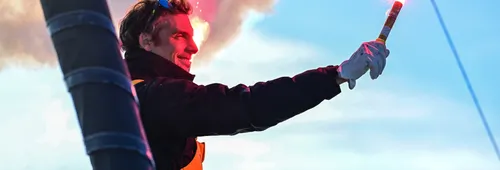

For Goodchild, leading the race overall, the crossing represented something different from a simple geographic achievement. The Arctic Circle represented proof that the 2026 Vendée Arctique had genuinely evolved from its predecessors. The route was no longer theoretical. The conditions, however fierce, had permitted entry into a realm of ocean racing that remained closed just years ago.
The fleet’s northward push continues. Each skipper still racing will soon cross that same threshold, adding their name to the newly written chapter of the sport’s history. The race itself, it seems, has grown larger.